Tailoring Guides
What to Bring to Your First Tailoring Consultation
Prepare for a first tailoring conversation with a few fit notes, useful examples and practical questions about cloth, fittings, budget and timing. Ask ahead which garments or shoes would help.
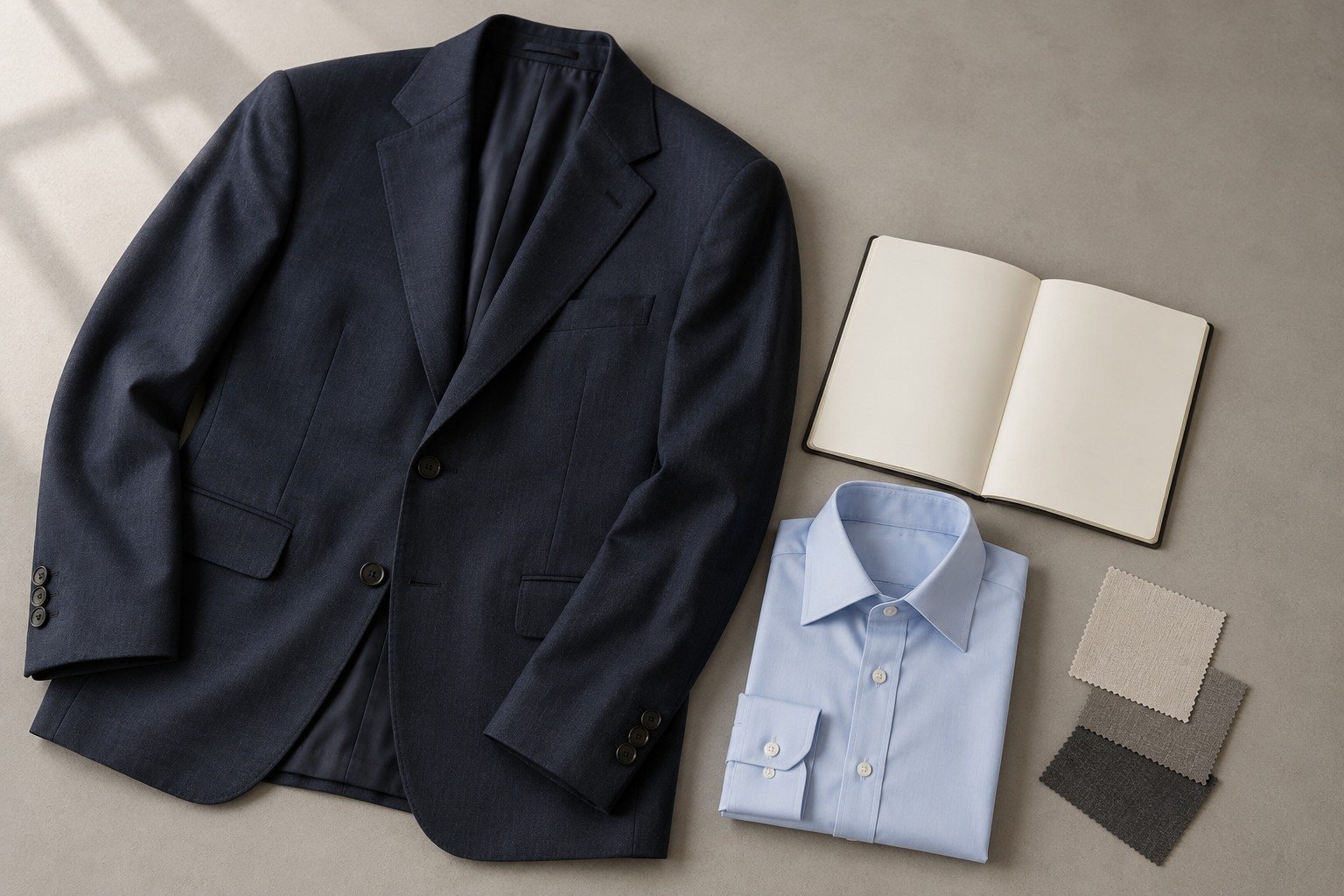
A few observations about your clothes are enough to start a useful tailoring conversation. You might have an occasion in mind, a pair of trousers that becomes uncomfortable at your desk, or a jacket you like but rarely reach for. You don't need to arrive with measurements, fabric terminology or a settled choice between bespoke and made-to-measure.
When deciding what to bring to a tailoring consultation, start with what will help you explain your needs. Notes and a few examples can help. Before carrying in clothing or shoes, ask whether they'd be useful for the conversation you have planned.
Describe the day the garment needs to suit
Start with where and how you'll wear it. An upcoming wedding gives you a particular date and setting to discuss. For work clothes, describe the parts of your day that affect how you dress: time at a desk, meetings, travel or the layers you usually wear.
Try to name your main priority. Perhaps you want trousers that feel more comfortable when seated, or a jacket whose shape feels appropriate for both meetings and dinner. You can care about several things, but identifying the most pressing one gives the conversation a clear starting point.
Isaac Ely's published process begins with a discussion of how you wear clothing, what has worked and what hasn't. That leaves room to explain the problem before choosing a service. If you aren't sure which garment would help most, say so; you don't need to turn a wardrobe frustration into a finished design brief.
Make fit notes you can actually use

Keep notes short enough to recall easily. Describe what you notice, when it happens and whether it's a matter of comfort or appearance. Include something you like as well, so the discussion isn't only a list of problems.
For a hypothetical example, your note might say: these trousers feel comfortable standing, but pull when I sit at my desk. That describes a sensation and a situation. It doesn't identify the cause or tell you which measurement to change; those are questions for the tailor's assessment.
You could also note that you like a jacket's colour but seldom wear it because its shape feels too formal for your usual clothes. That's a preference worth explaining. You don't need to prove that the garment is wrong before asking for something different.
Choose examples, then ask what to bring
A few reference images can help you show a preference that's difficult to describe. Pick out the detail you mean: a softer silhouette, a particular colour combination or the shape of a lapel. Explain what caught your attention rather than asking the tailor to infer it from a whole outfit.
An image can show the look you have in mind. It can't tell you how that garment would feel on you, whether a cloth is available or whether every detail can be reproduced. Ask which parts could suit the garment you're considering.
An existing garment may offer another useful reference, especially if it helps you explain a fit note or something you'd like to retain. Ask ahead whether to bring it and whether the shoes or layers you expect to wear with the new piece would help. These are optional discussion aids, not a required packing list.
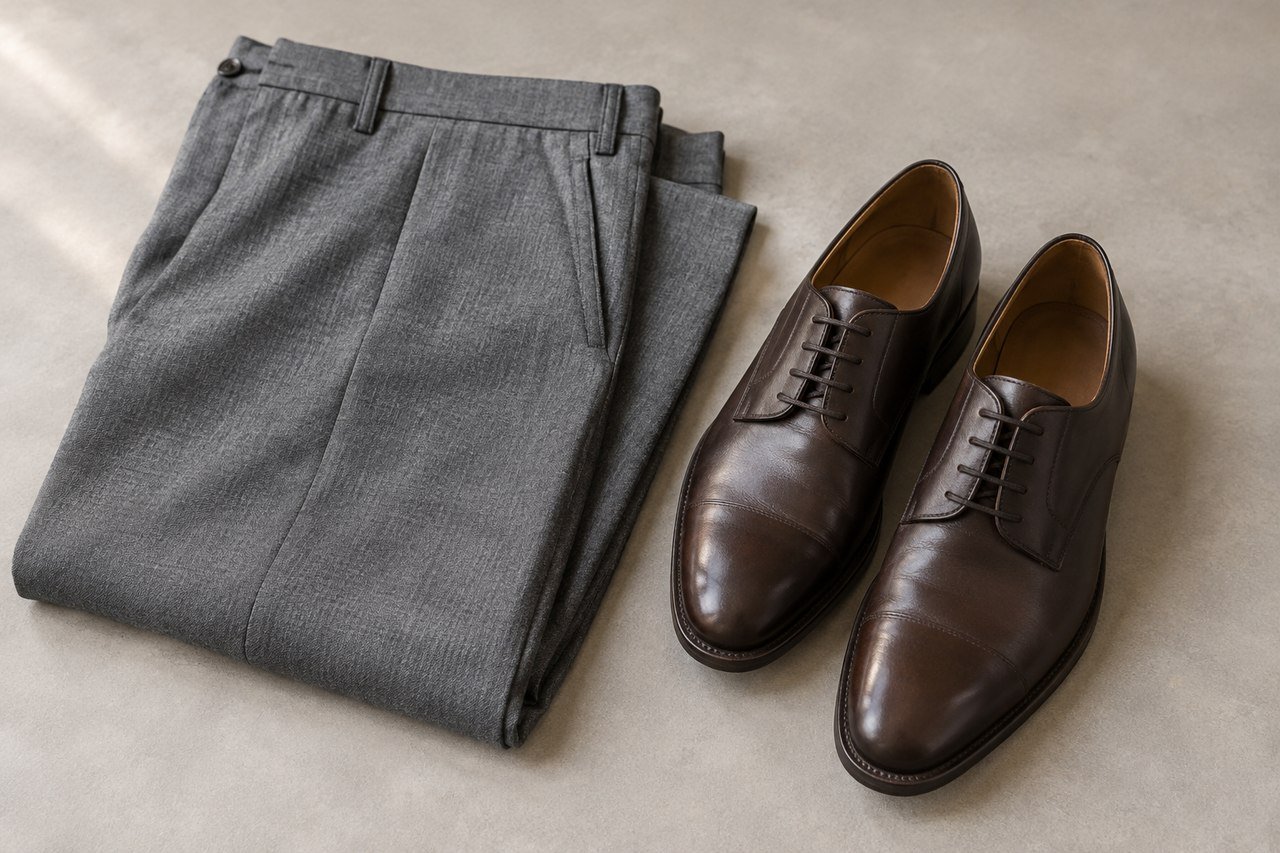
Bringing an older garment as a reference doesn't establish that alterations to it are available. If you want work done on that piece, ask about that separately.
Leave room for the practical questions
The service choice can wait until you've explained what you need. Made-to-measure adapts an existing pattern; bespoke begins with an individual pattern for the wearer. If you'd like more background before the conversation, the guide to choosing between bespoke and made-to-measure explores that decision in more detail.
A short question list can cover what you'll need to understand before deciding:
- Which approach would you suggest for the needs I've described, and why?
- What cloth choices would be appropriate, and what should I know about caring for them?
- How would fittings be arranged, and what would I need to make time for?
- What would be included in the proposed cost, and how would it fit my budget?
- Is my required date realistic for this garment, including time for fittings?
Mention your budget and date early, even if you haven't chosen the design. Isaac Ely's bespoke information says the estimated schedule is discussed for the specific garment and level of customization. Confirm those details directly rather than assuming a standard turnaround or number of visits.
Send a short note before the visit
For context on individual patterns and fitting refinement, read about Isaac Ely's bespoke tailoring. When you're ready to contact Isaac Ely, a short message can name the garment or occasion, your main concern and any required date. Ask whether an existing garment, shoes or anything else would be helpful to bring.
An inquiry doesn't reserve an appointment time. Confirm the arrangements directly, and keep your notes somewhere easy to find when the conversation begins.