Fit & Proportions
When a Shirt Fits Your Neck but Not Your Shoulders
A shirt can fasten comfortably at the collar and still pull across your shoulders when you reach. Here is why neck size doesn't settle the fit, what to notice at your desk and under a jacket, and how to describe it at a fitting.
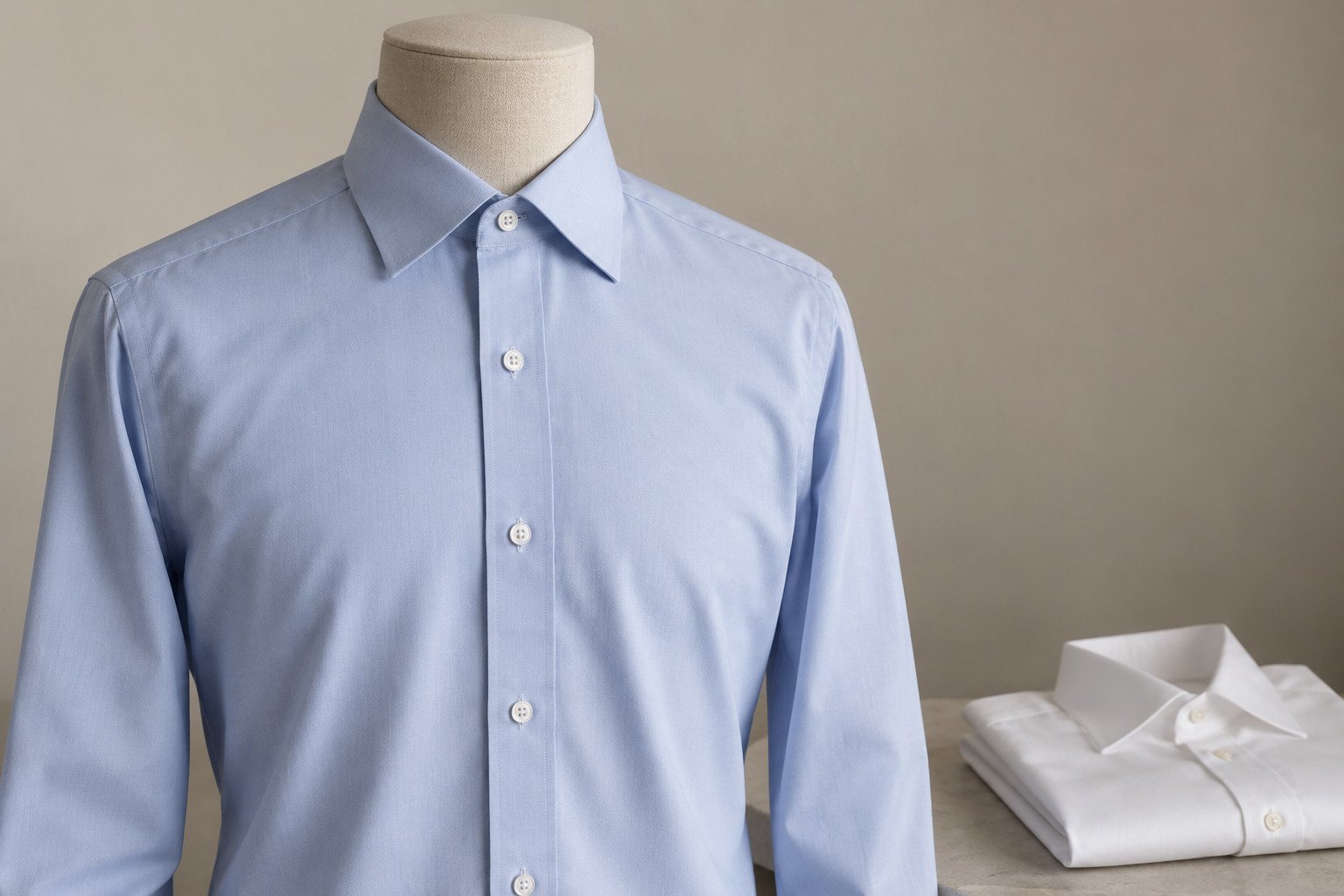
You button the collar and it feels comfortable. Then you reach towards your keyboard and the shirt pulls across your upper back. Those observations can both be true: comfort at the neck doesn't tell you how the shoulders, sleeves and body of the shirt will feel together.
Most ready-made shirts are sized by the neck, often with a sleeve length, and the shoulders, back and sleeves follow a standard pattern for that size. A collar that fits tells you the neck measurement suits you; it says little about whether the rest of the pattern matches your proportions or the way you move. Going up a collar size changes all of it at once, so it may ease the shoulders while leaving you with a looser collar and more fabric than you wanted elsewhere. If your shirt fits your neck but the shoulders feel too tight, the comfortable collar is worth noting as something to keep while the rest of the shirt is assessed.
Describe the collar and shoulders separately
Start with the shirt fastened as you normally wear it. Let your arms rest naturally and notice the collar, shoulders, upper arms and torso separately. You don't need to decide whether the shirt is technically correct before describing how it feels.
Be specific about the difference between appearance and comfort. A shoulder line might look different from the one you prefer without feeling restrictive. Equally, a shirt can look tidy in the mirror while making an ordinary reach uncomfortable. Both observations are worth discussing, but they ask different questions.
You don't need to work out the cause. If a seam or crease catches your eye, point it out along with what you feel, where you feel it and what you were doing; working out why is the shirt maker's part.
Try the movements that matter to you
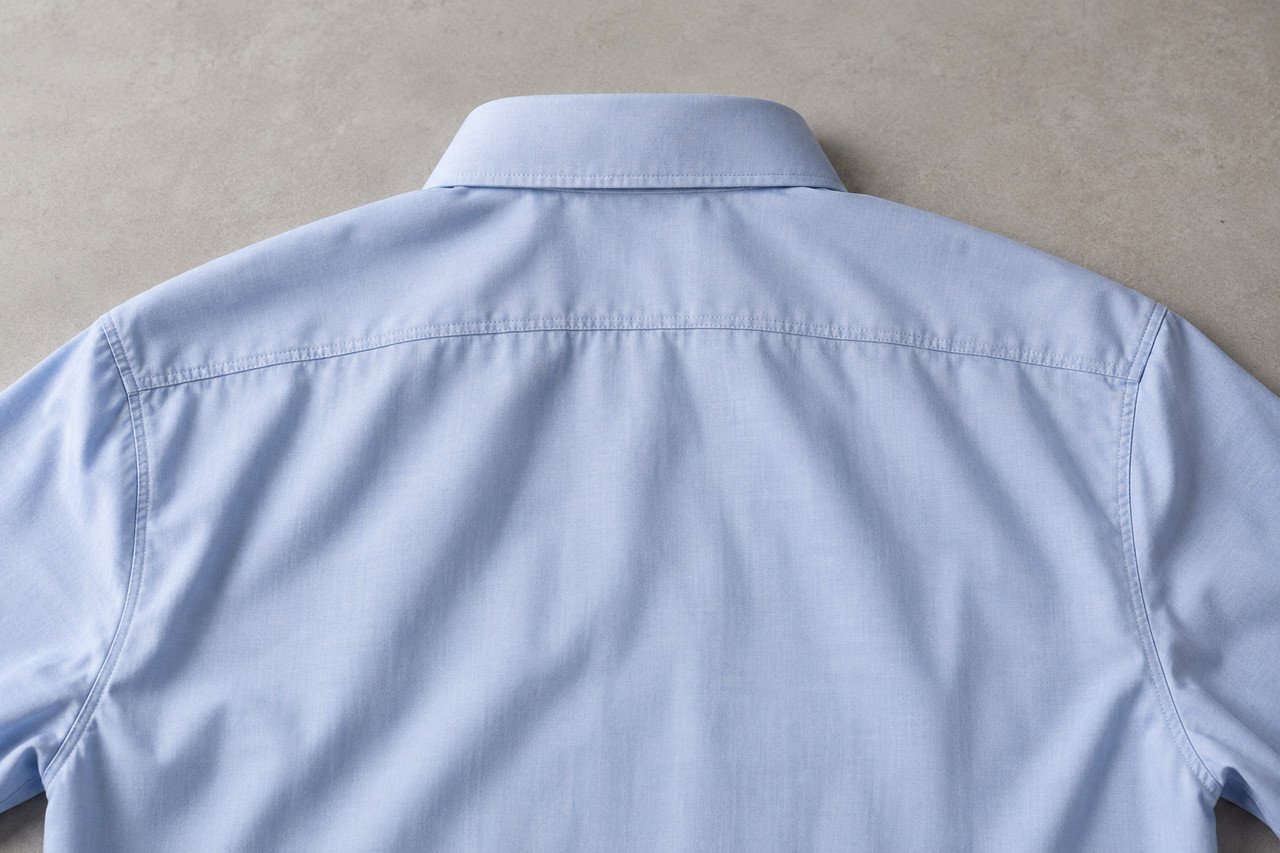
A still view is only part of the picture. Sit as you would at your desk, reach forward comfortably and then let your arms return to rest. Notice when the restriction begins and where you feel it. Use familiar movements; stretching as far as possible won't describe how you normally wear the shirt.
Keep each observation separate. Does the collar remain comfortable when you reach? Do you feel held across the back, around an upper arm or somewhere else? Does anything change when you sit? Mention what happens to the sleeves too.
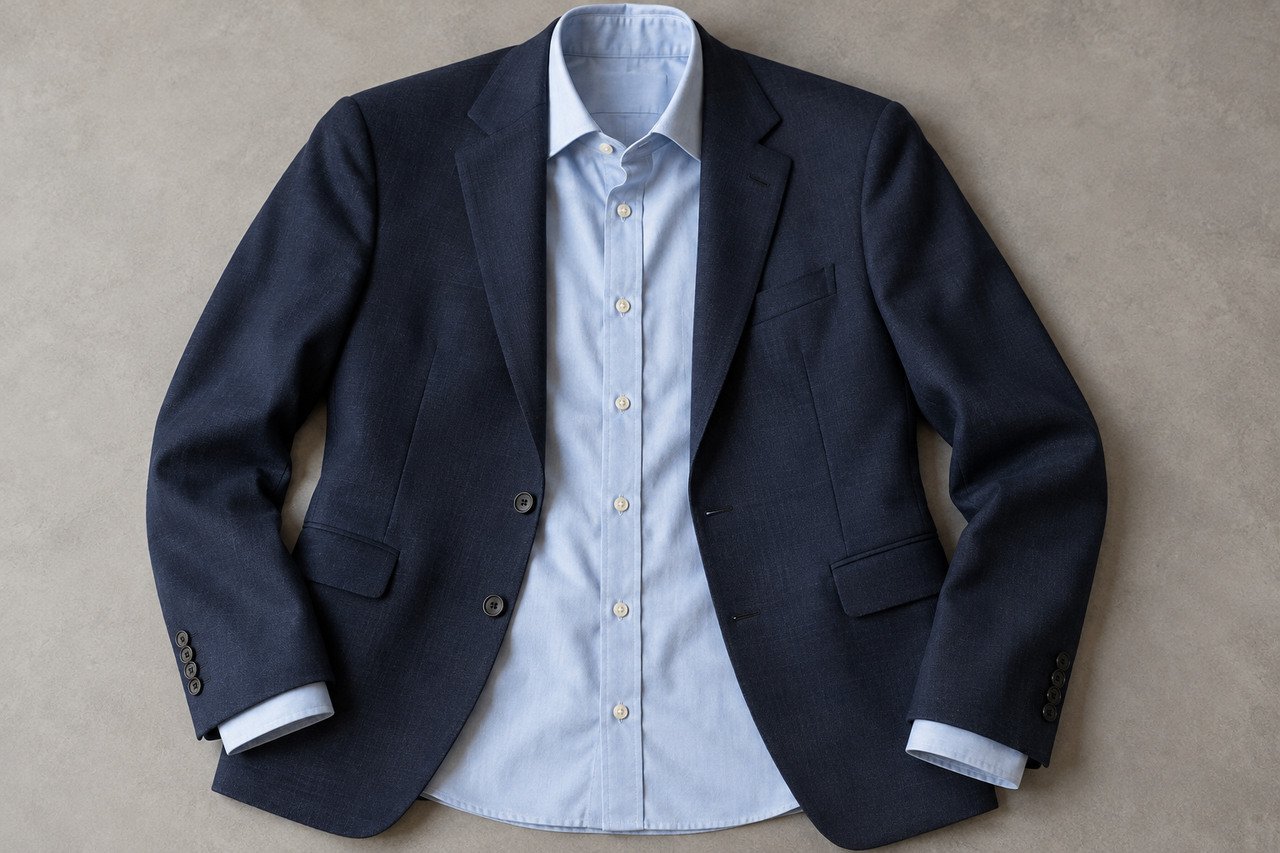
If you usually wear a jacket, try that combination as well. Describe what you notice in the shirt alone and what changes with the jacket on. That gives the fitting conversation useful context.
Bring a short note, not a proposed correction
A useful note records the location, the activity and your preference. It also keeps something that already works in view.
Suppose your note reads: “The top button feels comfortable when I'm standing and sitting. Reaching for my keyboard pulls across my upper back. I like the shirt's neat shape, but I'd like to feel less restricted during desk work.”
That gives the shirt maker more to assess than “the shirt is too small”. If the sensation is difficult to name, use ordinary words such as pulling, pressing or catching and show the movement that brings it on.
You can keep the note on your phone. Before taking an existing shirt to a consultation, ask whether it would be useful to bring. The guide to preparing for a first tailoring consultation covers other optional notes and reference examples.
Ask how the whole shirt will be assessed
Your note can turn into a few direct questions for the next conversation:
- Can I sit and reach forward in the trial shirt, the way I do at my desk?
- If the collar stays as it is, what would change through the back and shoulders?
- Should I bring the jacket I usually wear over the shirt?
- How will you balance the neat shape I like with comfort when I reach?
Isaac Ely's bespoke shirt process includes measurements and observation of posture and shoulder balance, an individual pattern, and a trial-shirt fitting before the final fabric is cut. The trial fitting is the place to revisit your notes and ask how the proposed fit addresses them.
You can discuss collar and cuff choices alongside fit, without having to settle every design detail first. Keep the practical question clear: how will the proposed shirt feel through the ordinary movements you've described?
When you're ready to discuss your shirt with Isaac Ely, mention what feels comfortable, where the restriction appears and when you notice it, and ask how a first appointment would be arranged once you've spoken. Keep the note with you afterwards, so the trial shirt can be checked against the same reach that raised the question.