Fit & Proportions
How an Overcoat Should Fit Over a Suit
Assess an overcoat with the suit you'll actually wear beneath it. Notice fastening, arm movement and seated comfort, then bring those observations to a fitting without guessing which measurements need changing.
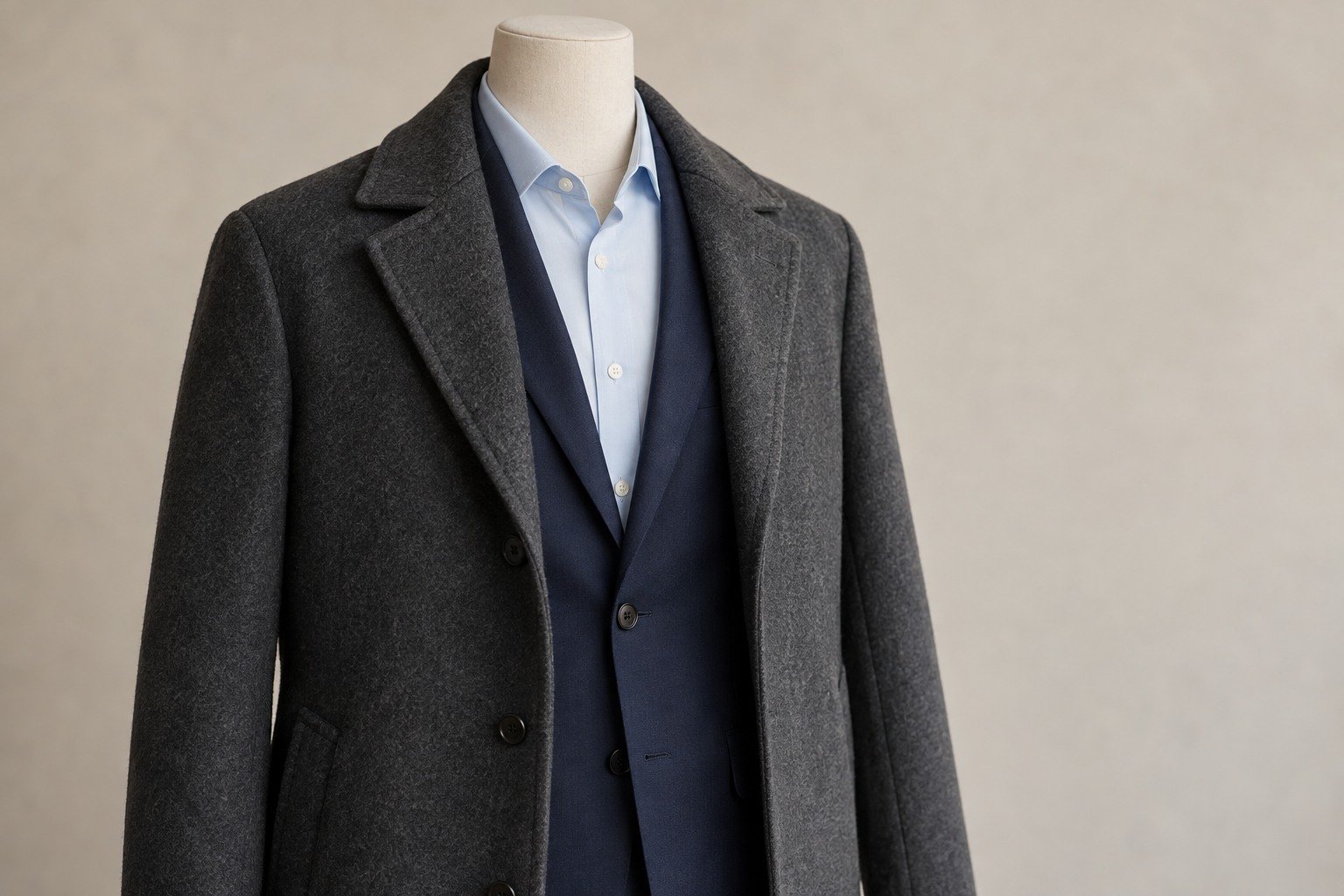
A coat that feels comfortable over a shirt can feel quite different once a suit jacket is underneath it. To judge how an overcoat should fit over a suit, try the whole outfit together. You need to know how it feels when fastened and during ordinary movement, as well as how it looks while you're standing still.
There isn't a useful universal rule to buy one size larger or add a fixed amount of room. The question is whether the coat works over your intended layers, in the shape you prefer, for the way you'll wear it.
Begin with the suit you actually wear
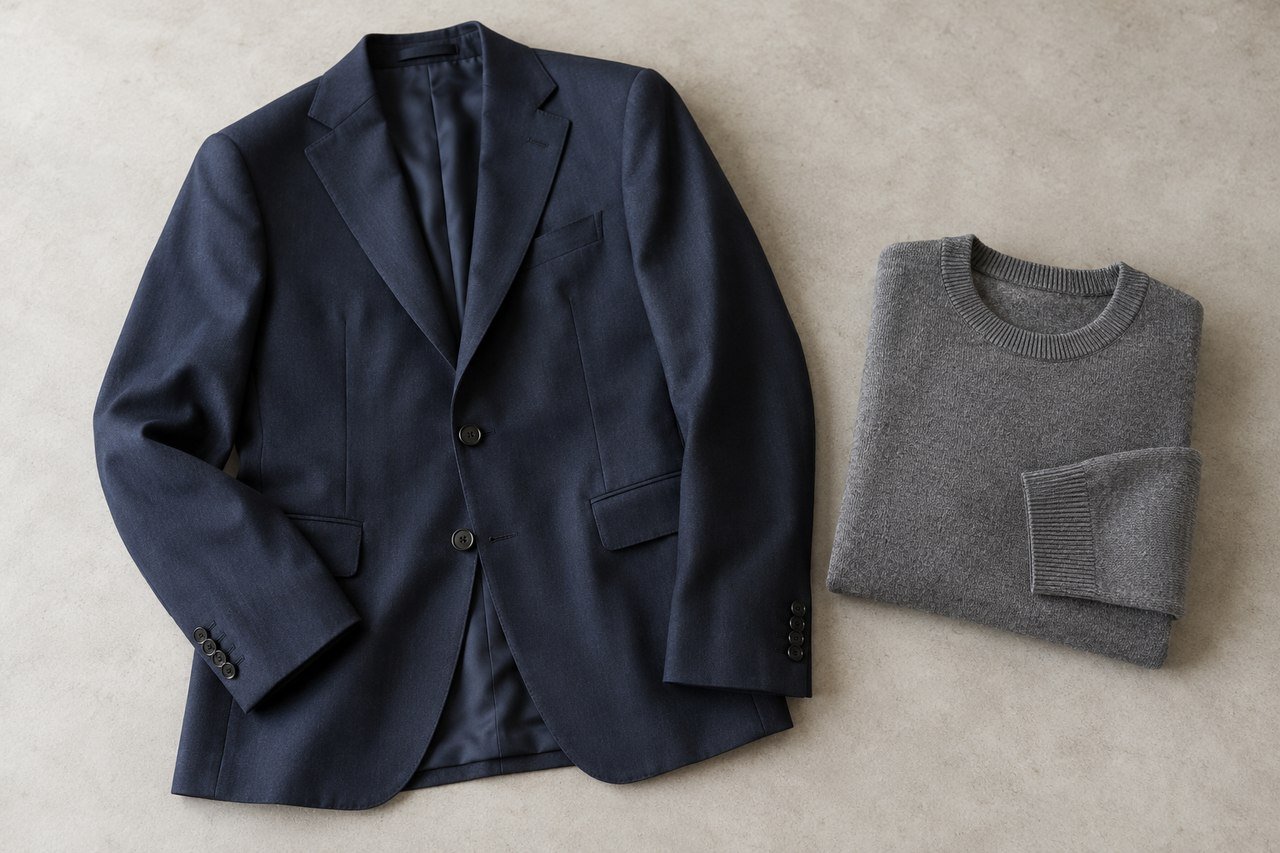
Choose the suit or jacket most likely to sit beneath the coat. If you regularly wear knitwear too, include the actual piece you have in mind. Calling it a winter sweater won't tell the tailor as much as seeing what you plan to wear.
Think about occasional combinations as well as your usual one. You might mainly wear the coat over a business suit but sometimes want it over a jacket and knitwear. Tell the tailor which combination matters most and which is an occasional preference. That gives you a more useful starting point than asking for a coat that accommodates every possible outfit.
For an observation exercise, try the same coat over a shirt alone, then over the shirt and jacket you intend to wear. Notice what changes at the closure, around the shoulders and through the sleeves. This comparison doesn't prove that the coat is incorrectly cut. It helps you describe how adding your jacket changes the experience.
Fasten it before deciding
An open coat can give you a first impression of the layered outfit, but it doesn't answer every question about fit. Fasten it as you expect to wear it and let your arms rest naturally. Notice whether bringing the fronts together feels easy, whether anything feels compressed and whether the jacket underneath remains comfortable.
Look at the shape you see, too. You may prefer a close outline or a more relaxed one. Neither preference tells you, on its own, whether the coat has enough room for your clothes underneath. A silhouette you like still needs to work when you move.
If you see pulling or feel pressure, point it out without trying to identify the alteration yourself. The place where you notice tension is useful information; it isn't a diagnosis of which measurement, seam or part of the pattern should change.
Move as you would during the day
Take the coat beyond a still pose. Walk a little, reach forward naturally and sit down in the way you normally would while wearing it. Use ordinary movements rather than stretching into an extreme position to test it.
Pay attention to a few distinct things:
- Arms and shoulders: What changes when you reach forward? Describe where you feel held back or where the clothes underneath seem to catch.
- Fastening: How does the closed coat feel as you move? Notice tension without forcing the fronts together.
- Seated comfort: What feels different when you sit? Mention whether you would normally keep the coat fastened or open it.
- The jacket underneath: Does it still feel comfortably arranged, or do you find yourself repeatedly adjusting it?
For a hypothetical example, a coat might feel comfortable with your arms at your sides but restrictive when you reach forward over your usual suit jacket. Tell the tailor which outfit you wore and what movement brought on the sensation. That is more precise than simply describing the coat as too small.
You don't need to turn these observations into a pass-or-fail score. Bring the points that matter to your routine into the fitting conversation.
Discuss the shape alongside the room
The aim is to find a shape you enjoy wearing over the layers you need. If you like a neat outline but also want room for an occasional heavier combination, explain both. Ask how the proposed coat could address them and what differences you might notice between outfits.
Sizing up alone doesn't answer that question: a size label cannot show how the complete outfit will feel or whether you'll like its proportions. Equally, a close-looking coat isn't automatically too restrictive. Try it with your clothes and judge appearance and comfort together.
Keep weather questions separate from this fit check. Comfortable layering doesn't establish a temperature rating or waterproofing. If warmth or protection from rain matters to your routine, discuss the intended cloth and its suitability directly.
Bring the outfit into the conversation
Isaac Ely's bespoke overcoat service considers your intended layers when developing the cut and balance, with fittings to refine fit and proportions. Ask how your usual outfit and any heavier alternatives should be included in that process.
Before a visit, the guide to preparing for a tailoring consultation can help you gather a few clear notes. When you contact Isaac Ely, explain which layers you'd like the coat to accommodate and confirm what to bring. Keep those same layers available for the fitting discussion, so everyone is assessing the outfit you intend to wear.