Fit & Proportions
Choosing a Suit for Long Days at a Desk
Plan a work suit around the time you spend seated, the meetings you attend and the things you carry. Separate jacket and trouser observations, account for your usual layers, and take clear priorities into the fitting conversation.
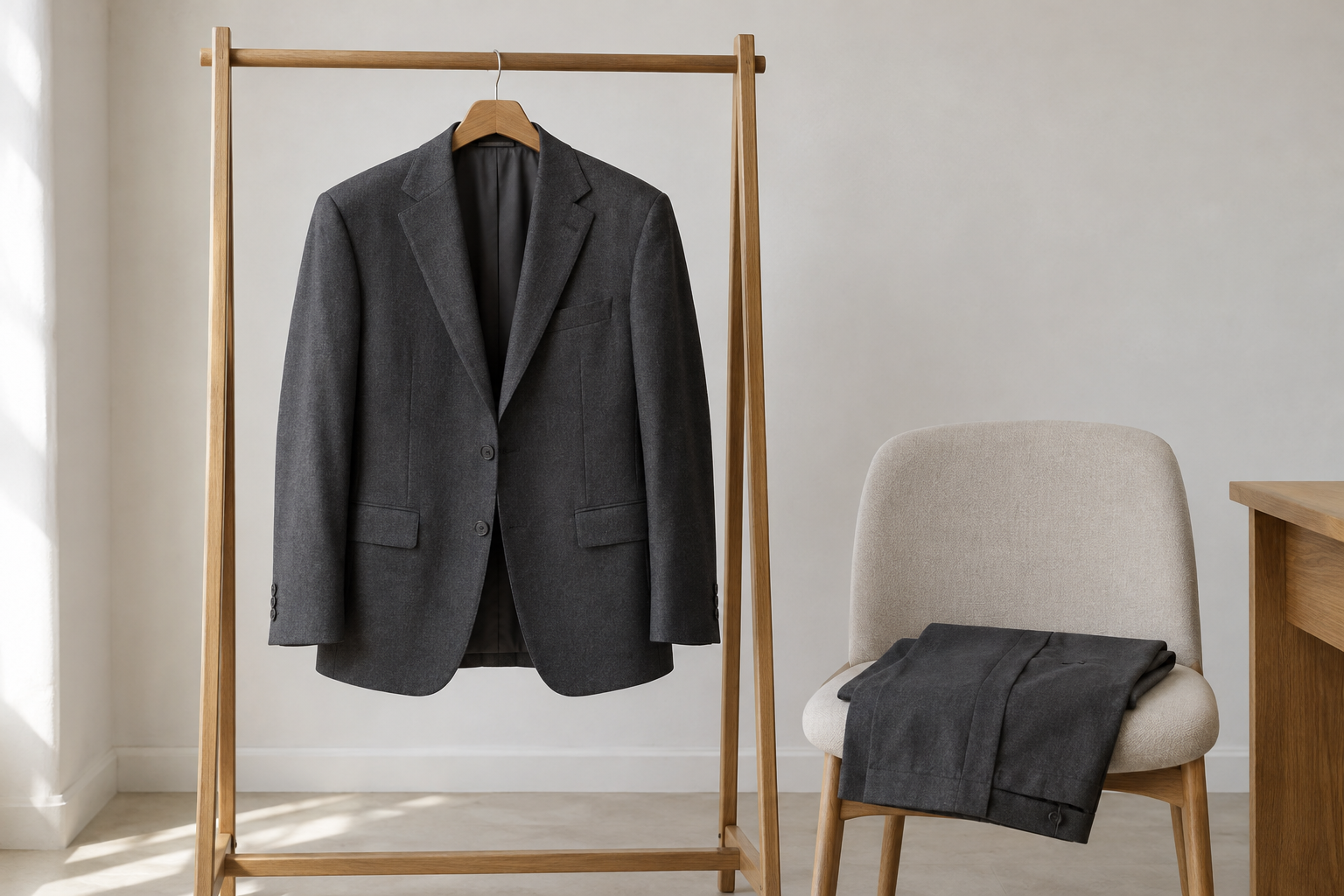
If your jacket comes off as soon as you sit at your desk, that's useful information when planning a suit. So is keeping it on through calls, reaching for a keyboard or moving between your desk and client meetings. A comfortable suit for desk work starts with explaining that routine, including the moments when your current clothes demand attention.
When Isaac Ely makes bespoke suits for work, the consultation includes observing how you stand and move through your day before an individual pattern is drafted. A short written brief about your routine, prepared before you settle the suit's appearance and details, gives that conversation more to work with than “I sit for much of the day.”
Describe a working day, not an ideal pose
Think through a representative day from arriving at work to leaving. Are you seated for long stretches, or repeatedly getting up? Do you type most of the time, work with papers beside you, or turn to speak with people? Mention the ordinary reaches and changes of position that recur.
Give an approximate sense of duration in your own words. A short seated meeting and a morning spent at a keyboard can matter differently to you. If a garment becomes bothersome only after a while, say that rather than trying to recreate the whole workday in one brief fitting.
Include the transitions. Perhaps you leave the jacket on the hanger during focused work, then put it on for meetings. Perhaps you remain fully dressed because calls arrive without warning. That tells the tailor how much of the day the jacket is actually worn, and how often you switch between shirtsleeves and the full suit.
Make the jacket observations specific
Use a jacket you already know as a reference for what you like and what interrupts your work. Notice whether you keep pulling down a sleeve, rearranging the front or settling the shoulders after reaching forwards. Record the task and the area involved and leave the cause for the tailor to assess; the same goes for every observation in your brief.
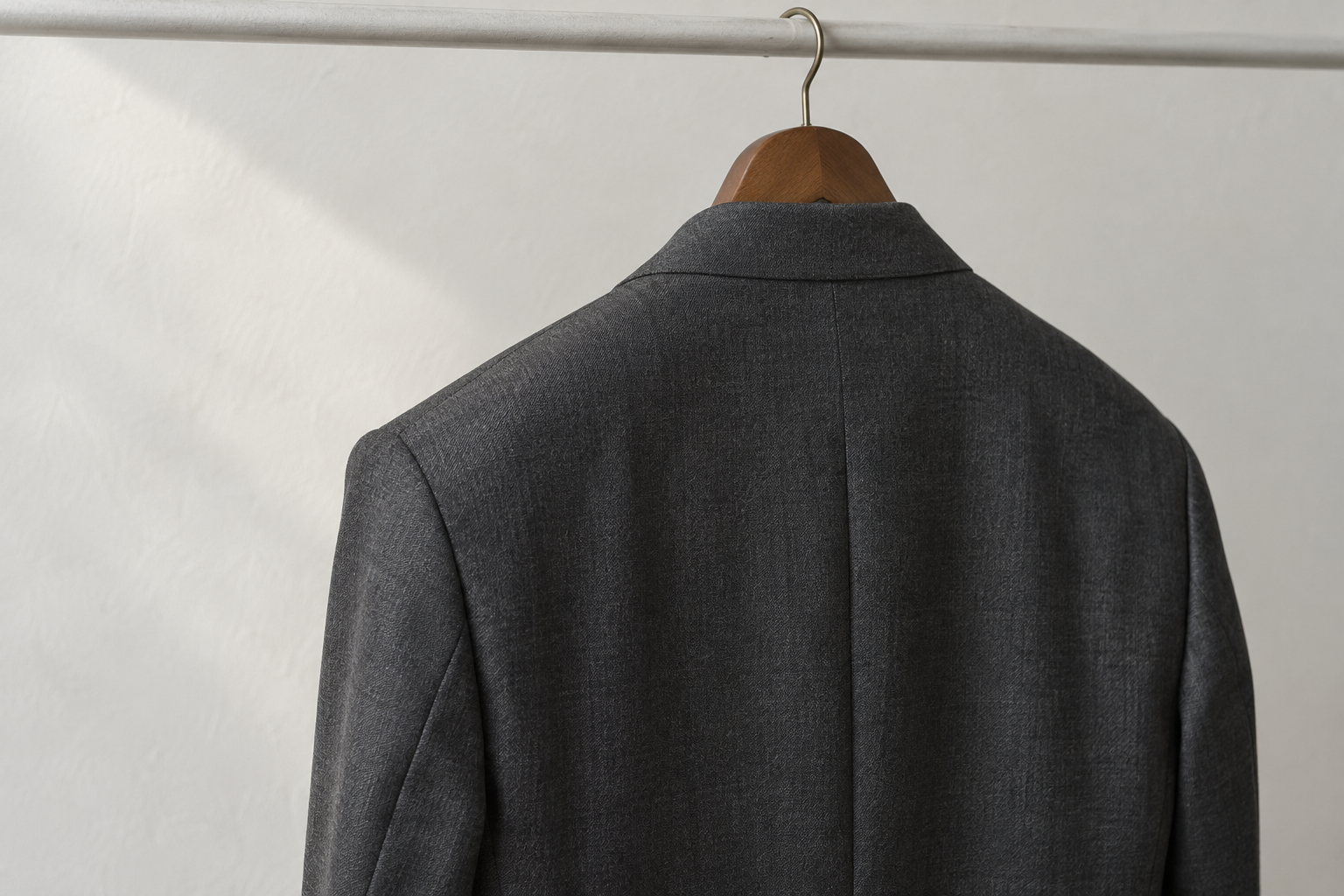
Some concerns are visible, such as cloth bunching near the front; others, such as tightness through an arm, are something you feel but can't easily show. Mention whether it happens while typing, reaching for a nearby item or putting the jacket back on. Also note a part of the jacket you want to preserve, such as its standing outline.
The suit fitting movement chxecklist offers a way to demonstrate familiar activities at a fitting. Use it alongside your workday brief: the checklist shows how the suit moves, while the brief explains how long and how often each movement matters.
Give the trousers their own line in the brief
Removing the jacket doesn't remove the need for comfortable trousers, and if the jacket stays on the chair, the trousers and shirt are what colleagues see for much of the day. Keep their observations separate: where pressure develops, whether the cloth catches and what you adjust after standing. A jacket concern and a trouser concern may appear during the same task without having the same cause.
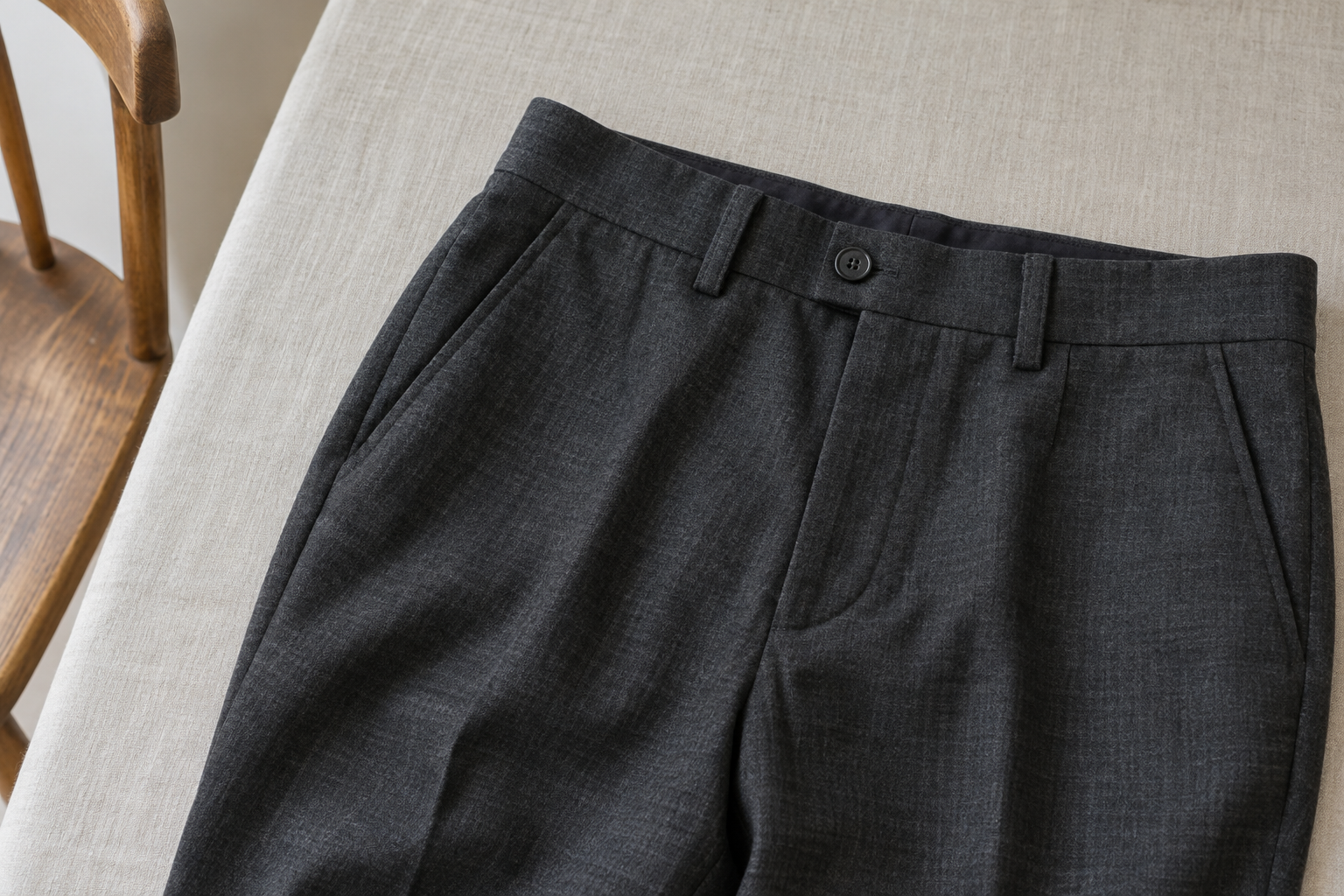
For example, you might write: “The waistband feels comfortable on the walk in, but presses at the front during desk work.” If you also need to settle the legs after getting up, include that as a separate observation.
For a more detailed record, see the guide to trousers that pull when you sit. Bring the useful findings back to the suit discussion: which seated experience needs attention, what already works when standing and what you would like the fitting to assess.
Include the layers you actually keep on
Name the shirt and any knitwear you normally wear beneath the jacket. If you add a sweater on some days but use only a shirt on others, explain both combinations and which is more frequent. Trying the suit at a fitting over a different shirt, or without your usual knit, may leave an important part of your routine unexamined.
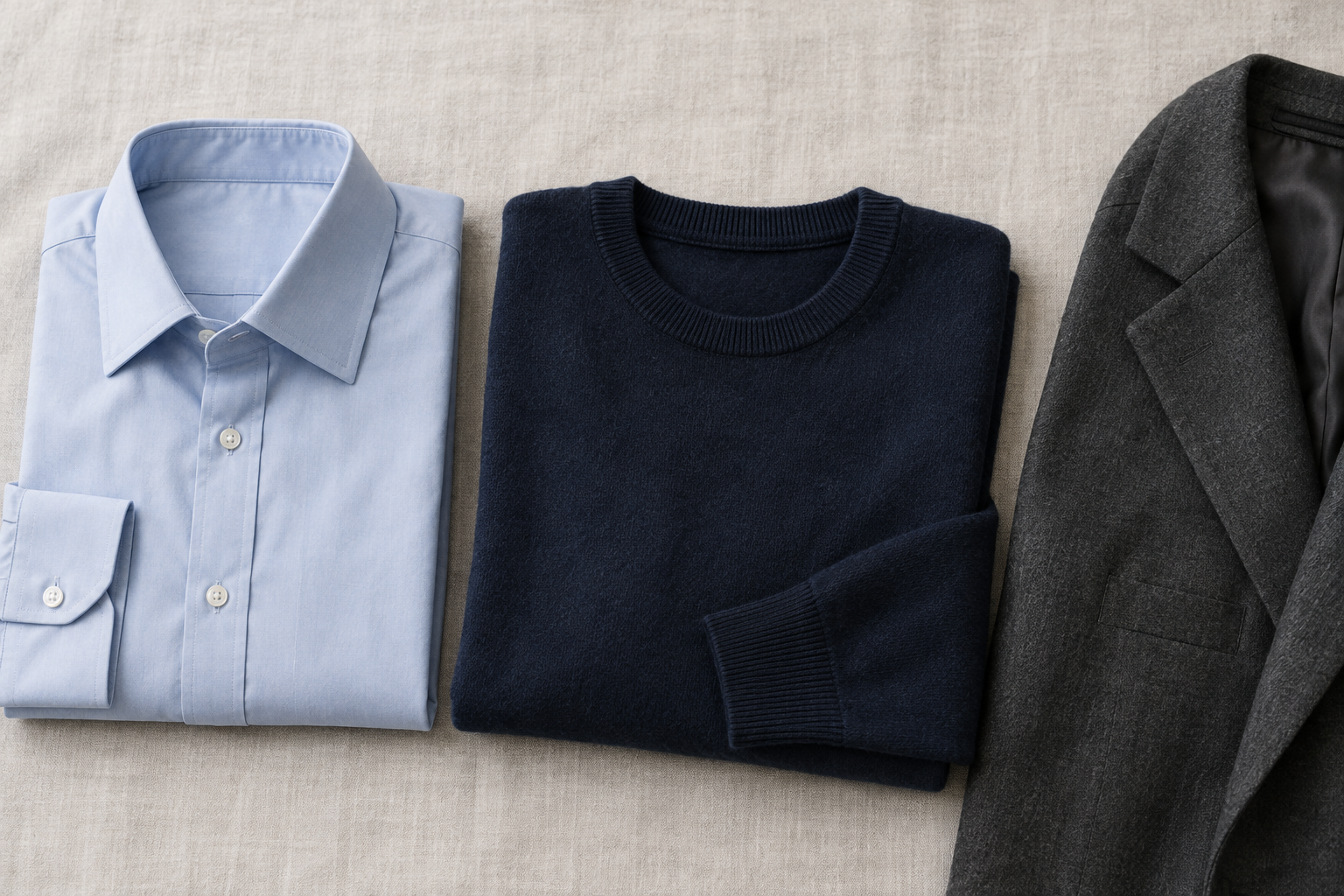
Ask how those layers can be considered alongside the silhouette you prefer. If a clean outline matters most in meetings but the keyboard is where you spend the morning, say which comes first. Mention how warm your office usually is, how many days a week you expect to wear the suit, and whether creasing across the lap or at the elbows bothers you. Those details help when you look at actual cloth options together, since no single fabric suits every kind of day.
Account for the things in your pockets
List what normally stays on you: a phone, wallet, keys or another small work item. Say where you carry it and whether it stays there while you sit. A phone placed on the desk all morning is a different situation from one kept in a trouser pocket until you leave the office.
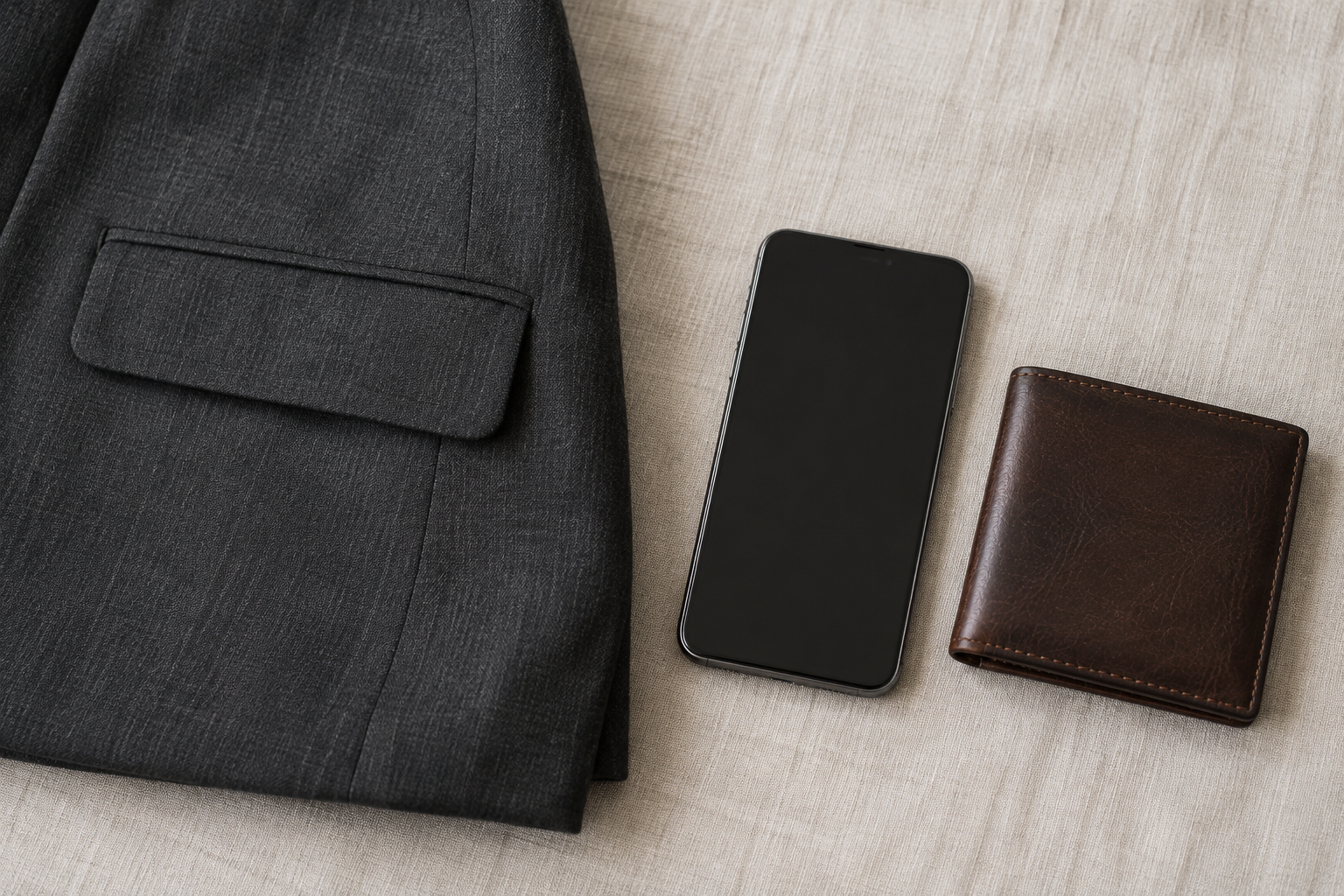
If an item seems connected with pulling or repeated adjustment, say so, and discuss practical pocket use alongside the outline you prefer.
Decide what matters at the desk and in the meeting
Suppose your morning involves sustained keyboard work and your afternoon includes client meetings in another room. For that hypothetical routine, a short commissioning brief might read:
- At the desk: jacket on the chair back for most of the morning; shirt only, with a knit on colder days; the waistband presses at the front after a long stretch of typing.
- During meetings: jacket on and fastened when standing to speak, then sitting again for discussion; a clean outline from the front matters here.
- Between rooms: the trousers need settling after standing, and the sleeves catch when putting the jacket on quickly.
- Throughout the day: phone in a trouser pocket; keys and wallet left on the desk.
Then choose the most important point. In this example, it might be the waistband at the desk, with a slightly less close outline acceptable in exchange. Explain any other compromise you would accept and ask what the fittings can assess. The aim is to agree practical priorities, then let the fittings show what the garment can reasonably offer.
Take the routine into the conversation
When you discuss a work suit with Isaac Ely, send the short routine and the main garment concern. Ask whether an existing suit, your usual shirt or photographs would be helpful. Once you've spoken, a fitting time can be arranged.
Before the fitting, agree which parts of the workday you can demonstrate and which you'll need to describe from experience. Bring those priorities to the fitting so they guide the assessment alongside the appearance you want.