Fit & Proportions
Choosing Overcoat Length for Your Daily Routine
Choose an overcoat length by trying the clothes, shoes and movements that make up your day. Compare coverage, seated comfort, pocket access and the full outline, then take specific preferences into a fitting without relying on height-based rules.
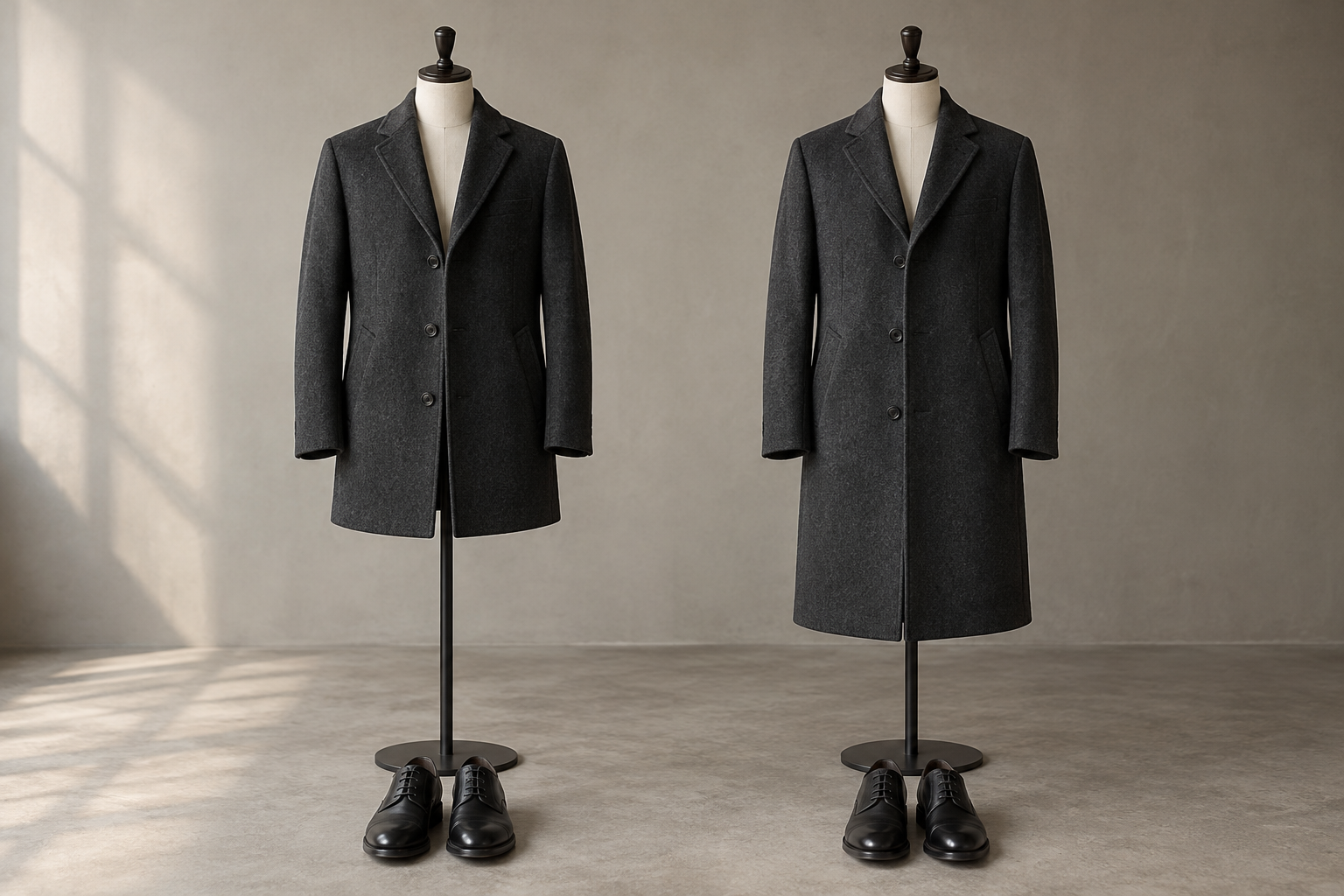
Where an overcoat ends affects how much of your jacket it covers, how it settles on stairs and car seats, and how it looks with your shoes. The useful question is how a length works through your day: with the clothes you'll wear underneath, as you walk and when you sit.
Isaac Ely's bespoke overcoat service lists length among the details chosen for each coat, alongside lapel shape, pockets, lining and cloth, and treats your daily routine and what you wear underneath as part of how the coat is cut. You won't have the finished coat while you decide, so work with what you can try. Before a fitting, a coat you already own can serve as a reference for what you like or would change. At the fitting, samples where available and the muslin, a trial version of the coat, let you judge length on the garment itself.
Start with what you want covered
It helps to have words for the options. Overcoat lengths are usually described by where the hem falls: around mid-thigh, just above the knee, at the knee or below it. Use these to describe what you like, not as a ranking. Height-based rules of thumb can give you a starting range, but the checks below will tell you more about how a particular length works for you.
Put on the jacket or knitwear you expect to wear underneath. Look at the relationship between its lower edge and the coat's hem, from the front and side. Notice what remains visible when the coat is open and what changes when you fasten it. Decide whether you like that relationship rather than relying on a rule that every coat must end at one particular point.
If the coat will serve several outfits, compare the most important ones. A jacket you wear to work and a shorter knit may create different outlines beneath it. Name the combination you want to prioritise, and mention the others so they can be considered during the fitting conversation.
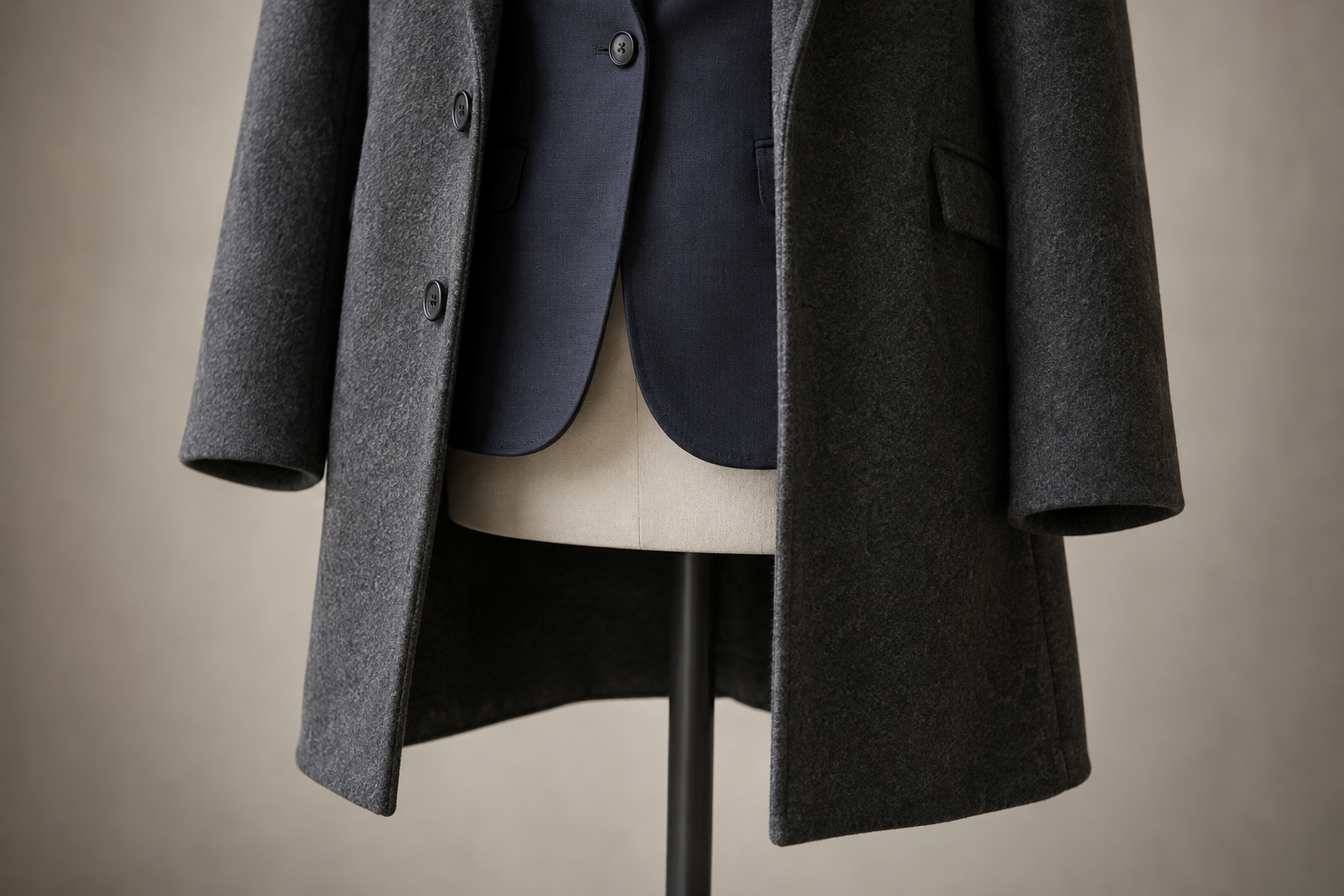
Coverage is worth describing plainly: do you like more of the outfit enclosed, or would you prefer a shorter outline? You can have a visual preference without turning it into a claim about warmth. Hem position alone doesn't establish weather protection; discuss the particular cloth and your intended use separately.
Check comfort when walking, sitting and reaching for pockets
At the fitting, walk at your normal pace, turn and sit on a chair. Notice whether the hem gets in your way and how much fabric you need to arrange when you sit. Try sitting with the coat open as well as fastened. If stairs, car journeys or public transit are part of your day, explain any difficulties you've had with other coats so the tailor knows what to consider.
Check the pockets while you're standing and seated. Reach for them as you normally would and notice whether you have to lift or pull the coat aside. Tell the tailor which pockets you expect to use and what you usually carry. If the reach feels awkward, discuss the pocket position and overall fit before deciding to change the length.
It also helps to separate a length preference from a general fit concern. If something pulls across the upper body or catches over your jacket, the guide to how an overcoat should fit over a suit explains what to observe with the full outfit. Tell the tailor where and when you notice discomfort instead of attributing every restriction to length.
Imagine two people of the same height choosing coats: one usually travels by car, while the other walks much of the way. In this hypothetical comparison, the driver might notice how the back of the coat settles in the seat and whether it needs gathering when getting in and out. The walker might pay more attention to how the coat moves with a longer stride, on stairs and under a bag strap, and how much coverage they want outside. Either may still choose a shorter or longer coat. Their routines identify the useful checks, not a predetermined answer.
Step back and look at the whole outline
Wear your usual shoes or boots when comparing lengths. Look at how much trouser leg is visible and how the coat, trousers and footwear sit together. A hem that appeals to you in isolation may look different once you see the complete outfit. Choose the balance you enjoy seeing with those clothes.
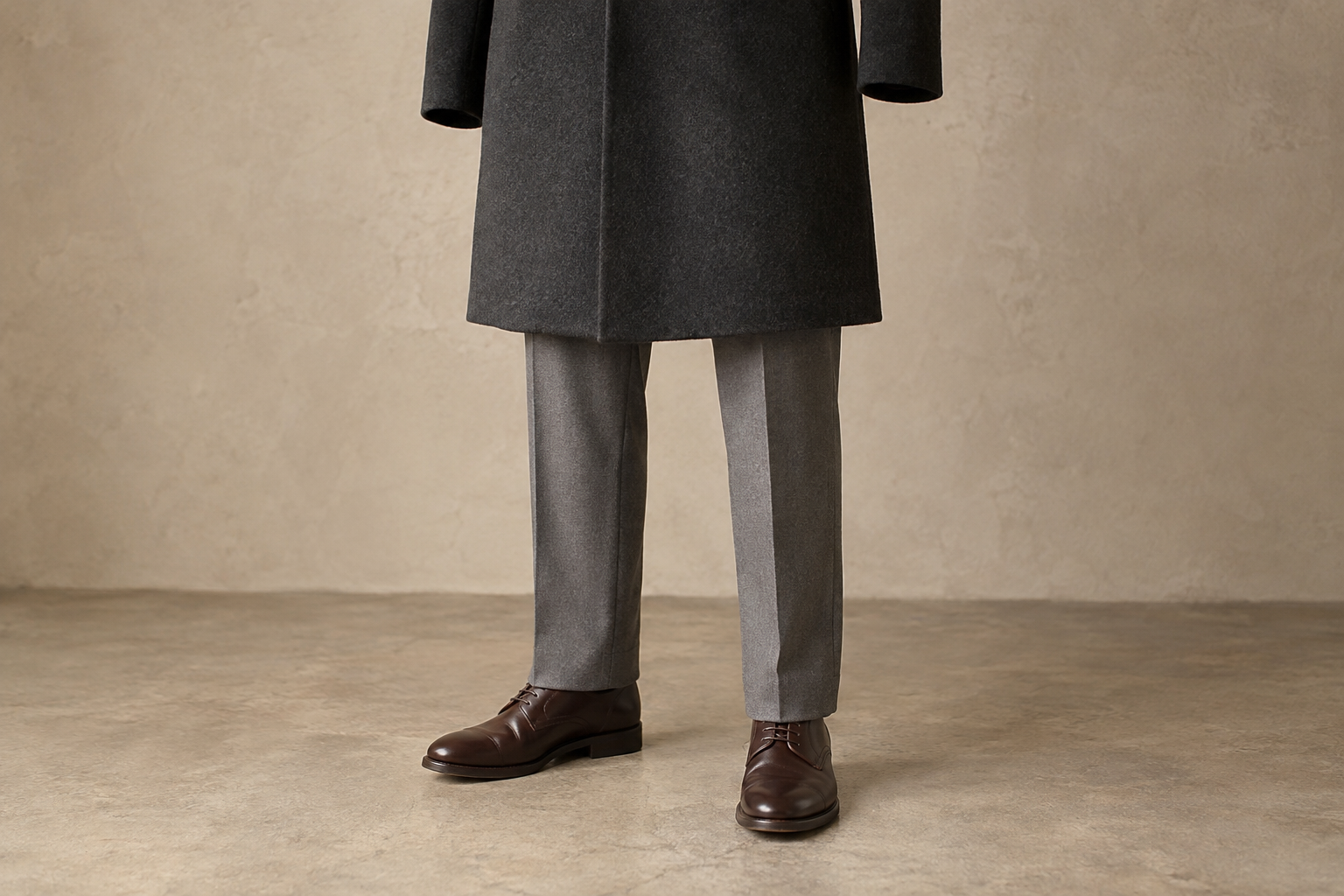
Look at the shape through the body as well as the bottom edge, and ask how the proposed length would relate to the chosen silhouette. Isaac Ely uses the muslin to refine fit, balance and proportions before the final cloth is cut, so ask how your length preference can be assessed at that stage.
If you use a photograph to explain what you like, point to the relationship you mean: the amount of trouser showing, the outline around the legs or the way the coat covers the jacket. Treat it as a reference for discussion. A photograph of someone else doesn't supply your finished hem measurement.
Keep a few notes for the fitting
Use the same short set of questions for each option you consider. Note which you preferred, what prompted that preference and anything you still want to ask.
- Underlayers: Which outfit did you try, and did you like the relationship between the hems?
- Walking: What did you notice about the lower coat during ordinary movement?
- Sitting: Where did the fabric settle, and did you need to rearrange it?
- Pockets: Were the pockets comfortable to reach in the way you'd use them?
- Overall appearance: Did you like the outline with your usual trousers and footwear?
Bring the differences that matter most into the conversation. When you discuss your overcoat with Isaac Ely, explain how you usually get around, your intended layers and preferred outline, and confirm what would be useful to bring. Leave the final length open for assessment with the garment and outfit together.