Fit & Proportions
A Suit Fitting Checklist for Sitting, Walking and Reaching
A suit needs to work when you sit, walk and reach. Use familiar movements to describe what changes in the jacket and trousers, then discuss comfort, appearance and the preferences you want to preserve at your fitting.
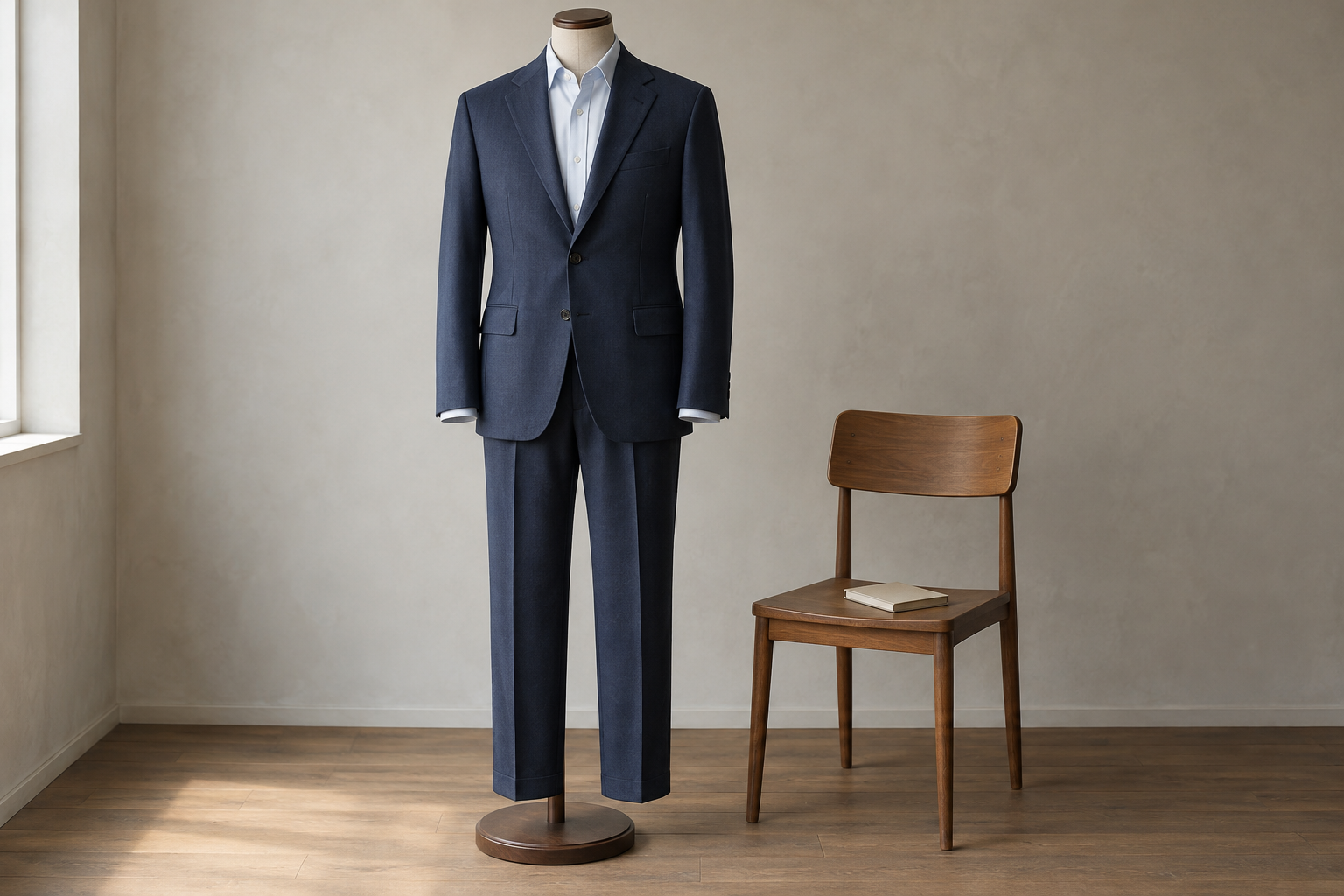
A suit can look settled in the mirror and feel quite different once you pull up a chair or reach across a desk. At a fitting, those ordinary movements are worth discussing alongside the standing outline. The aim is to explain what happens during your day, so comfort and appearance can be considered together.
That conversation is part of the approach behind Isaac Ely's bespoke suits: observing the wearer's posture, proportions and movement before developing an individual pattern. You don't need to identify a pattern correction yourself. A few specific observations can give the tailor something useful to assess.
Choose a few movements from your day
Think about where you expect to wear the suit. A day of desk work, a presentation and an evening reception involve different amounts of sitting, walking and reaching. Choose familiar activities you can demonstrate comfortably, rather than exaggerated tests.
Before moving, stand as you normally do, with your arms relaxed. Notice how the jacket and trousers feel separately. Is there an area you already want to discuss? Is there something about the shape that you particularly like? This starting point helps you describe what changes once you move.
Use the shirt, shoes and usual layers you expect to wear with the suit where practical, and ask ahead what would be useful at the fitting. Tell the tailor if you normally carry a phone or wallet in a particular pocket. Keep those details consistent while comparing movements; changing several things at once can make your observations harder to explain.
If the garment is at an unfinished fitting stage, ask which movements are appropriate before trying them. The checklist is a conversation aid, not a test you have to complete regardless of the garment's condition.
Sit as you would at work or dinner
Sit in an ordinary chair, then bring your arms towards the position you'd use at a desk or table. Let the tailor know how you usually wear the jacket while seated, including whether you leave it open. Ask how to assess it in that position rather than assuming every jacket should be fastened for every part of the check.
Pay attention to when a sensation begins. Does the jacket feel restrictive as you bring your arms forward, or only once you settle? Do the trousers press at the waistband, feel close across the seat, or catch around the thighs? Describe the location and activity without assigning a cause to either garment.
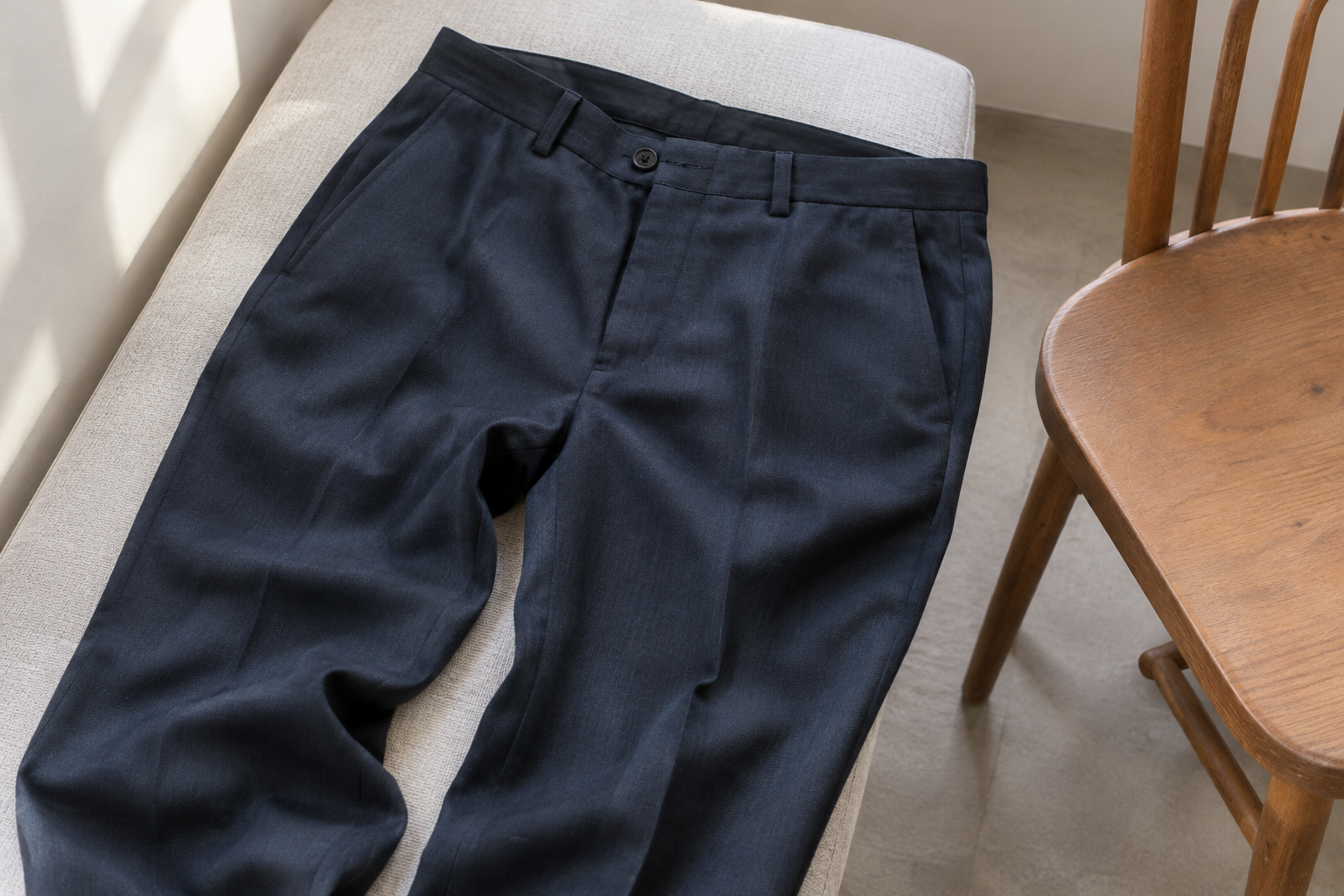
If the concern is mainly with your trousers, the guide to trousers that pull when you sit offers a more detailed standing-and-seated observation record. Keep the whole suit in view here: a comfortable pair of trousers doesn't answer whether the jacket lets you work at the table comfortably.
Stand up again and notice whether both garments settle on their own. For the jacket, mention whether you find yourself pulling the front or sleeves back into place; the trouser guide above covers the seated-to-standing change in more detail.
Walk, turn and reach without exaggerating
Take a short walk at your usual pace and turn naturally. Notice whether you shorten your stride, keep adjusting the trousers or feel the jacket shifting in a way that bothers you. Include what feels comfortable, too. A fitting discussion is more useful when it identifies qualities to preserve as well as concerns to investigate.
Try a modest reach that belongs to your routine, such as taking a notebook from a nearby shelf or bringing your hands towards a keyboard. Explain the activity you have in mind. An overhead stretch you rarely make in a suit may tell the tailor less about your priorities than the small forward reach you repeat throughout the day.
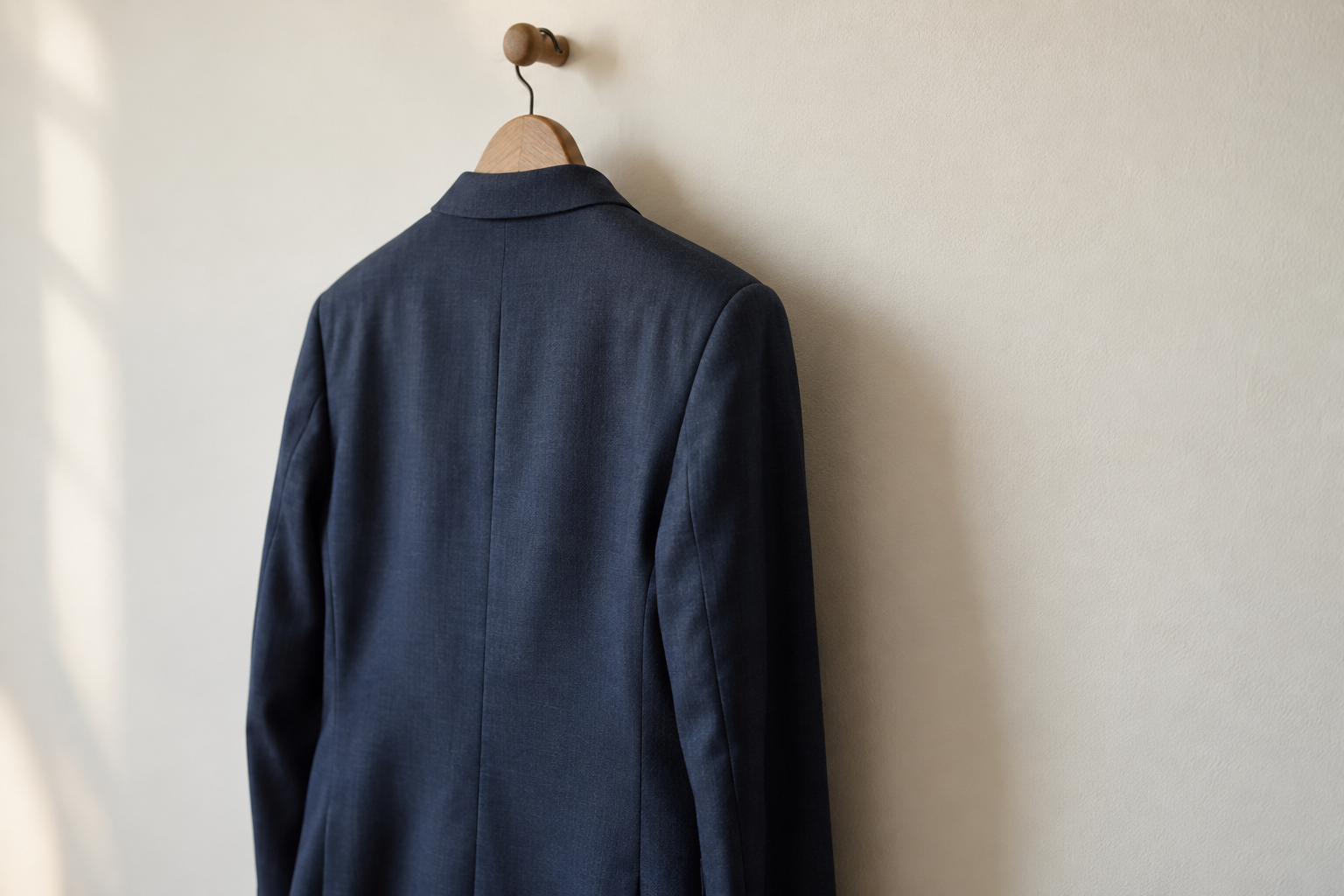
A tailored jacket isn't athletic clothing. Cloth shifting during a reach may not bother you, while a restrictive sleeve might interrupt an ordinary task. Tell the tailor what you notice and ask what can reasonably be refined.
Keep jacket and trouser notes separate
Suppose you're preparing a fitting sheet for a suit you expect to wear at work. You could use three short entries, each with a jacket note and a trouser note. These hypothetical observations show the level of detail that's useful:
- Sitting at a desk: the jacket feels close across the upper back when your hands move forward; the trousers feel comfortable while seated.
- Walking between rooms: the jacket feels settled; the trouser cloth catches near one knee after you turn.
- Reaching to a nearby shelf: you notice the jacket lifting; you don't notice a change in the trousers.
These are descriptions to investigate, not diagnoses or instructions to add or remove cloth. Record whether the issue is something you feel, something you see, or both. You can also note whether it happens every time you repeat the activity.
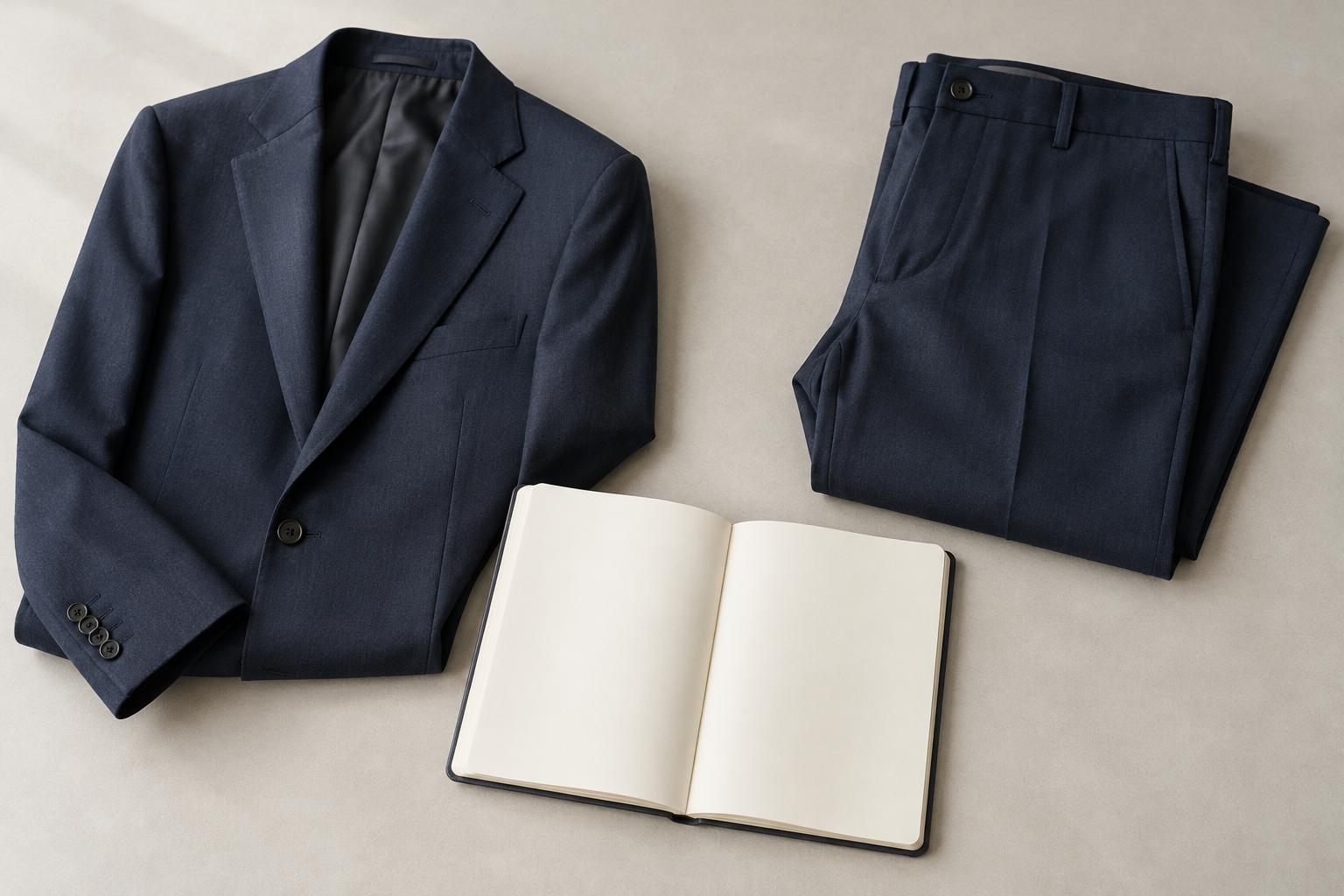
Short notes are enough. You don't need a score for each movement, a catalogue of every crease or a photograph that proves the problem. If something is difficult to describe, demonstrate the ordinary movement and point out where you notice the change.
Explain what matters most to you
Bring your preferred appearance into the same discussion. You might like a close outline but want to understand how it will feel during seated work. Or you might put ease of movement first while still wanting the jacket to look composed when standing. Neither preference needs to be presented as the correct choice for everyone.
Ask which refinements are feasible for the garment and what else they could affect. A still photograph won't answer every comfort question, and a single pulling sensation doesn't establish which measurement should change. Let the tailor assess the jacket, trousers and intended layers together, then agree what you should compare at the next fitting.
Start with the activity that bothers you most
If you'd like to raise these questions before a fitting, you can discuss your suit fitting questions with Isaac Ely. A one-line note is enough: the activity, the garment and what you noticed, such as the jacket feeling restrictive when you work at a desk, plus one preference you want to preserve. You can also ask what to bring. Sending the note starts the conversation; the appointment itself is arranged once you've spoken.
Keep the same note with you at the fitting. It gives the conversation a specific place to begin, even if you haven't found the tailoring words for it yet.