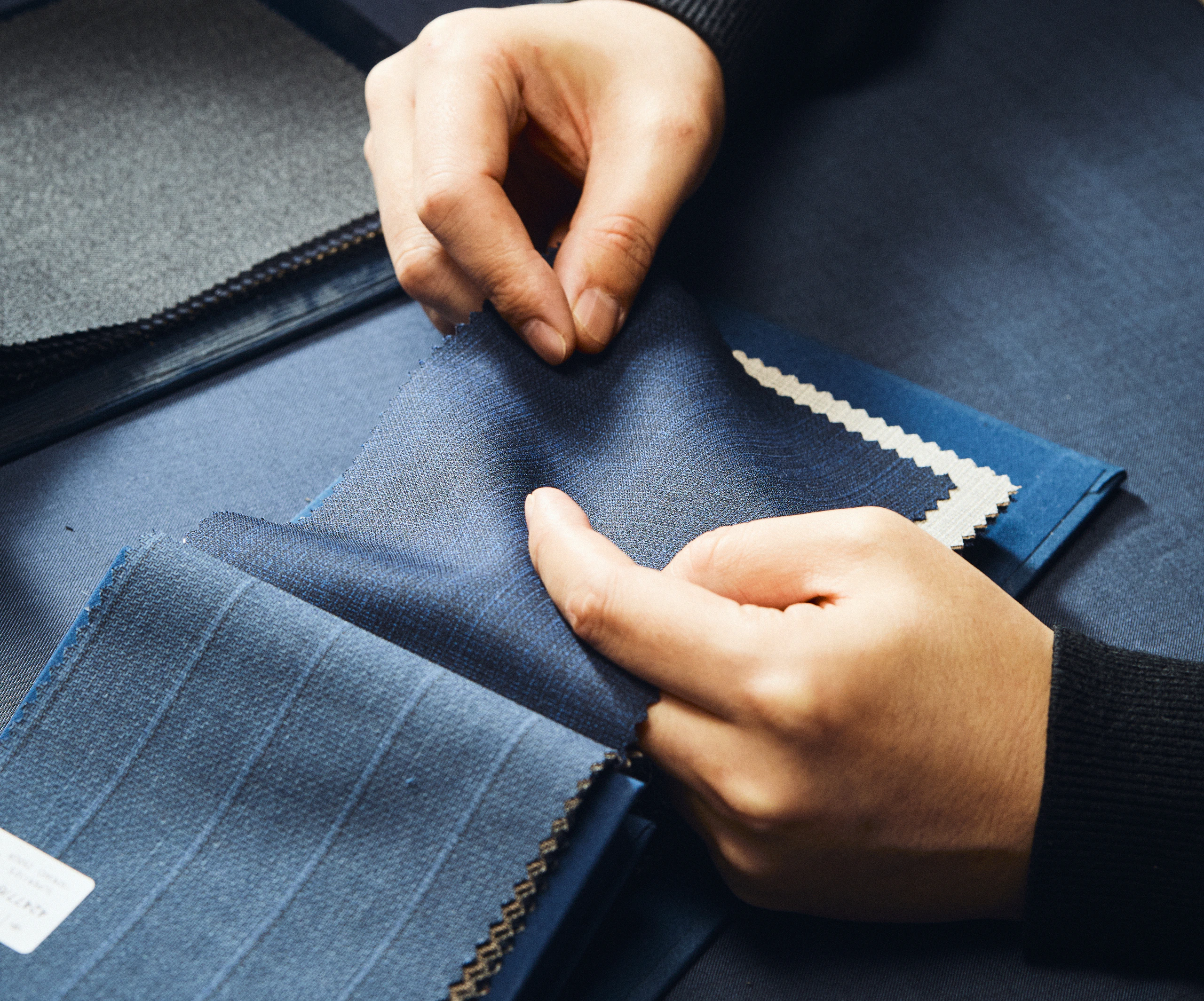
Fit & Proportions
Why Trousers Feel Comfortable Standing but Pull When You Sit
Trousers can feel comfortable on a walk yet pull at your desk. Learn why sitting changes the fit, how to record what changes at the waistband, seat, thigh and leg, and how to share those notes and your preferences with a tailor.
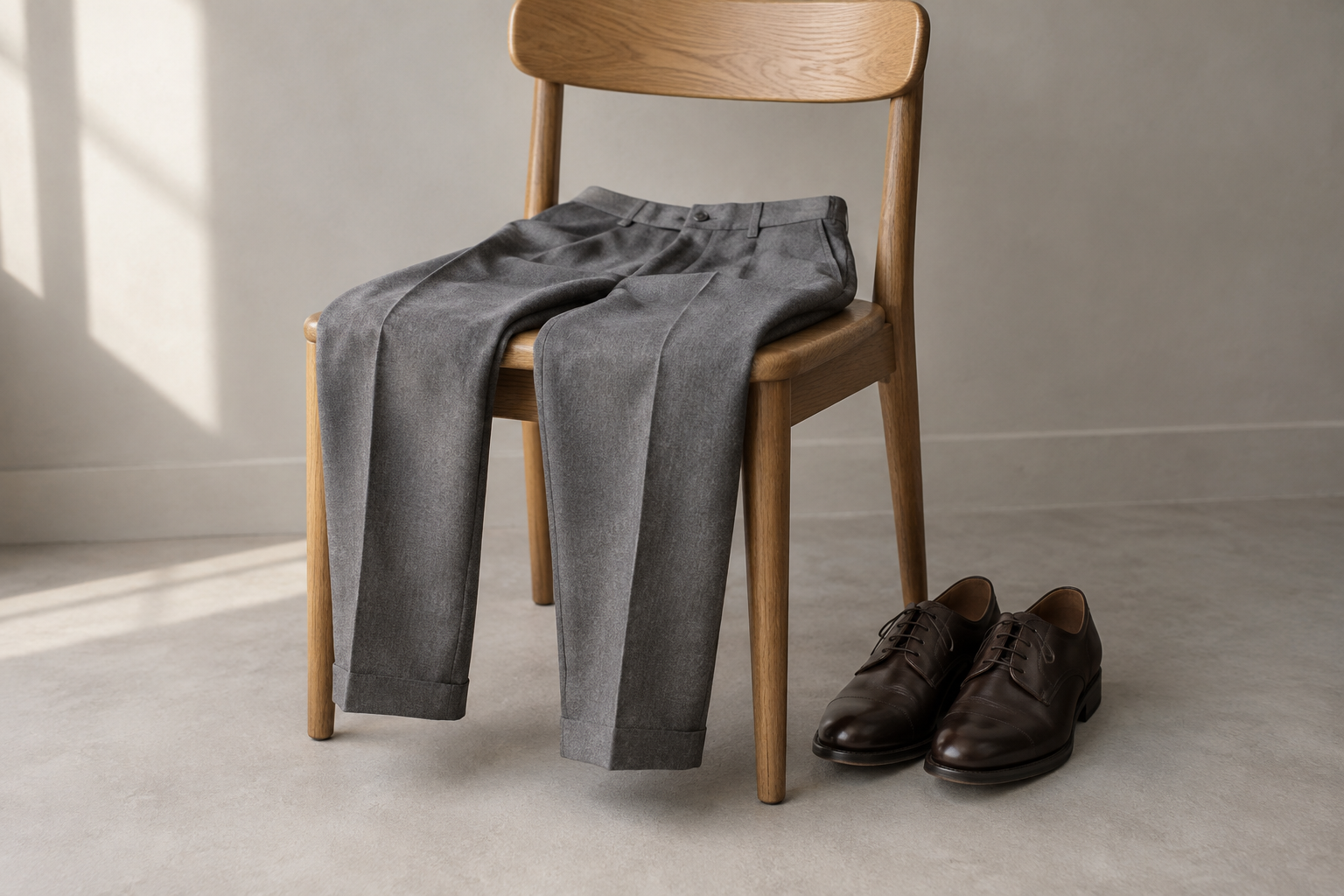
Trousers can feel comfortable during a short walk and begin to pull as soon as you sit at a desk. The useful question is what changes between those two positions: where you feel pressure, whether the cloth catches, and what happens when you stand again. That gives a tailor more to assess than a standing mirror check alone.
Sitting changes the position of your hips and knees. As your hips bend, the cloth at the back has to cover a longer distance across the seat, and your thighs widen slightly as they rest on the chair. Trousers that feel balanced while you stand may leave too little room for that change, and the tension can be felt at the waistband, across the seat or around the upper thigh, often in more than one place.
Because those areas work together, a sensation at the front doesn't, by itself, tell you which part of the cut needs changing, so fit is usually judged as a whole. Isaac Ely's bespoke trousers begin with a pattern drafted around how you stand and move, considering waist, seat, rise and leg alignment, and are refined through fittings.
Try the movement you actually make
Use an ordinary chair and sit as you normally would. Wear the same shoes throughout the check and keep your usual pocket contents in place to begin with; you can test without them later. If you normally wear a belt, keep that consistent too. Changing several things at once makes it harder to tell what affected the experience.
Start standing, then take a short walk. Notice whether the waistband stays where you expect, whether the seat and thighs feel comfortable, and whether the legs move freely. You don't need to judge every fold. Establish what feels satisfactory before you sit, so you can describe the change clearly.
Lower yourself into the chair without adopting a pose for the mirror. Notice whether pulling begins on the way down or only once you're seated. Is the waistband pressing at the front? Does the cloth feel close across the seat or upper thigh? Can you sit in your usual position without repeatedly adjusting the trousers?
Stand again and pause before smoothing the cloth. Note anything that stays caught around the knee or lower leg, and whether the waistband returns to its earlier position. Then adjust the garment if you need to. There's no benefit in remaining uncomfortable just to make a longer record.
Where Your Trousers Pull and What It Feels Like
A few plain terms can make the conversation easier. The waistband is the band around the top of the trousers. The seat is the area across the back of the hips and buttocks; the thigh is the upper part of each leg. Rise refers to the distance from the crotch seam to the waistband, considered at the front and back.
Those words help locate a concern, but they don't turn it into a diagnosis. You can describe pressure at the front while seated without deciding that the front rise must be changed. Ask the tailor to assess how the waistband, seat, rise and legs work together before proposing an adjustment.
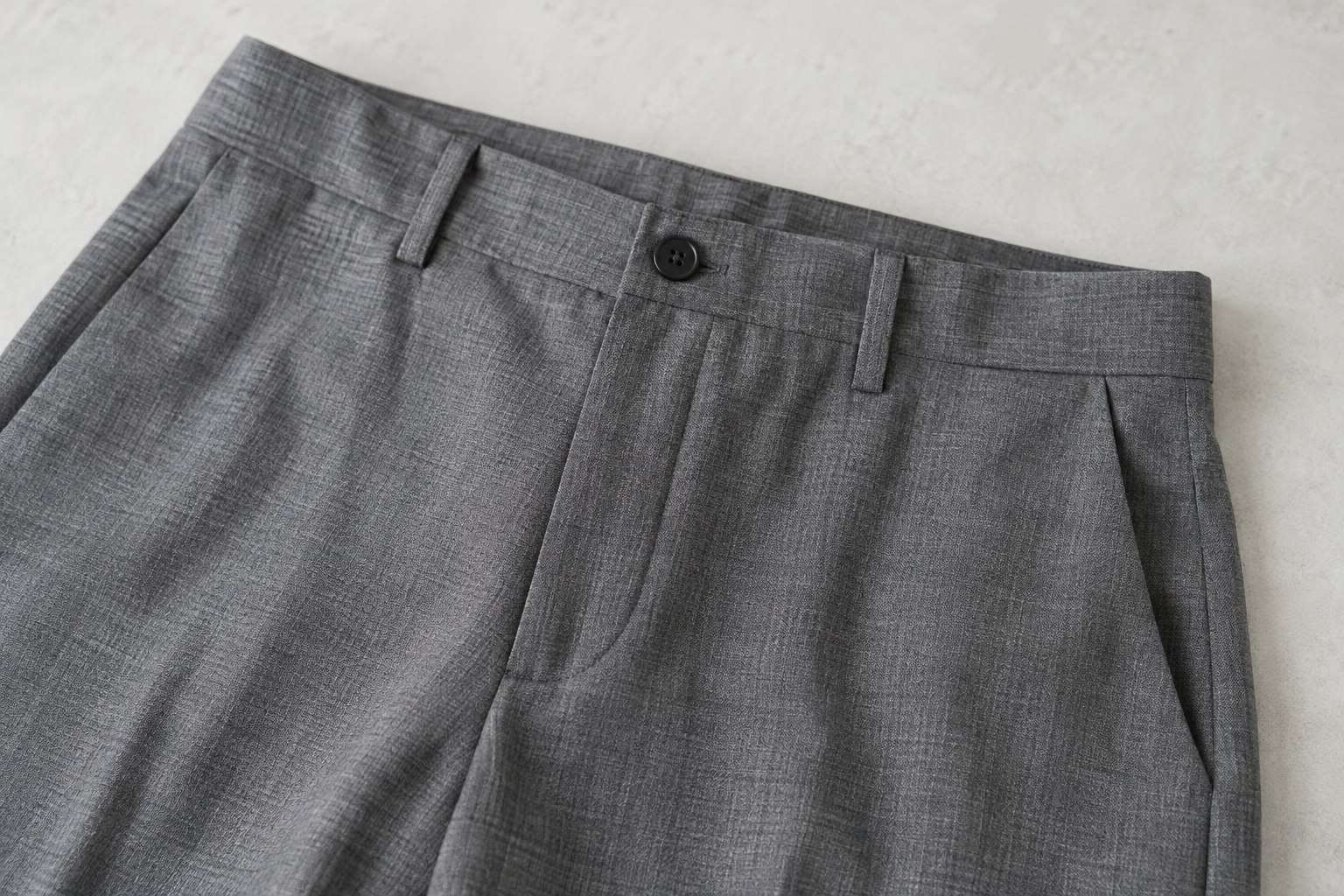
Separate what you feel from what you see. A fold visible in a photograph may not bother you, while pressure you feel in a chair may be difficult to show. Both observations are useful. Describe the location and activity, and say whether your concern is discomfort, appearance or both.
Keep a short standing-and-seated record
Take a hypothetical case: the trousers feel comfortable on a short walk, pull at the front while you sit, and catch behind the knee when you stand. Keep all three observations together. Recording only the seated pulling would leave out the comfortable starting point and the change afterwards.
A few lines on your phone or on paper are enough:
- Before sitting: note the waistband position and comfort through the seat, thigh and leg.
- While seated: record where pulling or pressure appears, when it starts, and any adjustment you find yourself making.
- After standing: note whether the cloth settles again or stays caught, and where.
- Context: include the chair or activity, shoes, usual pocket contents and anything you changed during the check.
If a phone or wallet seems relevant, repeat the same movement with that item removed and record whether anything feels different. Treat the result as one more observation rather than an explanation. Keep the shoes and other conditions the same.
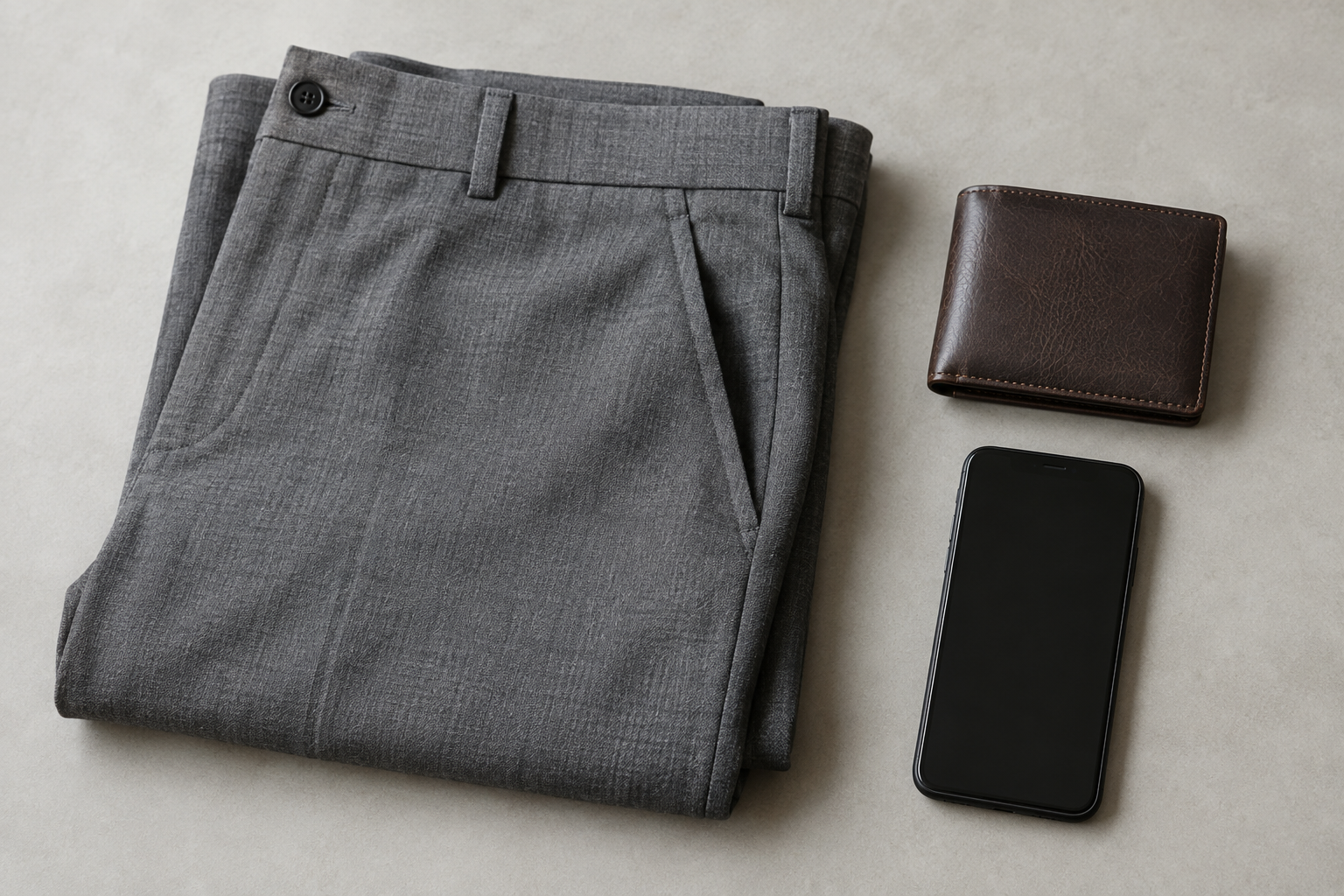
Add a preference worth preserving. Perhaps you like the standing outline but want to discuss more room when seated, or you prefer the waistband to sit in a particular place. Explain that alongside the discomfort so the conversation includes what you want to keep.
Bring the observations to the conversation
Your record is useful at a first consultation, and you can repeat the same sit-and-stand check at fittings for a new pair. Ask how the proposed fit will be assessed while sitting, standing and walking, and which parts of your notes the tailor would like to see demonstrated. You don't need to arrive with a pattern correction. A clear description of the activity and sensation is a useful starting point.
The guide to preparing for a first tailoring consultation covers broader preparation. Before taking an existing pair or your shoes along, ask whether they'd be useful as a reference.
You can discuss your trouser fit concerns with Isaac Ely; once you've spoken, a time and place that suits you both can be arranged. Keep your short record handy, especially the difference between how the trousers feel before sitting and after you stand. That detail can get lost in a general description such as “they feel too tight.”