Fit & Proportions
Choosing Knitwear That Fits Comfortably Under a Jacket
Choose knitwear with the jacket you'll actually wear. Compare the neckline, cuffs, hem and everyday movement, then separate your style preferences from any restriction before discussing proportions, weight and the shirt or base layer beneath the knit.
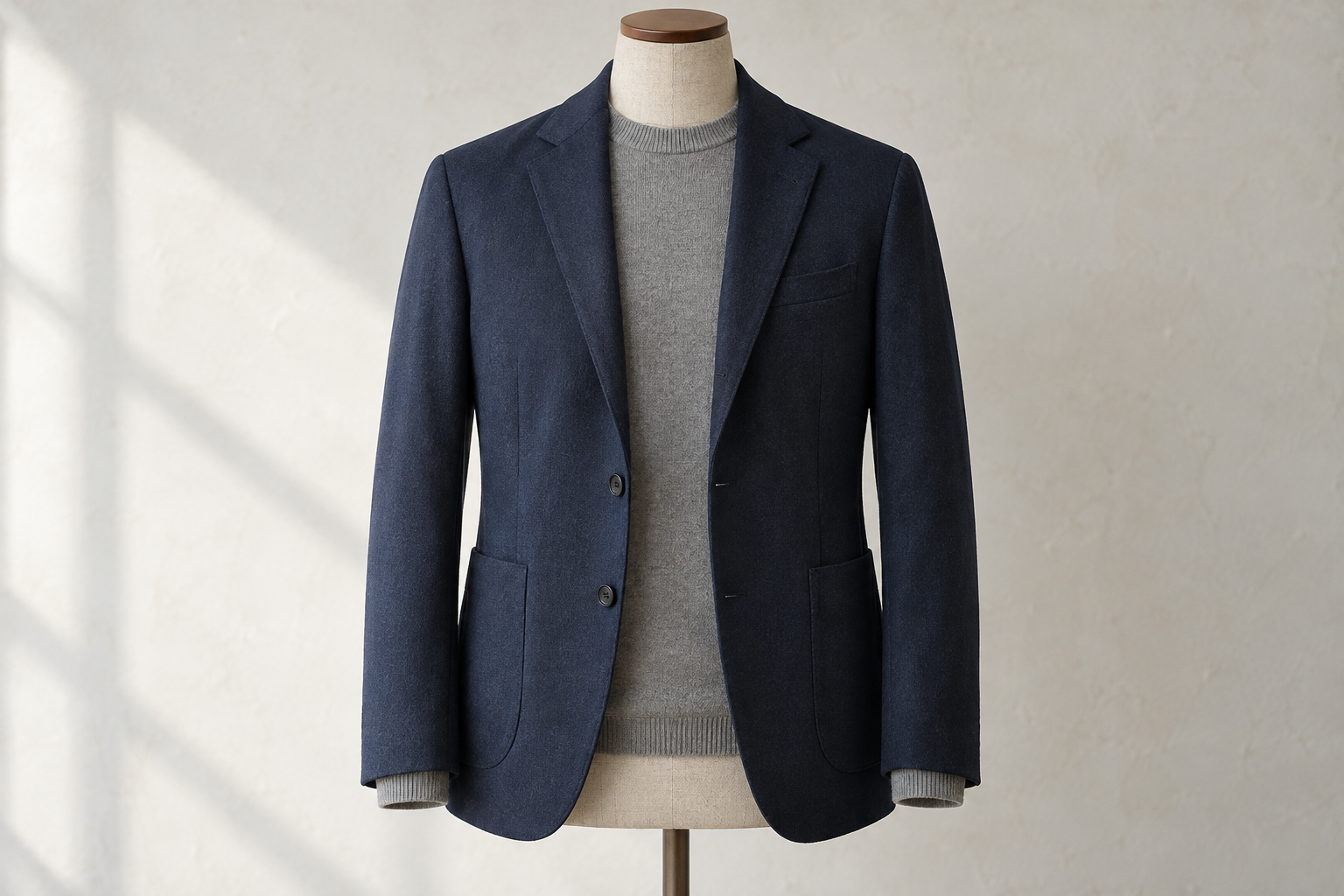
A sweater you enjoy on its own may feel crowded beneath a favourite jacket. The sleeves can catch, the neckline can sit differently between the lapels, or the hem can need adjusting every time you stand. Choosing knitwear for that outfit means trying the two garments together, with the other layers you actually wear.
Isaac Ely's bespoke knitwear offers choices in body and sleeve length, yarn, weight and fit, including pieces intended for layering beneath tailoring. Those choices are easier to discuss when you have a particular jacket in mind. A fibre name or sweater size alone won't tell you how the combination will feel.
Start with the jacket and its usual layers
Choose the jacket you expect to wear most often with the knit. Notice what normally sits beneath it: a shirt, a light base layer or another sweater. If you're adding knitwear over a shirt, include that shirt in the comparison. Trying the sweater directly against the body answers a different question from trying the complete outfit. If the knit you have in mind hasn't been made yet, use a similar sweater you already own, or a sample garment if one is available, and treat what you notice as preferences to discuss rather than a specification.
Put the knit on first and let it settle naturally. Then add the jacket without repeatedly pulling the sleeves or hem into a position you couldn't comfortably maintain during the day. Note where you need to make adjustments. That gives you something specific to discuss, rather than a general impression that the outfit feels bulky.
Keep the rest of the outfit familiar, including the trousers you intend to wear. Their waistband gives you a useful reference when looking at the knit's body length. If you plan to use several jackets, start with the one that matters most, then check the others before assuming one knit will suit them all equally well.
Look where the garments meet
Begin at the neckline with the jacket open. A crew neck gives you a curved edge between the lapels; a cardigan adds its own front opening. Isaac Ely's knitwear also comes in V-necks, mock necks and turtlenecks. A V-neck shows more of whatever sits beneath it, while a mock neck or turtleneck fills more of the space between the lapels and is usually worn without a shirt collar. Notice whether you like the arrangement you're trying, whether any shirt collar sits comfortably, and whether you find yourself tugging the knit away from your neck.
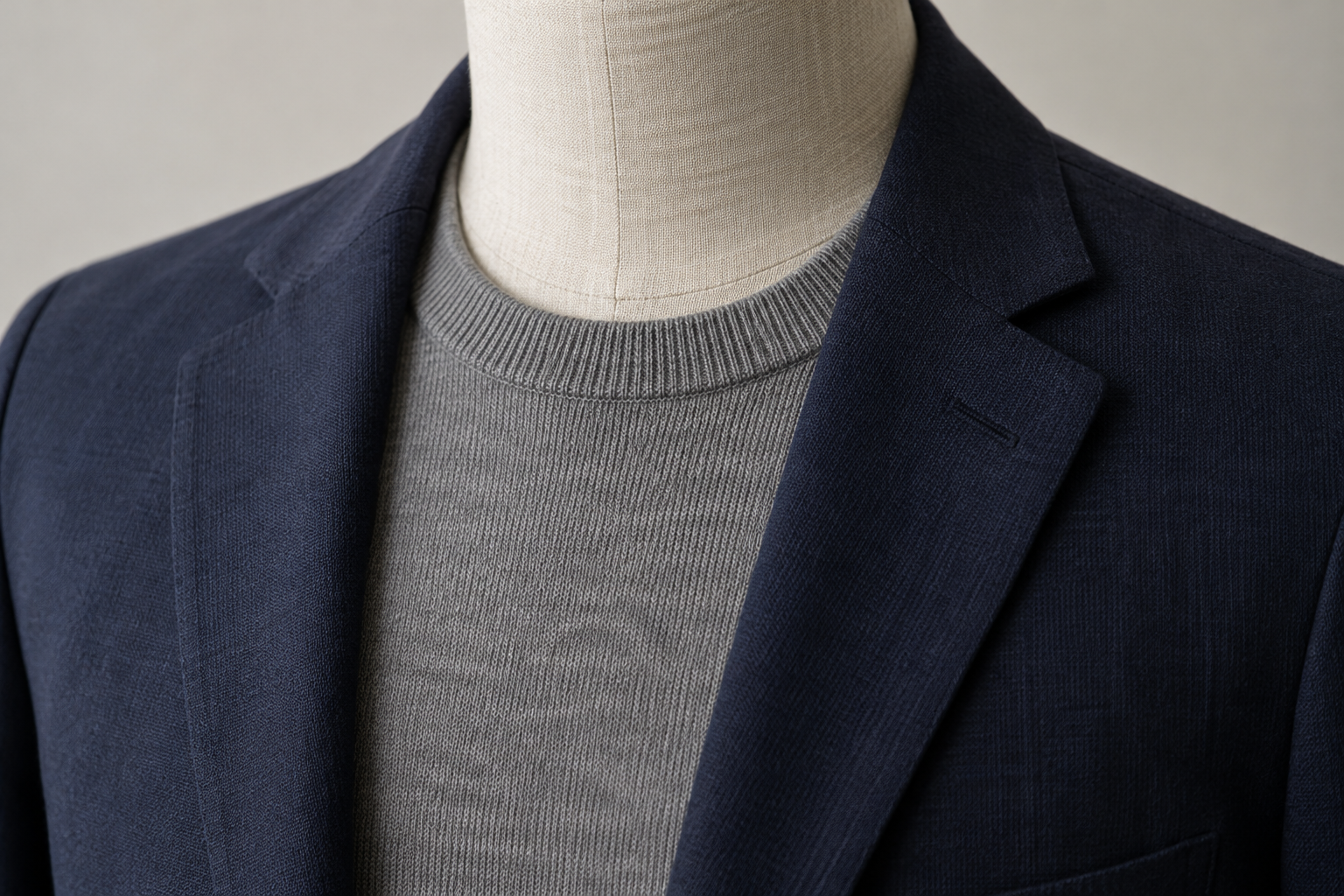
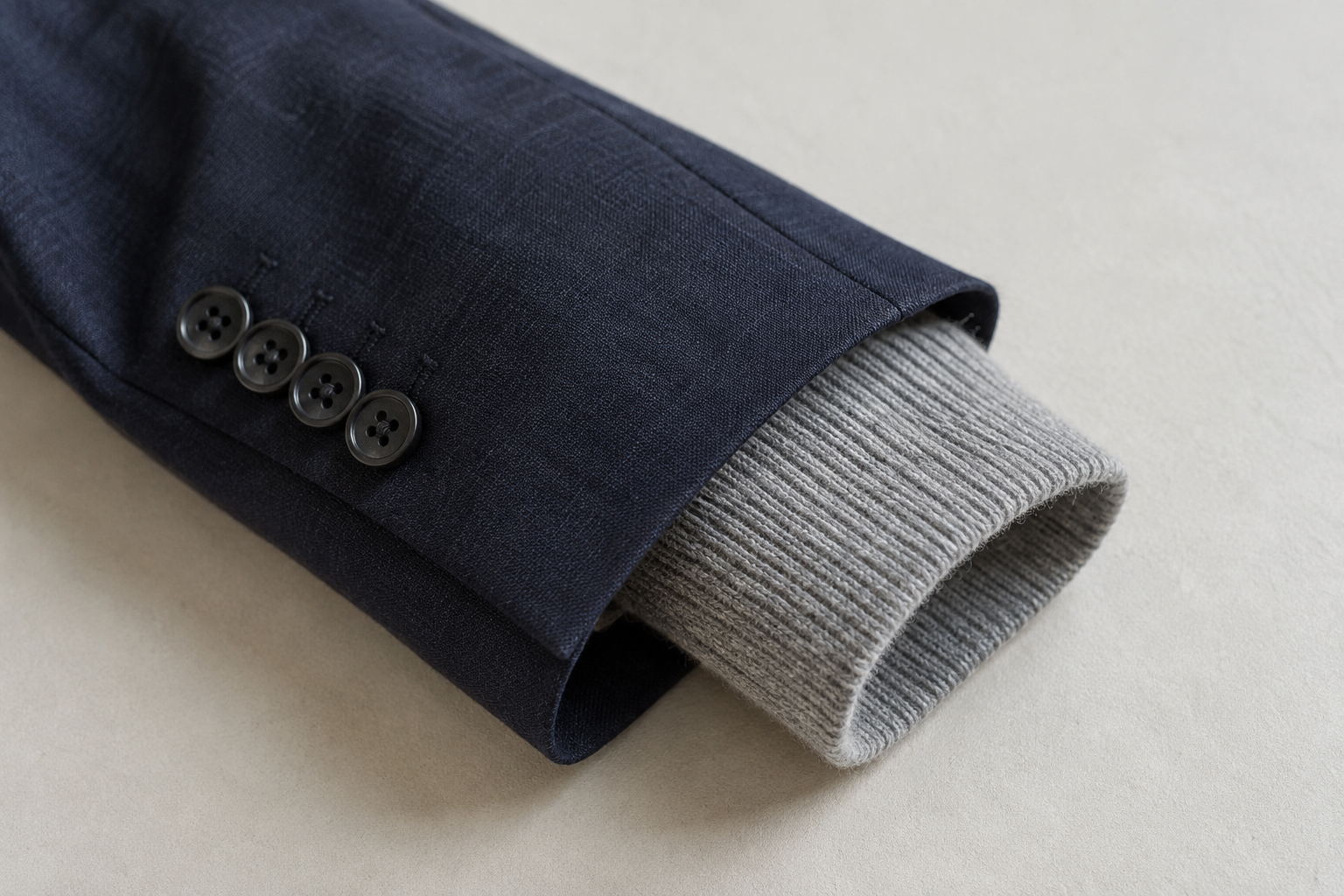
Next, look at the cuffs with your arms relaxed. Does the knit sleeve gather inside the jacket sleeve? You may prefer some knit cuff to show or to remain out of sight; there's no fixed amount that suits every outfit.
Check the hem from the front and side, both with the jacket open and fastened as you would normally wear it. Notice how the knit meets the trouser waistband and whether it gathers beneath the jacket. Ask whether the proposed body length would suit the combination instead of relying on a universal rule about where every sweater must end.
Move before deciding on the outline
Bring your hands forward, sit at a table and stand again. Does the knit sleeve stay comfortable inside the jacket, or does the cloth feel crowded through the arms? If the combination feels restrictive, explain where and during which activity. You don't need to decide immediately whether the knit, jacket or their interaction needs attention.
The suit fitting checklist for everyday movements gives a practical way to record sitting, walking and reaching observations. Use only the activities relevant to this outfit. What matters is whether something you do routinely, such as driving or working at a laptop, becomes uncomfortable in the layered combination.
Then look again at the neckline, cuffs and hem: a combination you like standing still may need rearranging once you've moved. Say whether that bothers you, and point out anything that already works, such as a neckline you enjoy or sleeves that settle on their own.
Compare a crew neck and a cardigan
For a hypothetical comparison, suppose you have a grey crew neck and a grey cardigan to consider beneath the same navy jacket. Keep the trousers and any underlying shirt the same. Try each knit with the jacket open, then in the fastened position you normally use.
With the crew neck, note how you like the continuous front and rounded neckline. With the cardigan, look at the additional opening and buttons, and notice whether you feel any extra fullness where the garments overlap. Neither front is automatically better; the useful question is which arrangement you prefer and how it feels on you.
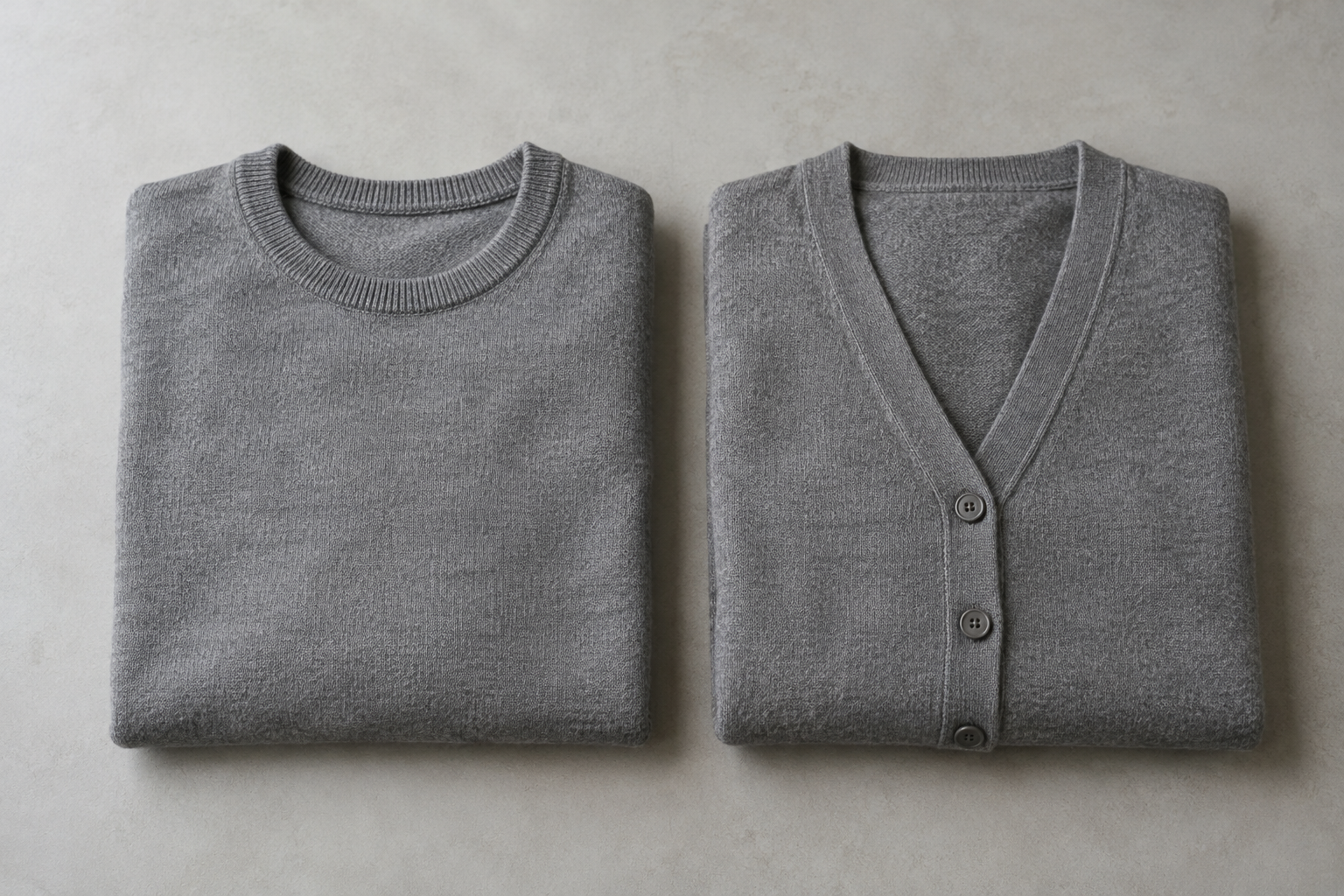
Your preference and your comfort may point in different directions. You might prefer the cardigan's front opening while finding that particular sweater crowded beneath the jacket. Or the crew neck might feel comfortable while showing a neckline you don't enjoy with those lapels. Describe what you'd like to retain and what you'd like to reconsider.
Discuss the actual knit, not just its fibre
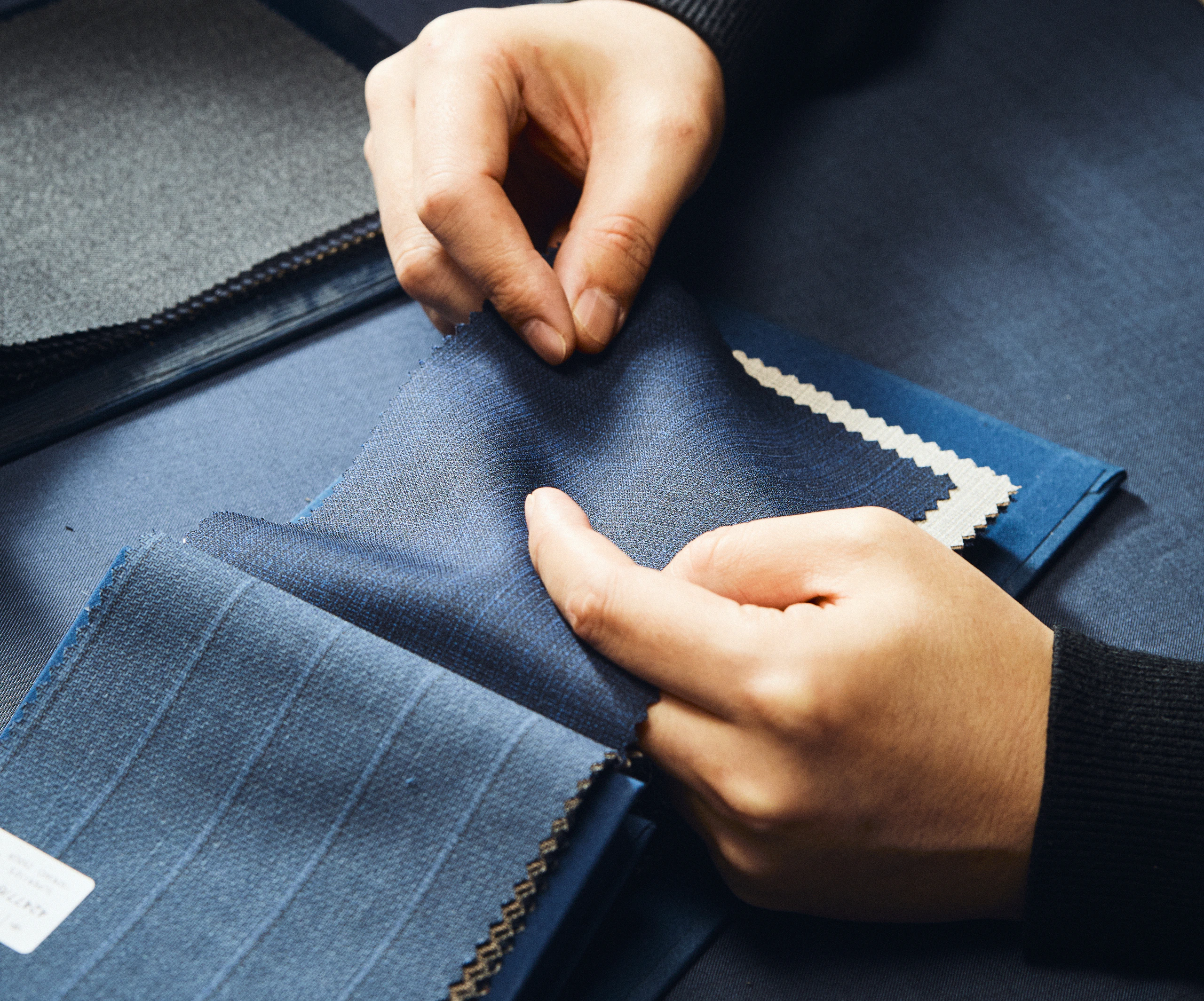
Ask to compare relevant samples and discuss their weight, feel and proportions in the context of your jacket. Weight matters because the knit sits inside the jacket: a heavier or more textured knit takes up more room in the sleeves and across the chest than a fine, smooth one, even at the same size. Cashmere, merino or a blend names the fibre content; it doesn't, by itself, establish the thickness, warmth or suitability for layering of a finished garment. Keep the discussion tied to the knit you're considering.
Explain whether you also expect to wear it without the jacket. A body length or outline chosen only for the layered outfit may not match your preference when the knit is worn alone. Ask how those priorities can be considered together, which options are currently available and what care the particular garment will need. Confirm details rather than assuming a pictured yarn or colour is available now.
Take a short layering brief to the conversation
You can prepare a useful brief without choosing the finished specification. Include:
- The jacket you want the knit to work with, and where you expect to wear the outfit.
- Any shirt or base layer that will sit beneath the knit.
- The trousers you usually pair with the jacket, to discuss the knit's hem and body length.
- Your preferred neckline or front opening, with a note about why you like it.
- Any gathering, restriction or repeated adjustment you noticed, plus something you'd like to keep.
Ask which garments or photographs would help before bringing them to a consultation, and confirm appointment arrangements directly; an inquiry doesn't reserve a time. You can then discuss knitwear and layering with Isaac Ely, including a note about the jacket, your usual layers and the detail you want help with.