Care & Wardrobe Advice
Navy or Charcoal for Your First Work Suit?
Choosing your first work suit starts with the clothes and working week you already have. Compare navy and charcoal with familiar shirts and shoes, look closely at actual cloth samples, and take a useful shortlist to your consultation.
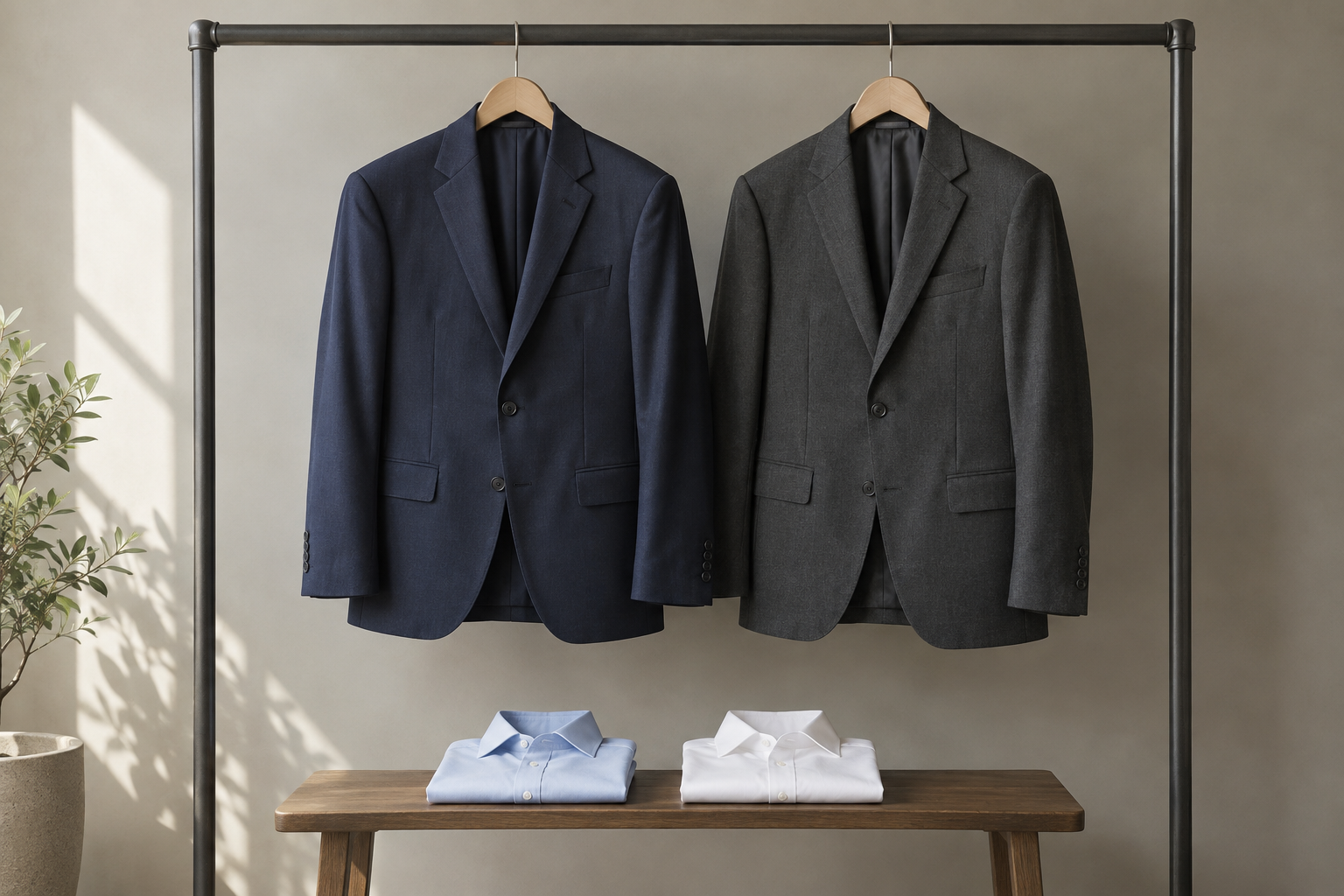
If you're choosing between navy and charcoal for your first work suit, start with the working week it needs to serve. Which particular cloth works with your shirts, shoes and workplace, and which combination would you want to wear again?
If you're considering bespoke suits, Isaac Ely drafts each one from an individual pattern, and colour is discussed alongside your proportions, comfort and preferences. You can arrive leaning towards navy or charcoal without having settled it.
Start with the days you'll wear it most
List the settings where you expect to wear the suit: ordinary office days, client meetings, presentations, work travel and occasional formal events. Give the recurring uses more weight. An occasional event matters, but it needn't set every choice for a suit you'll mostly wear to work.
Look at the expectations in your own workplace rather than relying on a general idea of business dress. Do colleagues usually wear ties? Are jackets worn throughout the day or mainly for meetings? If there's a written dress policy, use it. Neither colour automatically makes an outfit appropriate for every office or event.
Suppose you usually work in an office where open collars are common, but give occasional presentations in a tie. Compare each cloth with both versions of your outfit. If your work involves more formal client meetings, give that combination priority instead. These are examples of how to weigh the choice, not rules assigning navy to one job and charcoal to another.
Work travel deserves its own note, too. Tell the tailor how you expect to use the suit and ask about the specific cloth's suitability and care. Colour alone doesn't answer those questions.
Compare the same outfits with both colours
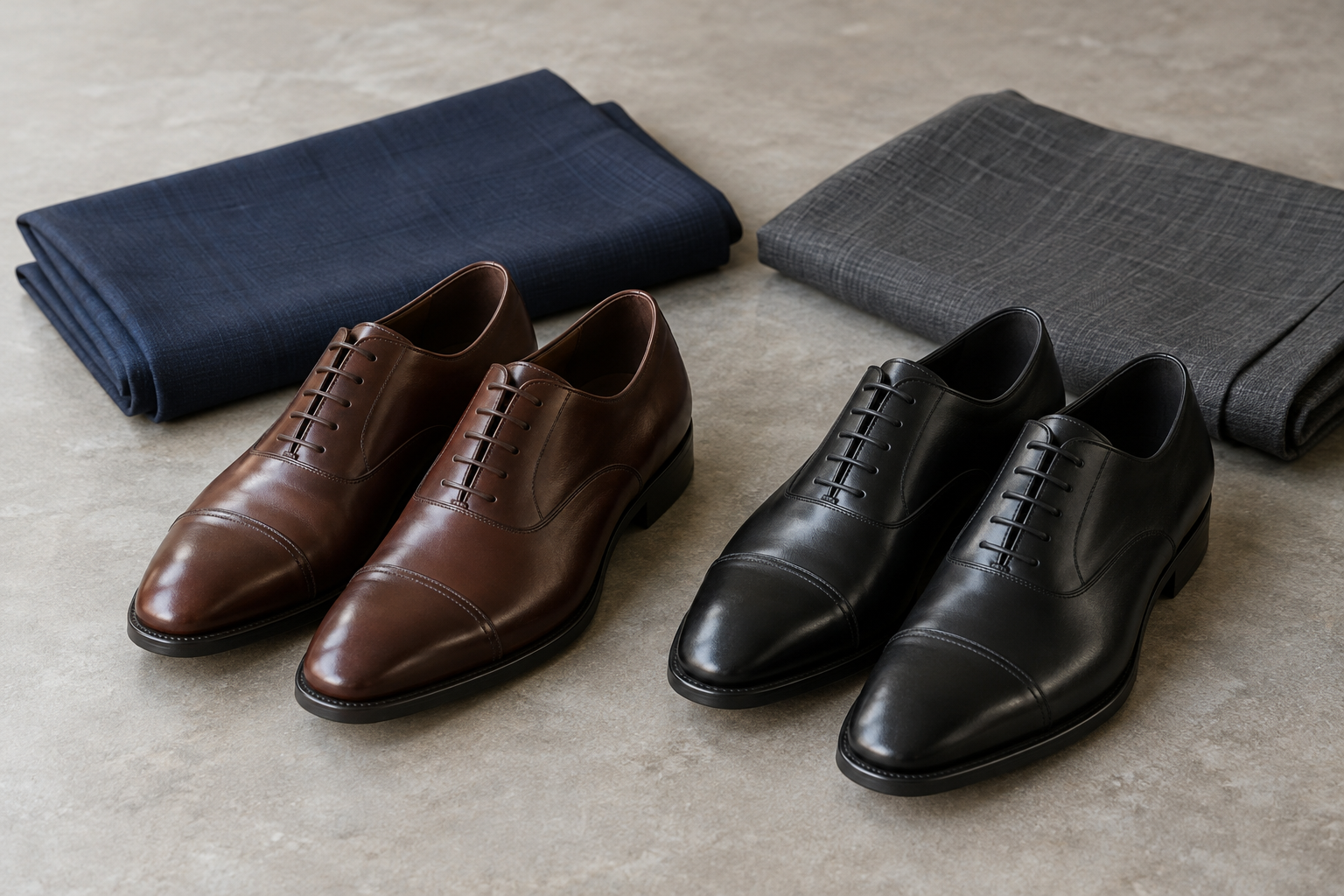
Navy keeps a visible blue, and many people wear it with both black and dark-brown shoes. Charcoal is a quieter grey with no obvious colour of its own. Treat those as conventions to test rather than rules; the comparison below shows how each looks with your own clothes.
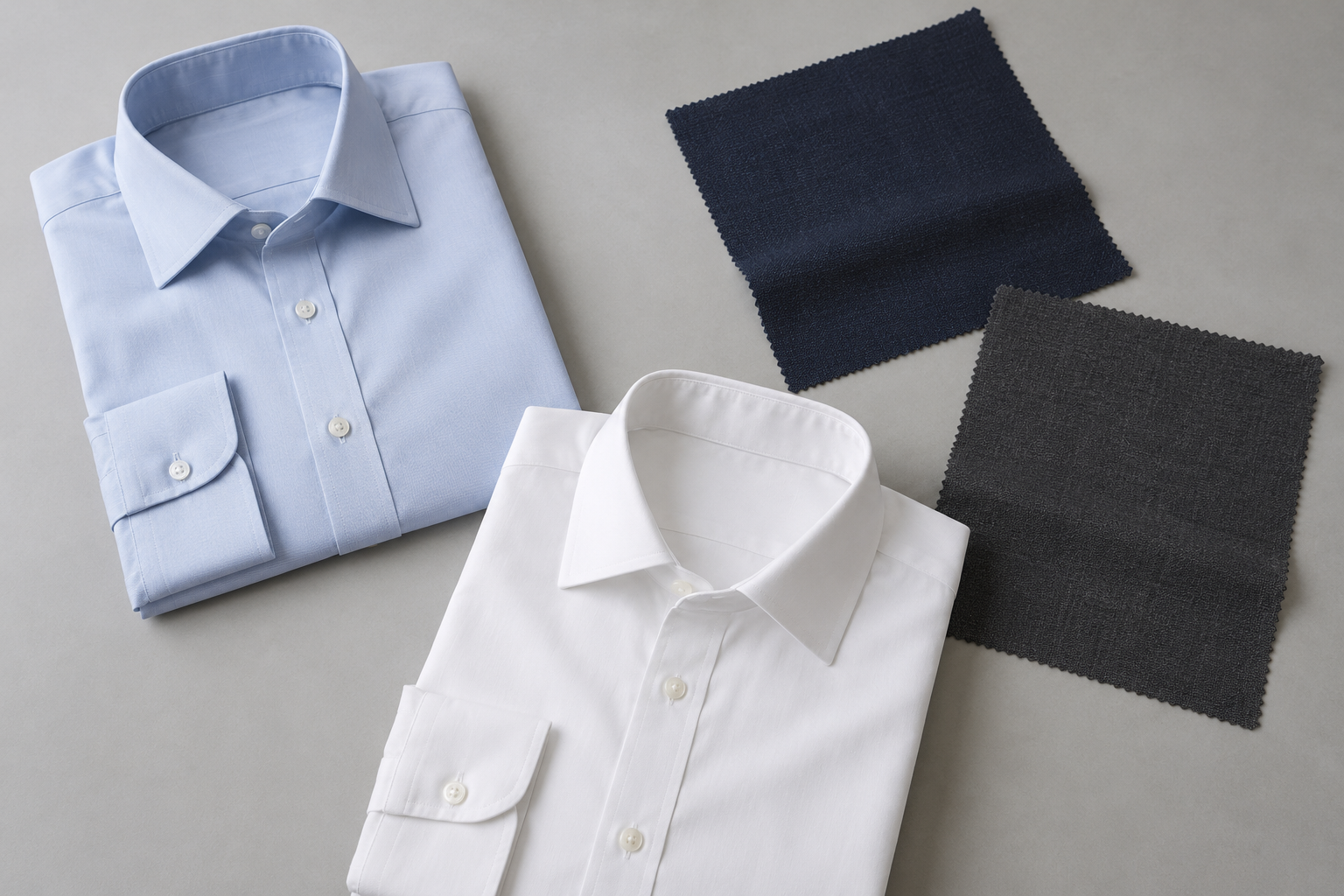
Start with a pale-blue shirt and brown shoes, then try a white shirt and black shoes. These hypothetical combinations give you two useful comparisons; replace them with the clothes you own if your wardrobe is different. Keep the shirt, shoes and any tie unchanged while you switch between navy and charcoal.
Place each cloth beside the shirt and look at the overall impression. Do you like the contrast? Does the shirt still look as you expect beside each cloth? Notice whether your preference changes with the white shirt. A choice that looks appealing in isolation may be less convincing with the clothes you wear most often.
A short set of notes is enough:
- Which combination would you choose for an ordinary workday?
- Which would you feel comfortable wearing to your usual meetings?
- Does either choice depend on buying shirts, shoes or ties you don't currently own?
- If both work, which do you simply prefer?
Include the shoes you really wear
Set your shoes where you can see them alongside the cloth and shirt. Compare the whole combination rather than relying on a convention about brown or black leather. The particular shade and style of your shoes, your workplace and your own preferences all belong in the decision.
You don't need to make every existing accessory work equally well. If one pair of shoes and two shirts account for most of your working week, those combinations deserve more attention than something you wear once a year. If you'd happily buy a new shirt or tie to make one colour work, count that as part of the cost of choosing it, not as a point in its favour.
Look beyond the words navy and charcoal
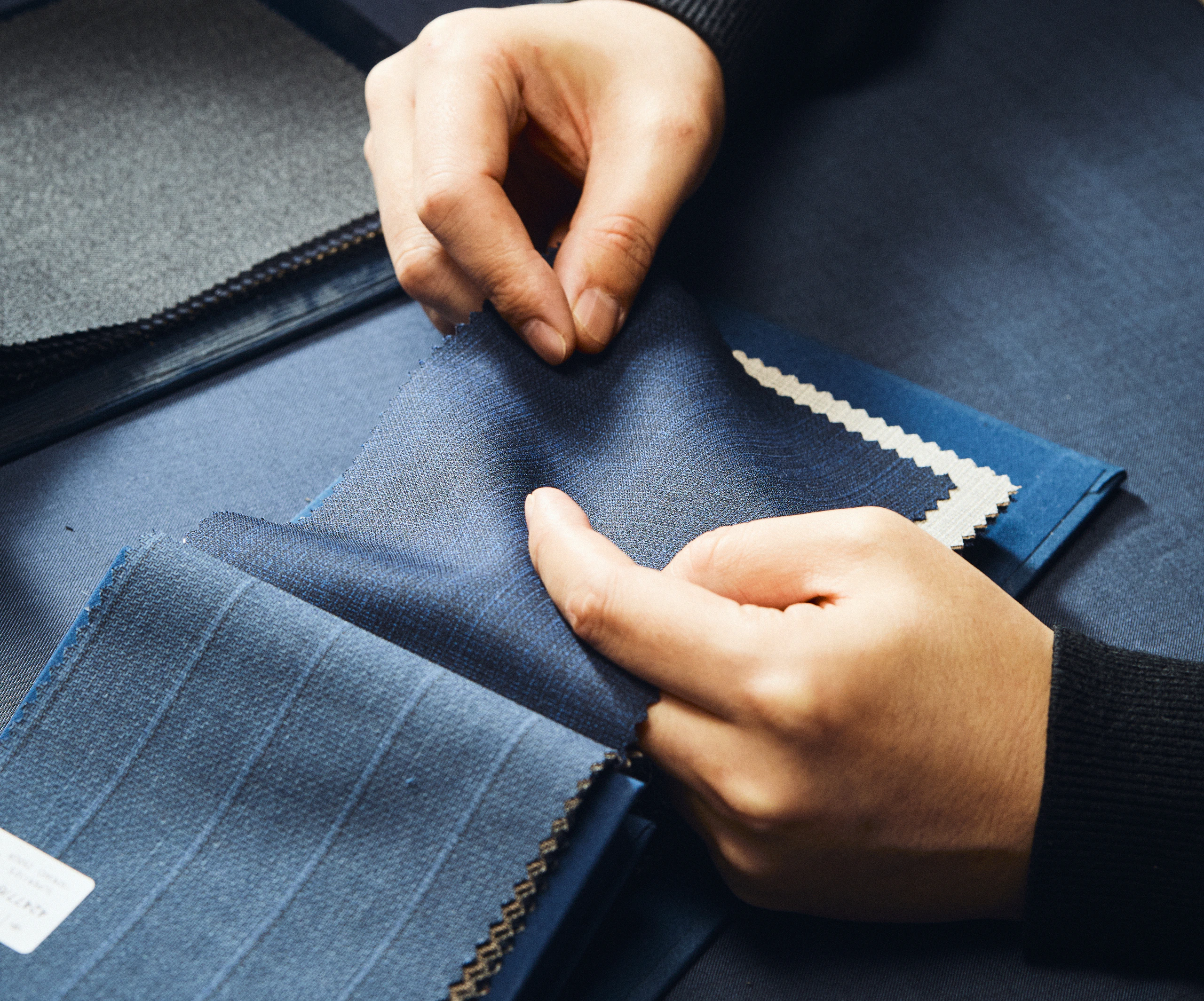
Ask to compare actual samples side by side under the same light. Look at the depth of colour, the surface and the finish. Neither name describes a single cloth: navy samples can differ noticeably in depth of colour, and charcoal also varies in depth and surface.
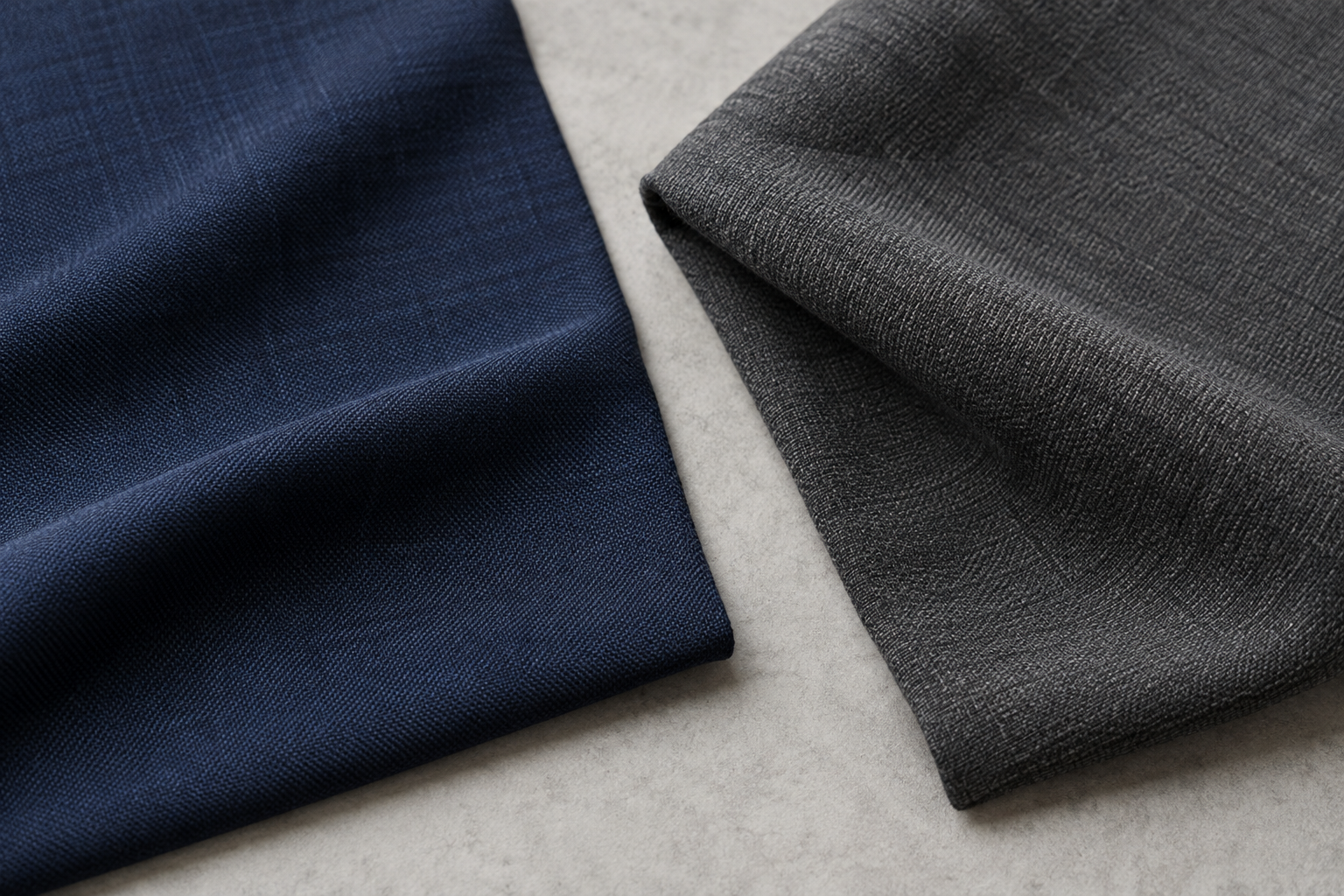
Notice whether the surface appears smooth or has a more visible texture, and whether it catches the light in a way you like. Then return to the shirt comparison. Picture the cloth as a matching jacket and trousers rather than a small sample. A texture you enjoy up close will cover far more of the outfit once it's a whole suit, so ask to see a larger piece if that helps you judge it.
If a photograph prompted your preference, use it to explain what attracted you. Ask to see relevant cloth in person before treating the photograph as a precise colour reference. Confirm current options with the tailor; an appealing image doesn't establish that the same cloth is available.
Keep colour and fit as separate decisions
Colour won't settle how you want the suit to fit or feel. Note any silhouette or comfort preferences separately, so they get their own discussion rather than fading once you've found a cloth you like.
If you're also deciding how the suit should be made, the guide to choosing between bespoke and made-to-measure explains the different pattern starting points and useful consultation questions. Neither navy nor charcoal determines which approach is suitable.
Take a useful shortlist to the conversation
Take your preferred combinations, a note about the work settings that matter most and any remaining questions to the conversation. If you think your own shirts or shoes would help the comparison, check whether to bring them first.
You can discuss your first work suit with Isaac Ely, including which cloths you'd like to compare and any date or budget constraints. An inquiry doesn't reserve an appointment time. You don't need a universal winner between navy and charcoal; you need a choice that makes sense with the clothes and working life you have.