Wedding & Occasion Style
Wedding Suit or Tuxedo: Start With the Dress Code
A wedding suit and a tuxedo answer different dress-code expectations. Clarify black tie or black-tie optional, consider the accompanying pieces, and bring a focused outfit plan to your consultation before deciding what you'll wear on the day.
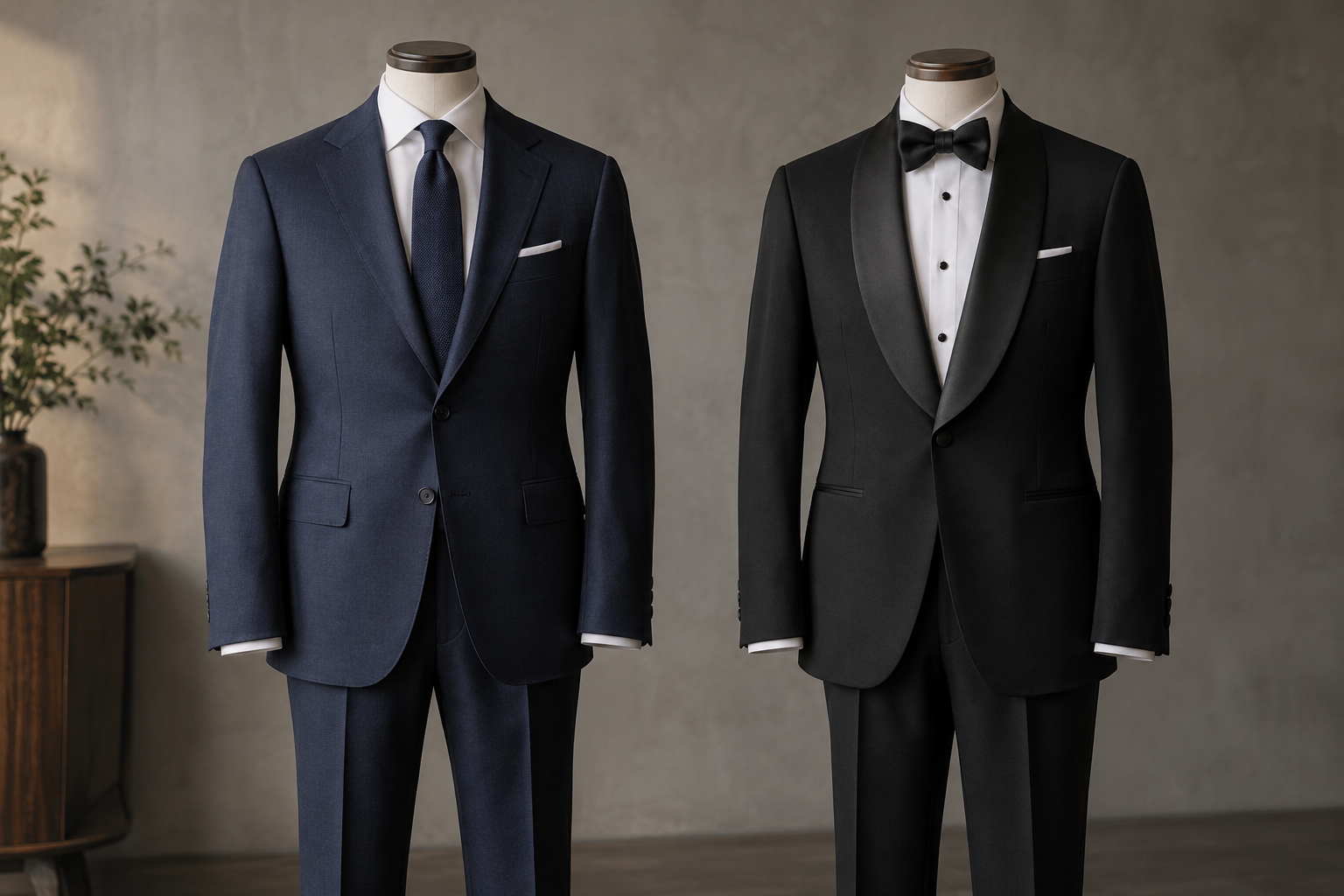
The choice between a wedding suit and a tuxedo starts with what the wedding asks you to wear. Before comparing colours or saving reference photos, settle the intended dress code. A dark suit may be a welcome choice at one wedding and fall outside the stated expectations at another.
If you're the groom, agree the look with your partner as well as considering the invitation. Guest guidance doesn't automatically settle what you and your wedding party will wear. If everyone will dress to match, Isaac Ely's custom wedding suits service can coordinate everyone's look while fitting each person individually.
Read the wording before choosing the garment
Emily Post's black-tie guidance provides a conventional menswear baseline. It distinguishes two instructions that are easy to blur together:
- Black tie: begin with a tuxedo. A dark business suit isn't listed as an alternative in this dress code.
- Black-tie optional: a tuxedo is welcome, and a dark suit is also an accepted option.
Treat that distinction as a starting point for confirming the couple's intentions, including cultural context and any agreed exceptions. The word “optional” creates a choice; it doesn't mean the rest of the outfit no longer matters.
If the invitation says only “formal”, ask the couple what they mean before committing. A venue photograph can't answer that question for them. For your own wedding, resolve the wording together and make sure the outfit you intend to wear fits the expectations you're setting for everyone else.
Lay out the whole outfit
A tuxedo is cut much like a suit but finished for evening: its lapels are usually faced in satin, the trousers carry a satin stripe down the side, and it's worn with a bow tie rather than a long tie. Studs replace the shirt's front buttons, and a cummerbund (a pleated waistband) or a vest covers the waist.
Choosing the jacket and trousers leaves several decisions unfinished. Look at the accompanying pieces together, using the same conventional baseline:
- With a tuxedo: a black jacket and matching trousers go with a formal white shirt, a black bow tie, shirt studs and cufflinks. Add a black cummerbund or vest, black patent shoes and black dress socks.
- With the dark-suit option: plan a white dress shirt, a conservative tie, leather dress shoes and dark dress socks. The tuxedo's cummerbund, studs and cufflinks aren't part of this option.
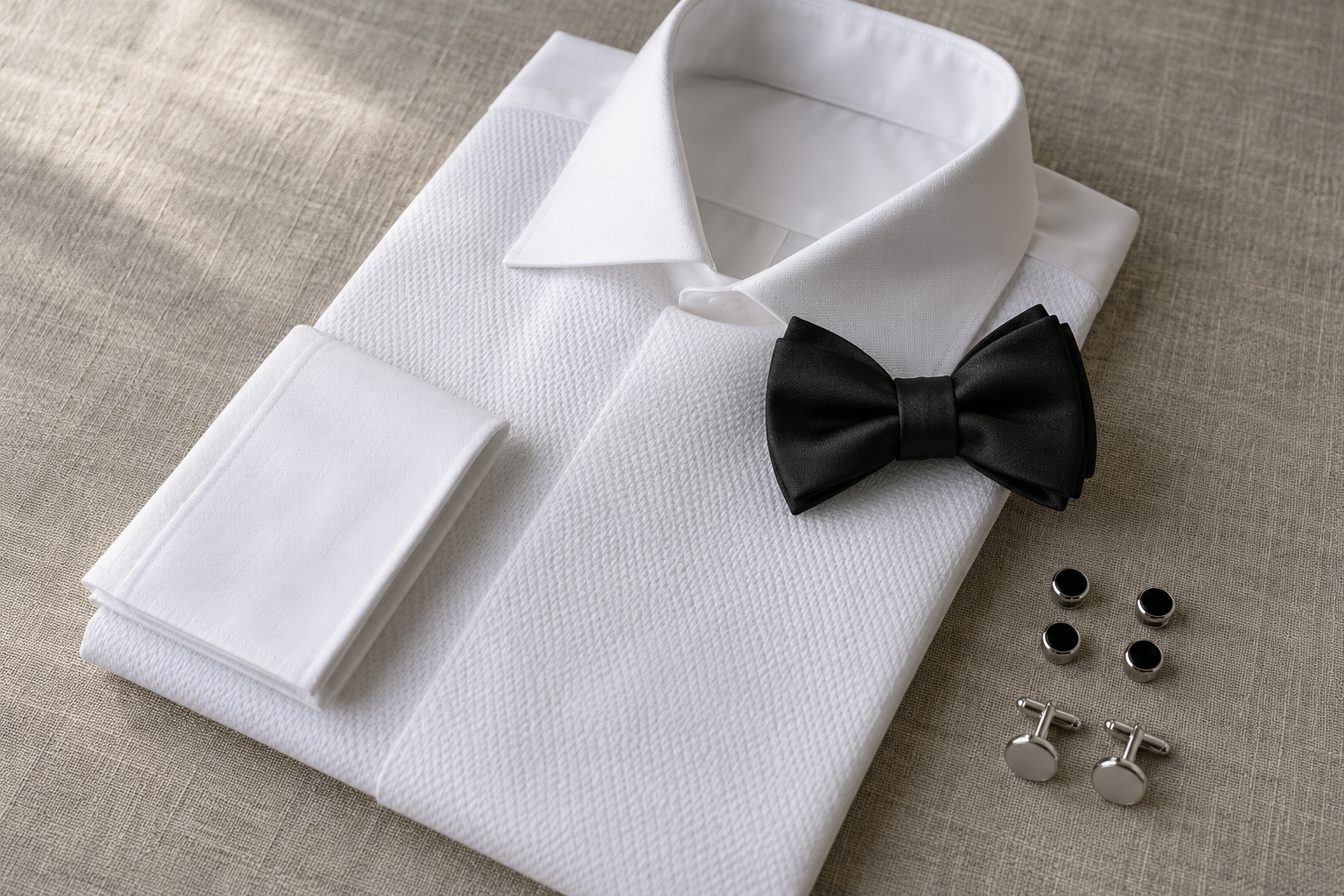
Ask Isaac Ely which of these pieces you'll need to source separately. In particular, discuss the shirt and its fastenings together rather than buying individual pieces and assuming they'll work with one another.
Make a short inventory of what you already own. A shirt you like, shoes you hope to wear or a tie with personal meaning can each become a concrete question. Ask whether the piece works with the agreed outfit before making it the centre of the plan.
Separate the dress-code decision from the tailoring decision
Once the acceptable outfits are clear, you can discuss how to commission the garment. Isaac Ely makes both bespoke suits and tuxedos, so either answer to the dress-code question can lead into that conversation. Suit versus tuxedo and bespoke versus made-to-measure answer different questions. The first concerns the outfit; the second concerns its tailoring starting point. The guide to choosing between bespoke and made-to-measure explains how to bring fit preferences and practical constraints into that separate conversation.
Comfort belongs here too. Describe how you'll spend the day: standing through the ceremony, sitting for dinner and moving around the reception. Ask how the intended outfit can be assessed during fittings, including the layers and footwear you expect to wear. Say what feels restrictive; you don't need to know what should change.
Consider future use within the agreed options
Future use only tips the balance where the dress code leaves room. If the couple has chosen black tie, a tuxedo stays the starting point even if a suit would get more wear afterwards.

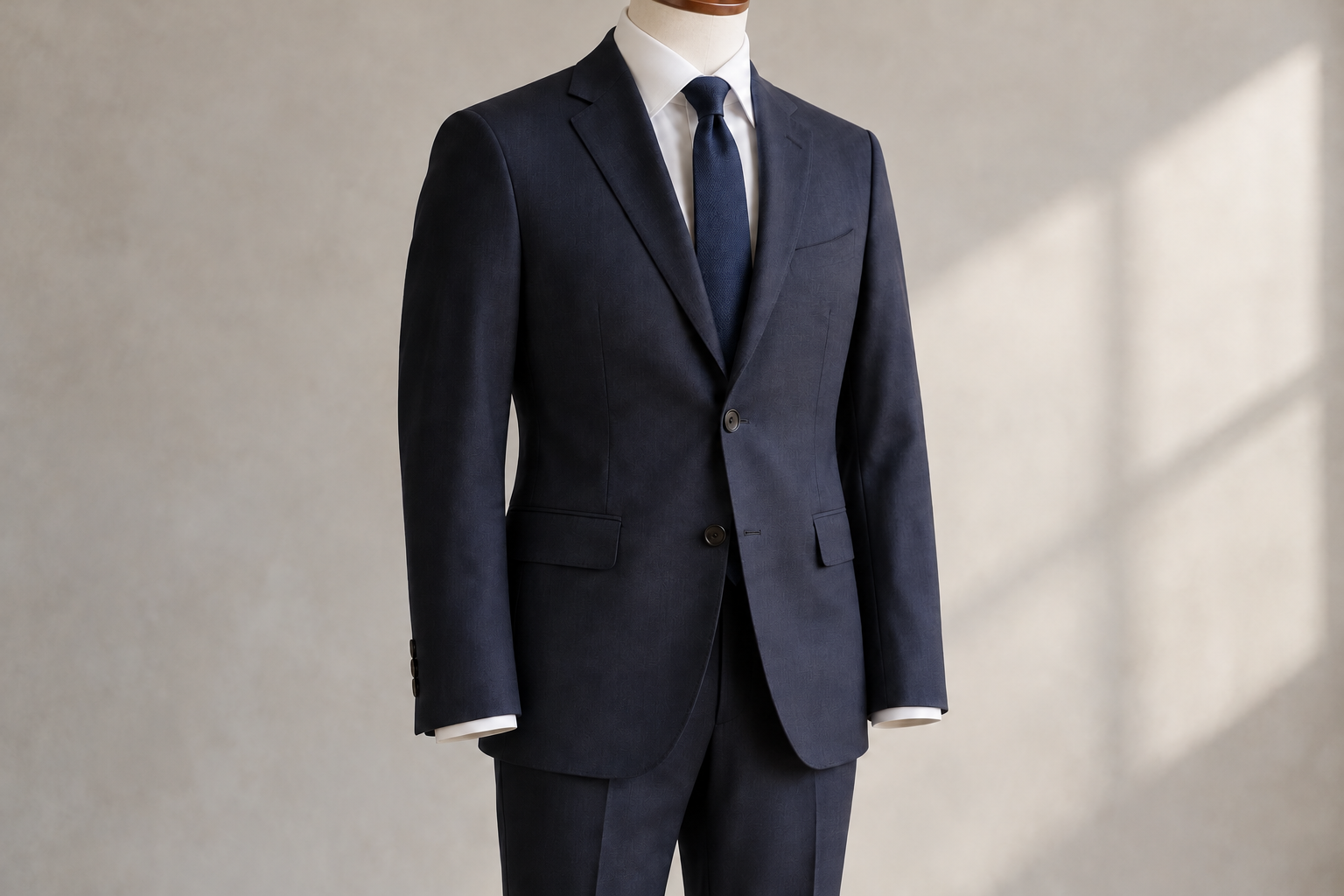
Within the agreed choices, think about occasions you actually attend. Would you wear the suit to other celebrations? Do you have future events where a tuxedo would be useful? Neither answer makes one garment universally better, but both help you explain what you hope to keep wearing after the wedding.
Take a clear outfit note to the consultation
Keep the exact invitation wording, agreed outfit choice, pieces already owned and unresolved details in one short note. Add the wedding date and any fitting constraints. You can contact Isaac Ely with that note and your questions. Once you've spoken, you can arrange a consultation time together.