Tailoring Guides
Your First Work Suit: Why Made-to-Measure May Be the Right Choice
Your first work suit should fit your proportions, routine and personal style. Explore how made-to-measure brings fit, fabric and design choices together, and when bespoke may offer the flexibility you need to build a useful professional wardrobe.
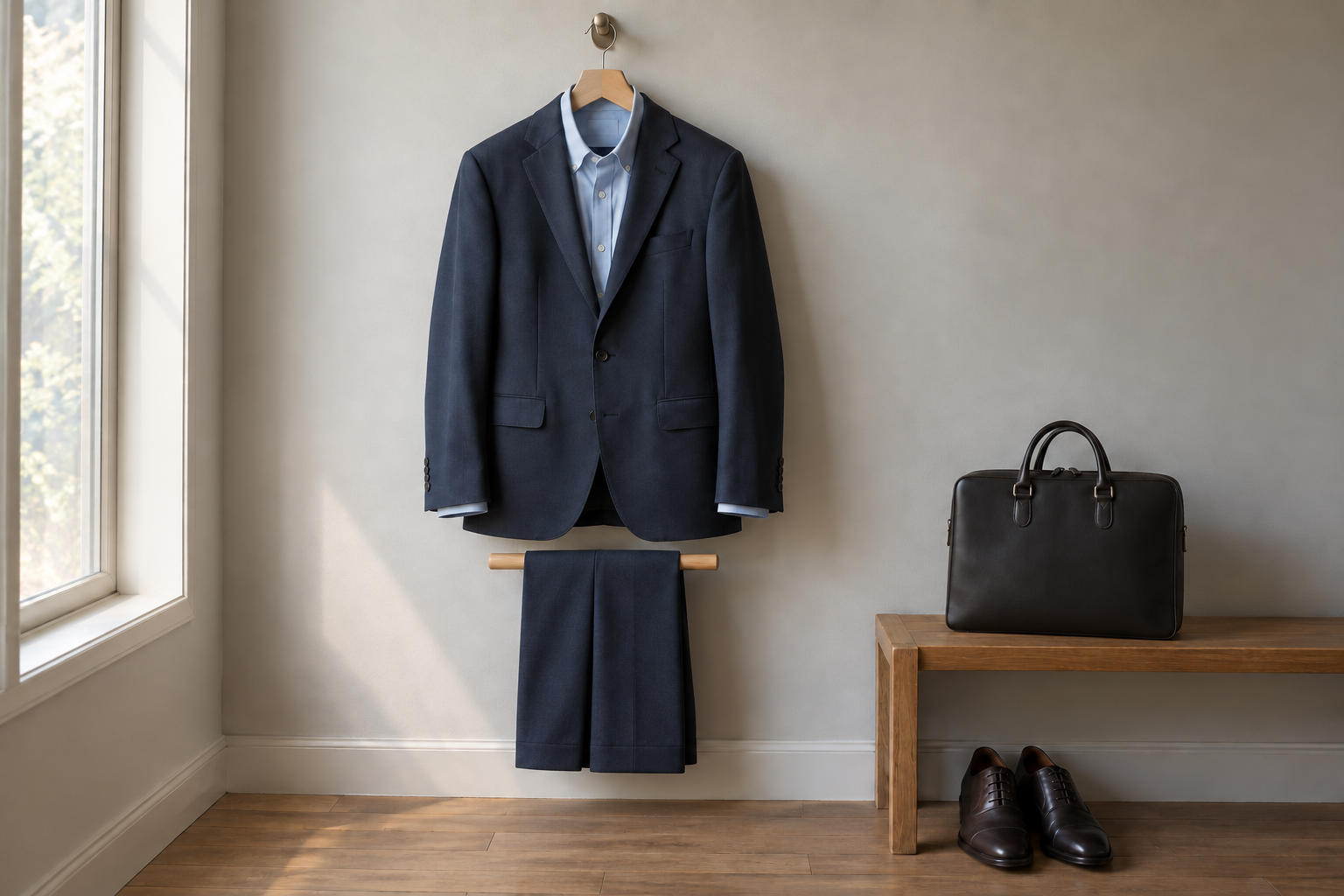
Your first work suit should complement your proportions, feel comfortable throughout the day and reflect how you want to present yourself professionally. Whether you're starting your career, stepping into a new role or building a more useful wardrobe, the right suit needs to work with your life.
Finding it can take more than choosing a size. A jacket may fit across the shoulders but pull at the waist; trousers may feel comfortable yet have a shape you don't enjoy wearing. Isaac Ely's made-to-measure service brings fit, fabric and personal preferences into the same conversation, so those decisions can be considered together.
Why Standard Sizes Often Fall Short
Ready-to-wear suits are made in standard sizes. Alterations can improve the fit, but the finished garment's proportions and construction place limits on what can change.
Made-to-measure starts with an established pattern, adjusted to your measurements and proportions before the fabric is cut and the suit is constructed. This gives the tailor an opportunity to account for your needs earlier in the process.
You can also select the cloth, overall silhouette and design details. For a first work suit, that combination is useful: you can develop a professional appearance that feels like your own, with guidance on how the choices fit together.
A Good Fit Begins With a Conversation
Measurements are essential, but they tell only part of the story. Two people with similar chest and waist measurements can have different shoulder shapes, posture and preferences for how clothing should feel.
A useful consultation explores three things:
- Your day: time spent sitting, meeting clients, presenting or travelling.
- Your preferences: a closer silhouette, more room to move or a particular trouser shape.
- Your current clothes: what you enjoy wearing and what you would change.
The tailor's experience helps connect those observations with your proportions and the way fabric hangs on your body. Describing a jacket that becomes uncomfortable while sitting, for example, gives more useful context than simply asking for a bigger size.
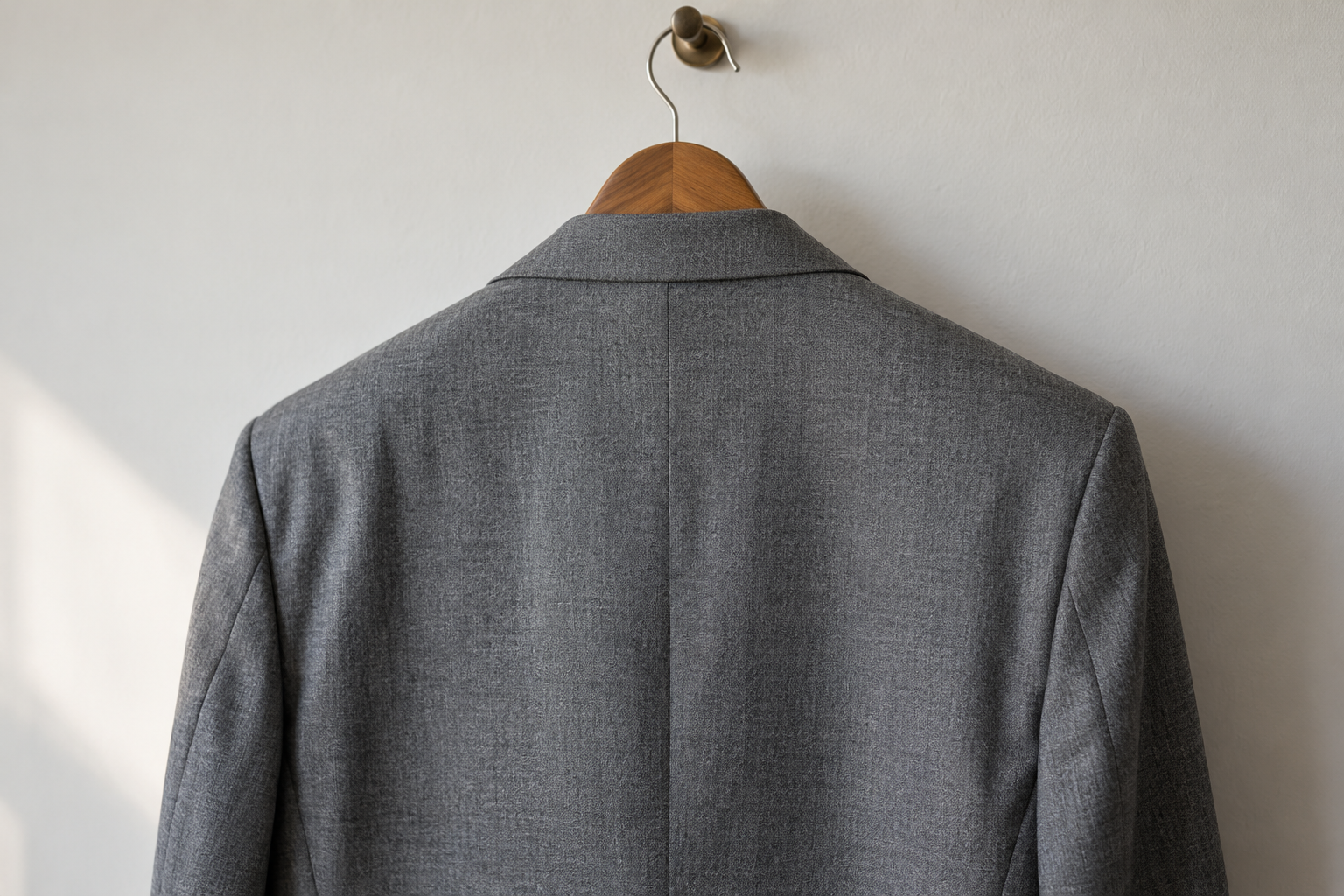
Fit should support both appearance and movement. A suit needs to look balanced in the mirror and feel comfortable several hours into the working day.
Choosing a Suit That Works for Your Wardrobe
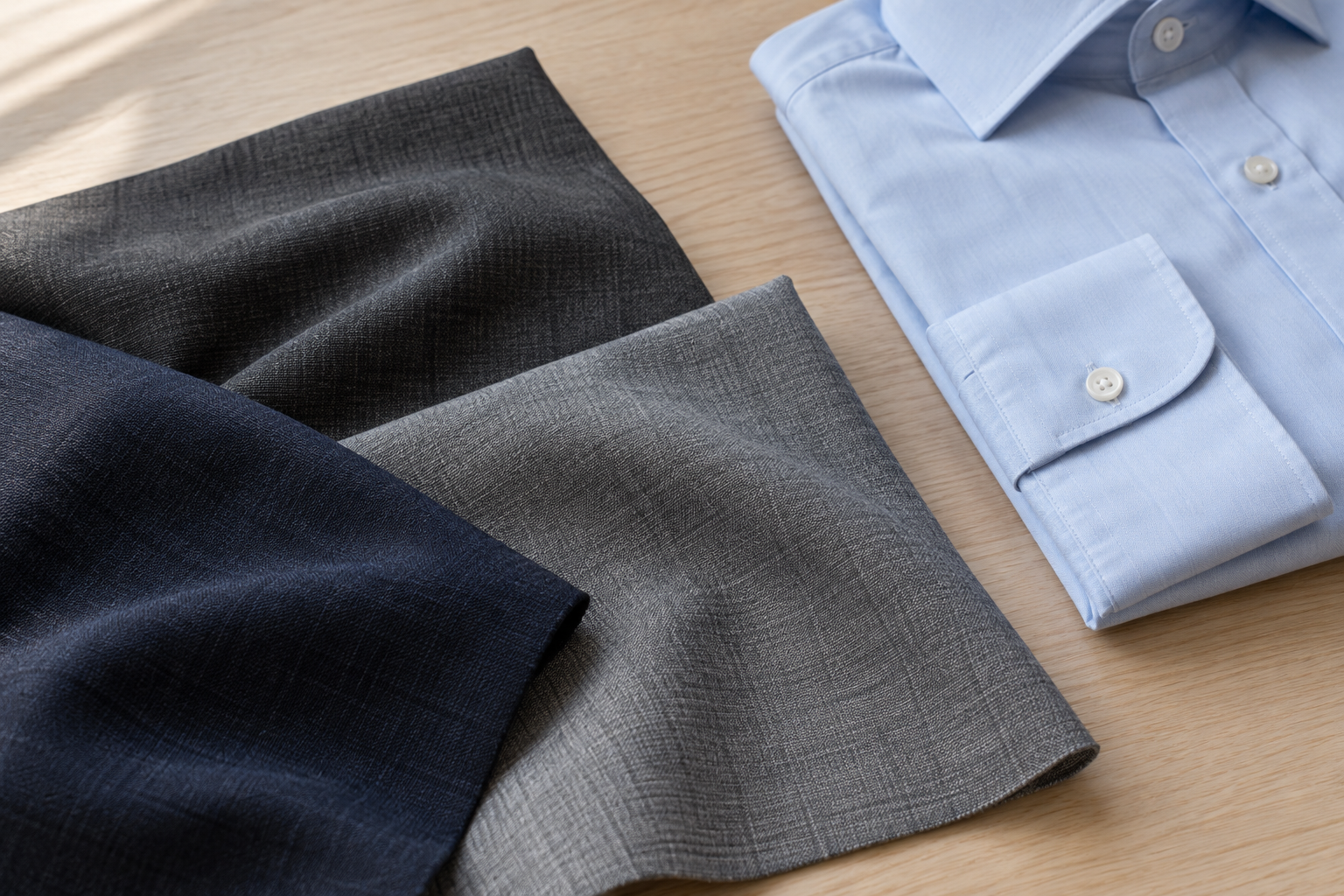
Versatility is a sensible priority for a first professional suit. Navy and charcoal are useful starting points because they work with many business wardrobes. Compare them with shirts and shoes you already own; our guide to choosing between navy and charcoal explores that decision in more detail.
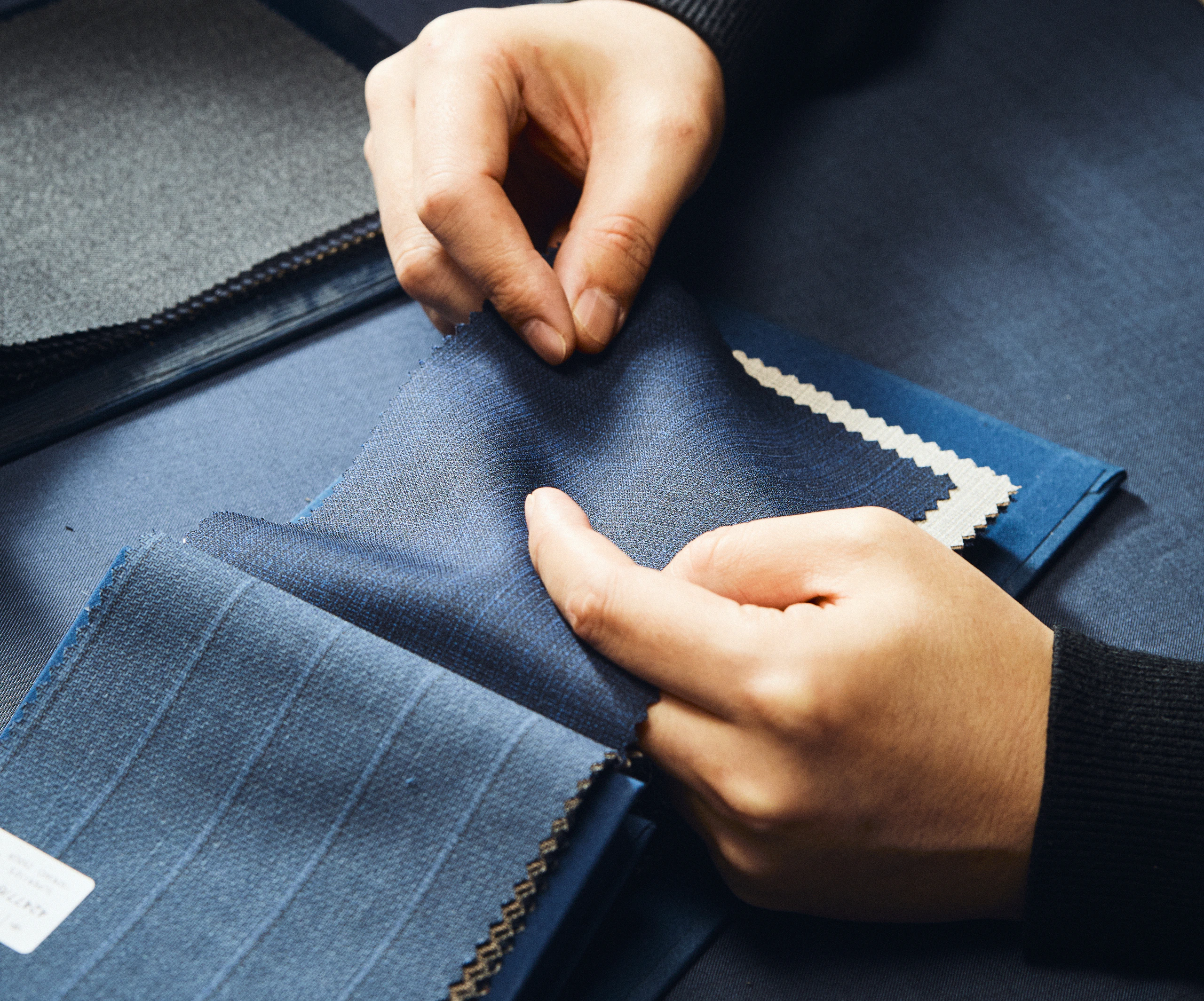
Cloth deserves the same attention. Wool comes in different weights and weaves, and the right choice depends on your working environment, how often you'll wear the suit and the seasons it needs to serve. Discuss comfort, breathability and durability together when looking at samples.
Think about value through regular use. A suit that fits comfortably and works with the rest of your wardrobe has more opportunities to earn its place. Cost per wear is a useful consideration alongside the initial price: think about how often you expect to wear the suit and whether it suits those occasions.
Personal Style Is in the Details
Jacket length, lapels, pockets, buttons, lining and trouser shape all contribute to the finished appearance. The most useful choices are those that work together and suit your proportions, workplace and taste.
You don't need a detailed design brief before your first appointment. Explain the impression you want to make and show examples of clothes you like. The tailor can guide you through the available options and explain their effect on the overall suit.
A restrained lining or a particular trouser shape can be enough to make the garment feel personal. Every detail needn't compete for attention.
Choosing Between Made-to-Measure and Bespoke
Made-to-measure may provide the fit and styling flexibility you want through adjustments to an existing pattern. Bespoke develops an individual pattern, offering greater scope to address particular proportions, fitting requirements and design preferences.
More complex fitting needs or a highly individual design may make bespoke worth considering. Isaac Ely offers both approaches, so the recommendation can follow your needs. Our guide to bespoke versus made-to-measure explains the distinction further.
Start With a Suit You Will Wear
Your first work suit can become the foundation of a professional wardrobe. Aim for comfort, versatility and a style you feel at ease wearing; you can refine your preferences as you learn what works for you.
With more than 30 years of clothing experience, Isaac Ely helps clients understand their options and choose garments around their proportions and daily lives. Made-to-measure suits start at $2,200, with fabric and design choices discussed around your needs.
To begin, arrange a private consultation and share how you work, what you like in your current clothing and what you hope to achieve. You can then explore whether made-to-measure or bespoke is the right approach for your first work suit.