Fit & Proportions
Pleated or Flat-Front Trousers: Comparing Shape and Ease
Pleats change the look of a trouser front, but comfort depends on the whole cut. Compare the waist, seat and leg, try ordinary movements, and judge each design with the jacket or knitwear you intend to wear.
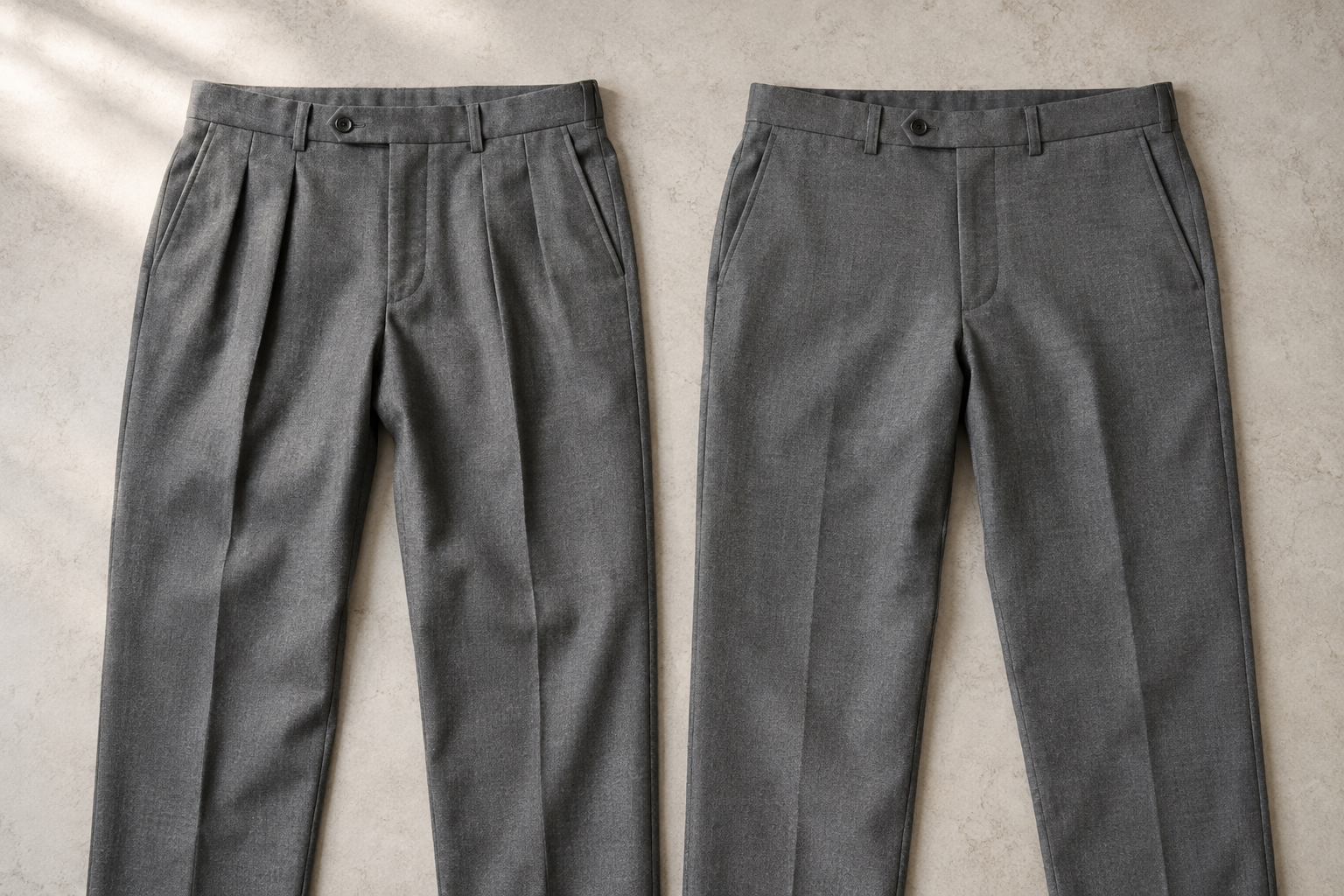
Choosing between pleated and flat-front trousers involves two questions: which front you like looking at, and how the whole pair feels when you wear it. The answers don't always arrive together. You might prefer a quiet, uninterrupted front but want more room through the leg, or like the folds of a pleated design without wanting a particularly full silhouette.
For Isaac Ely's bespoke trousers, an individual pattern brings the waist, seat, rise and leg into the same fitting discussion. That matters here because the front treatment is only one design choice. Whether the finished trousers suit your proportions and stay comfortable in a chair depends on how the whole cut works together.
Look for the fold at the waistband
A pleat is a deliberate fold of cloth formed at the front of the trousers, beginning at the waistband. A flat front has no such pleats. Both can have a pressed crease running down each leg; that crease isn't the same thing as a fold built into the waist.
A pleat also holds a little extra cloth at the front. When you stand, it lies mostly closed; when you sit, bend or reach into a pocket, it can open to give the hips and thighs more room. Pleated trousers are often cut a little fuller through the upper leg, while a flat front gives a smoother surface and often suits a closer cut. The trade-off is that a pleated front can show more cloth in your lap when you sit. Pleats also vary: there may be one or two on each side, facing towards the fly or towards the pockets, and those details are worth raising if you're drawn to them.
Look closely at where the cloth meets the waistband before judging the overall outline. On pleated trousers, you should be able to identify the intended fold. Don't treat every line, wrinkle or area of pulling as part of that design. If you're unsure what you're seeing, ask the tailor to distinguish the planned shape from something that needs assessment.
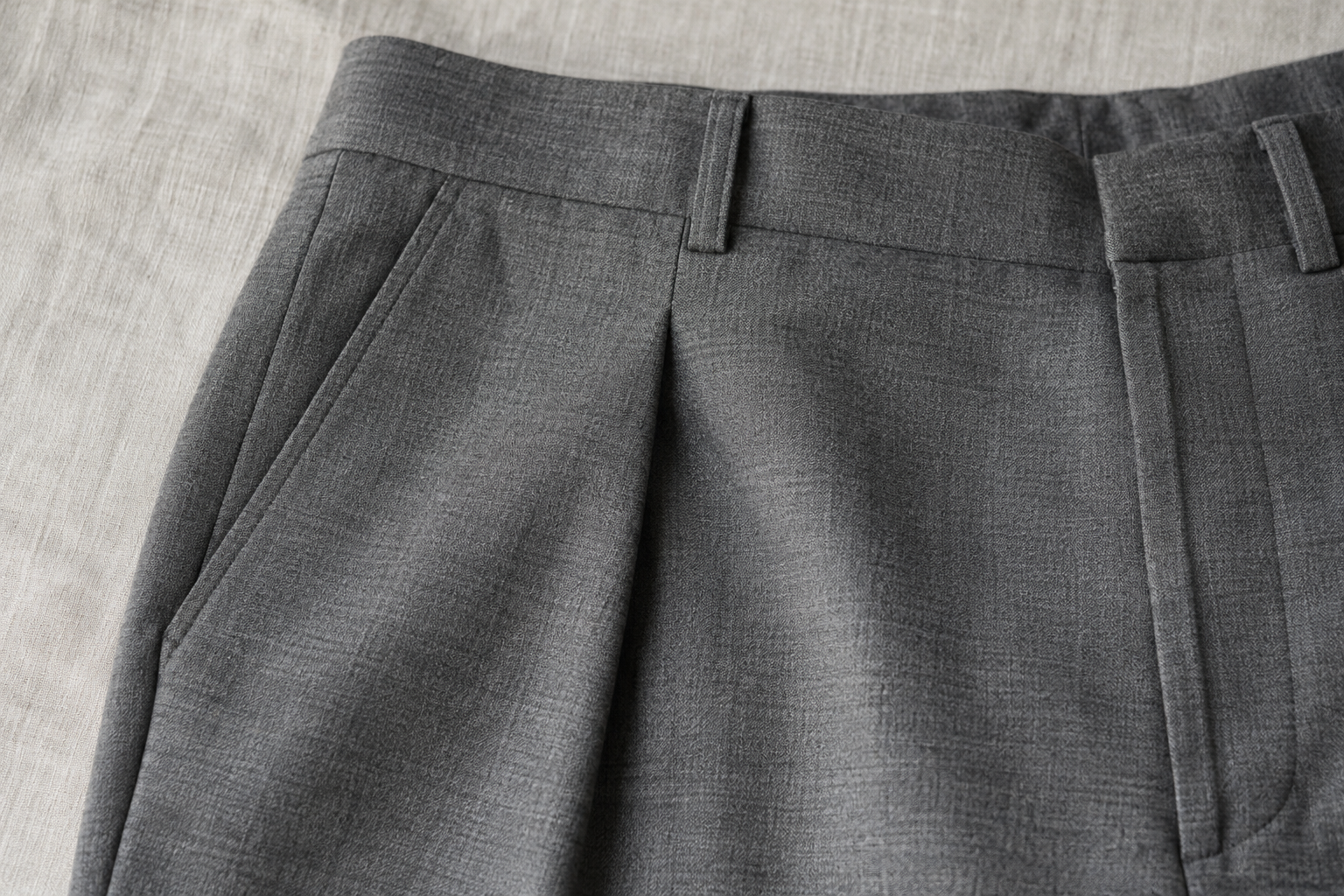
The visual preference can be straightforward. You may enjoy the extra lines at the top of a pleated pair, or prefer the simpler surface of a flat front. Pleats are sometimes called old-fashioned and flat fronts modern; neither label tells you whether you'll like the pair in front of you. Describe what appeals to you in the particular trousers.
Compare the cut as well as the front
Suppose you're looking at two hypothetical pairs of grey trousers, one pleated and one flat-front. Because they're the same colour, they look easy to compare at first. But one might sit higher at the waist, have more room through the thigh or narrow more towards the hem. Those differences belong in the comparison too.
Ask which details differ before attributing the entire effect to the pleats. If the flat-front pair feels closer through the seat, that doesn't establish that all flat-front trousers must fit closely there. Equally, a comfortable pleated pair doesn't show that adding a pleat would resolve discomfort in another garment. This is a comparison of two complete designs, not a controlled test of one feature.
A few terms help keep the conversation precise. Ease is the room allowed beyond the body, and pleats are one way of placing some of it at the front. The seat, which covers the back of your hips, has its own room to get right, whichever front you choose. The rise, the length from the crotch seam to the top of the waistband, decides where the waistband sits on your body and so where any pleats begin. These parts of the cut work together, so settle them alongside the front treatment.
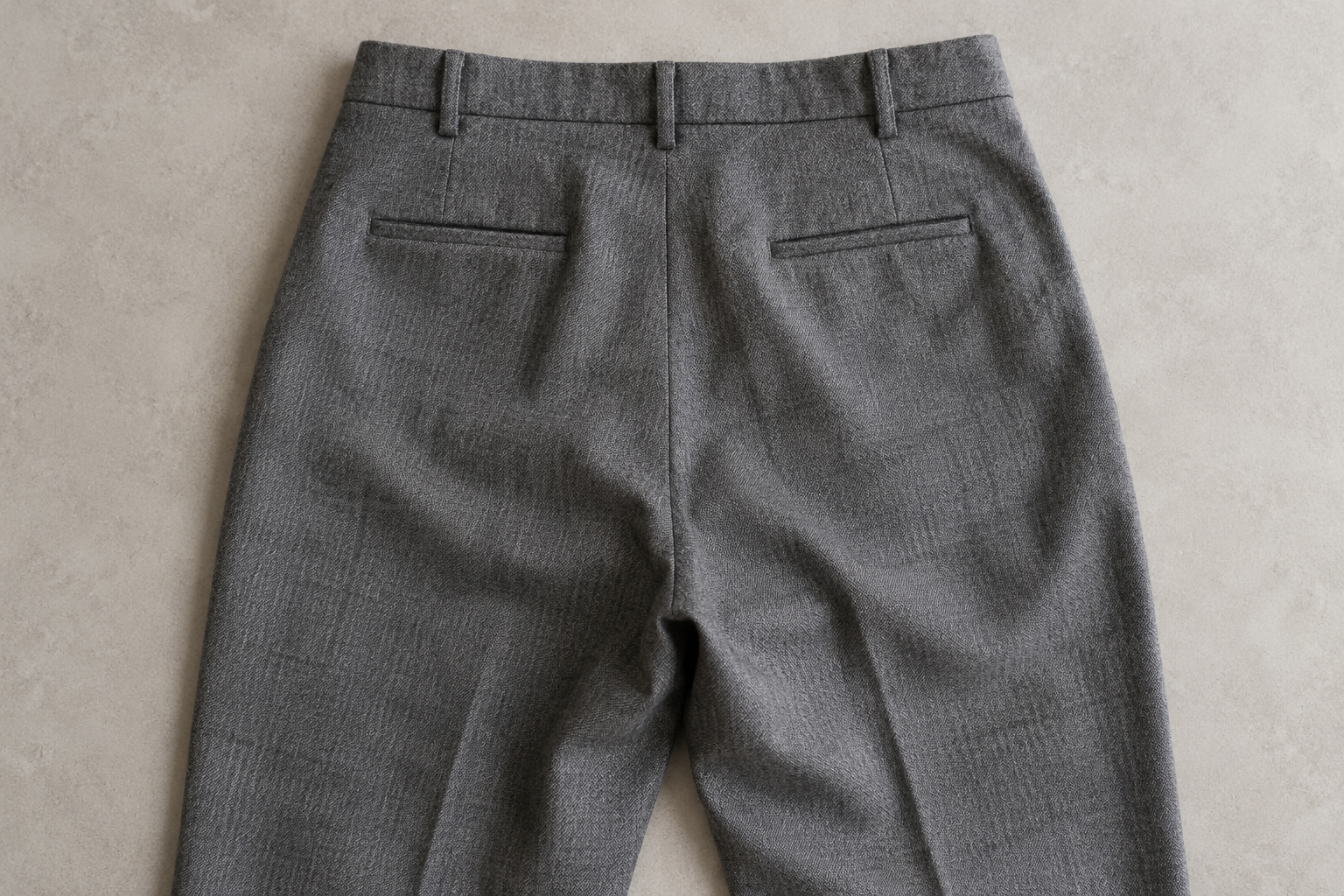
Consider the outline you want from waist to hem, including the view from the side and back. If you like a fuller leg, say so separately from your interest in pleats. If you prefer a closer outline, explain where you still want freedom of movement.
Seated comfort deserves its own check. The guide to trousers that pull when you sit explains how to describe changes at the waistband, seat, thigh and leg. Use those observations to inform the choice.
Wear the rest of the outfit
If you own a pleated and a flat-front pair, start with those; otherwise, use the pair you wear most and note what you'd change. Compare the trousers with the jacket or knitwear you expect to wear most often. A close view of the waistband answers one question; seeing the full outfit answers another. You may like a front detail on its own yet find that your usual knit covers it, or discover that your preferred jacket changes how you see the trouser proportions.
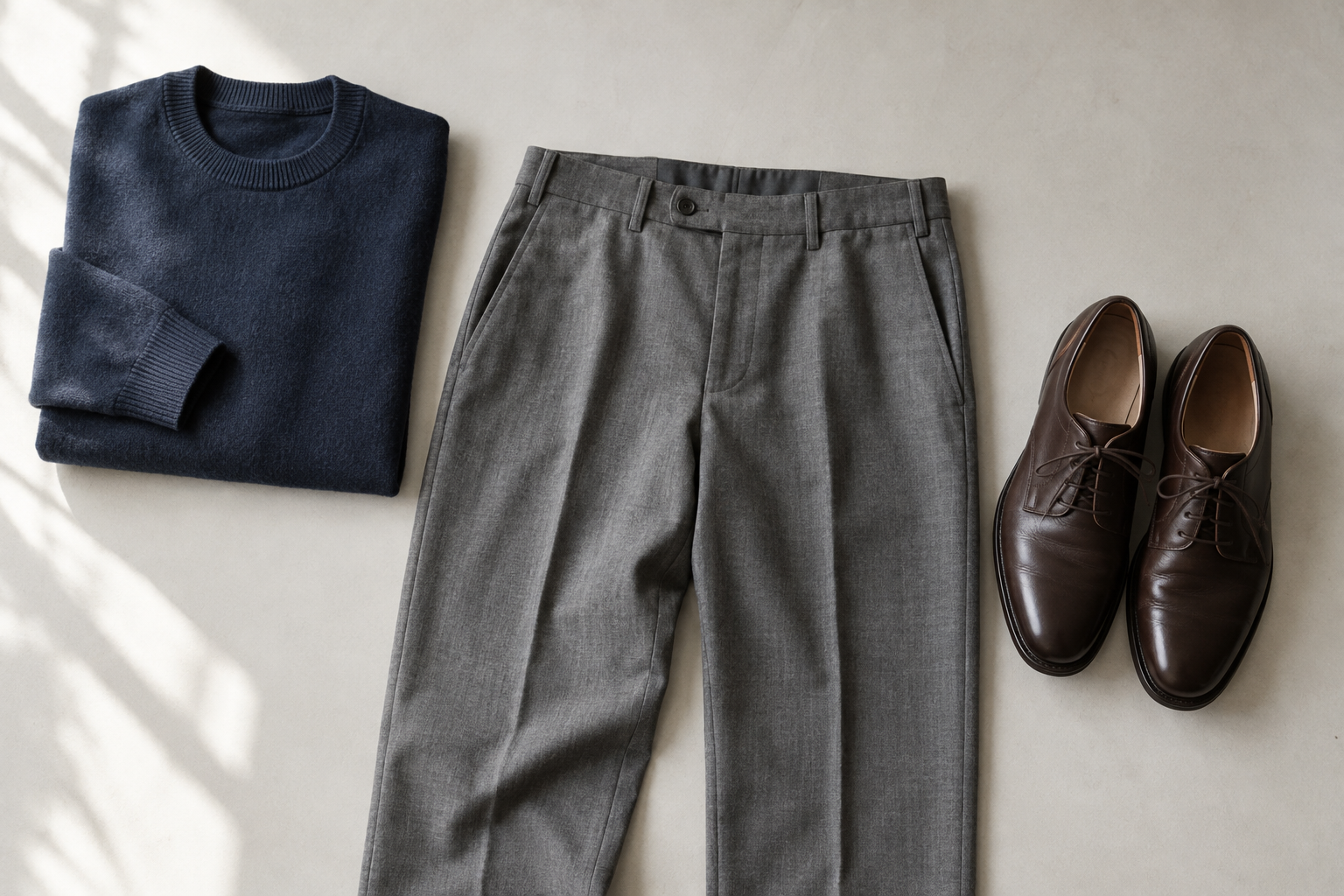
Keep the accompanying clothes and shoes the same each time you try a pair. Then move as you normally would and watch the front: whether the pleats open when you sit and close again when you stand, and whether a flat front stays smooth or starts to pull. A still photograph can help you discuss appearance, but it can't tell you how the trousers feel.
Keep your notes short enough to use:
- What do you like about the front when standing?
- Which other differences in rise, seat or leg shape are influencing your preference?
- What changes when you sit, walk and stand again?
- Does the outline work with the jacket or knitwear you intend to wear?
You may finish with a clear preference, or with one detail you like from each example. Either is useful. Ask what can sensibly be combined.
Bring your preference to a consultation
At a consultation, explain both the look you want and the activities the trousers need to accommodate. Ask whether pleated and flat-front examples are available to look at, which options are currently offered, and how the proposed cut will be assessed through fittings.
You can discuss your trouser preferences with Isaac Ely and ask whether an existing pair or outfit reference would help; a time and place can be arranged once you've spoken. The useful starting point is specific: a front you like, an outline you want, and an honest account of how you need the trousers to feel.