Fabrics & Materials
Cashmere or Merino: Choosing for How You Wear Your Knitwear
Compare cashmere and merino around the sweater you actually want to wear. Use samples, layering needs, frequency of wear and garment-specific care to prepare useful questions, without assuming that one fibre is the right choice for everyone.
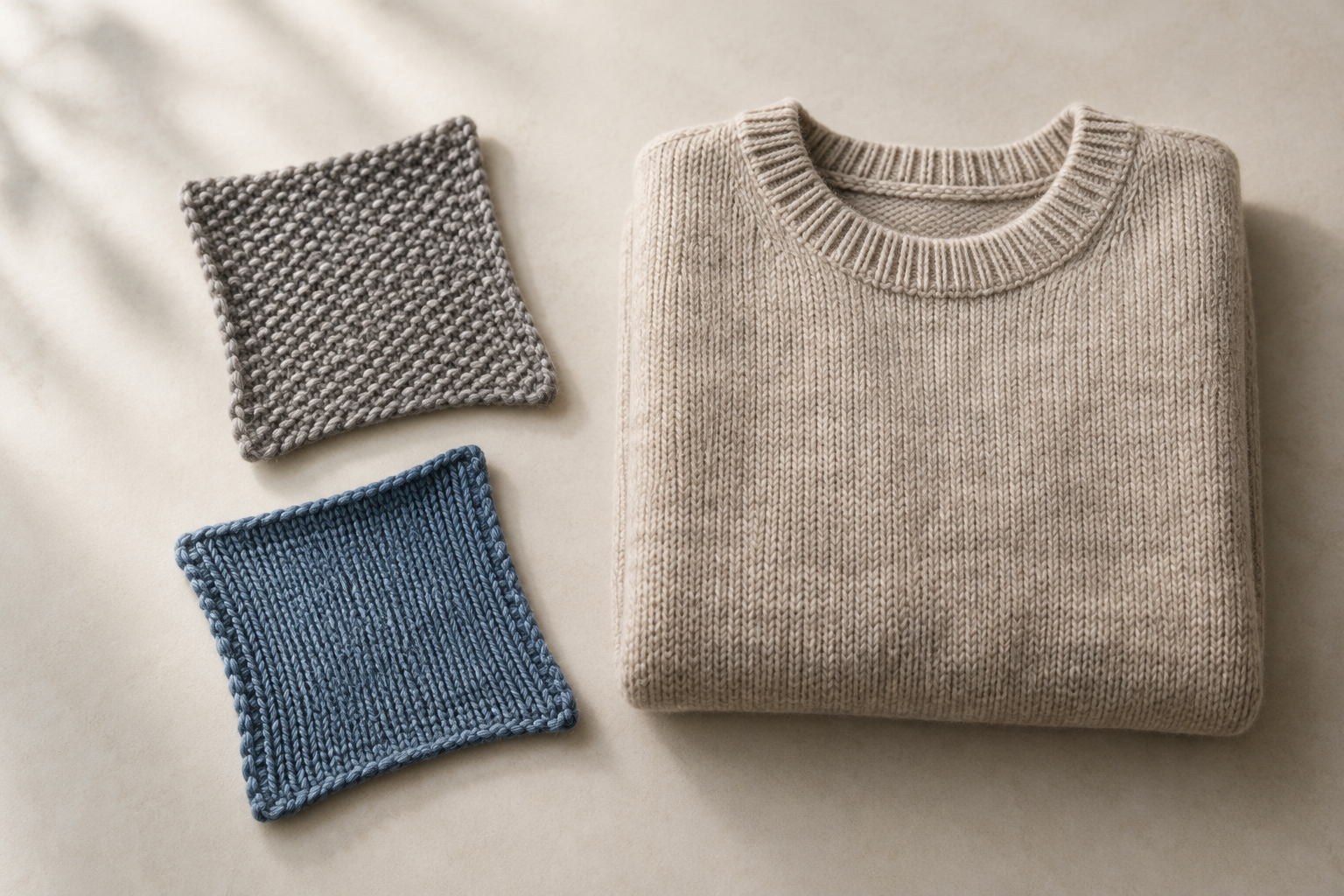
Choosing between cashmere and merino is easier when you start with the sweater you want to wear. Think about where it will fit in your wardrobe, how you want it to feel and how often you'll reach for it.
Isaac Ely's yarn options include cashmere and superfine merino. Comparing relevant samples with a particular use in mind gives you a practical way to explore both.
What cashmere and merino each bring
Cashmere comes from the soft undercoat of cashmere goats; merino is wool from merino sheep. Isaac Ely describes its cashmere in terms of softness and warmth, and its Australian superfine merino as lightweight, breathable knitwear for year-round wear, beneath tailoring or on its own. Its yarn page also lists seasonal cashmere-silk and cotton-silk blends for transitional seasons and warmer weather.
Give the sweater a particular job
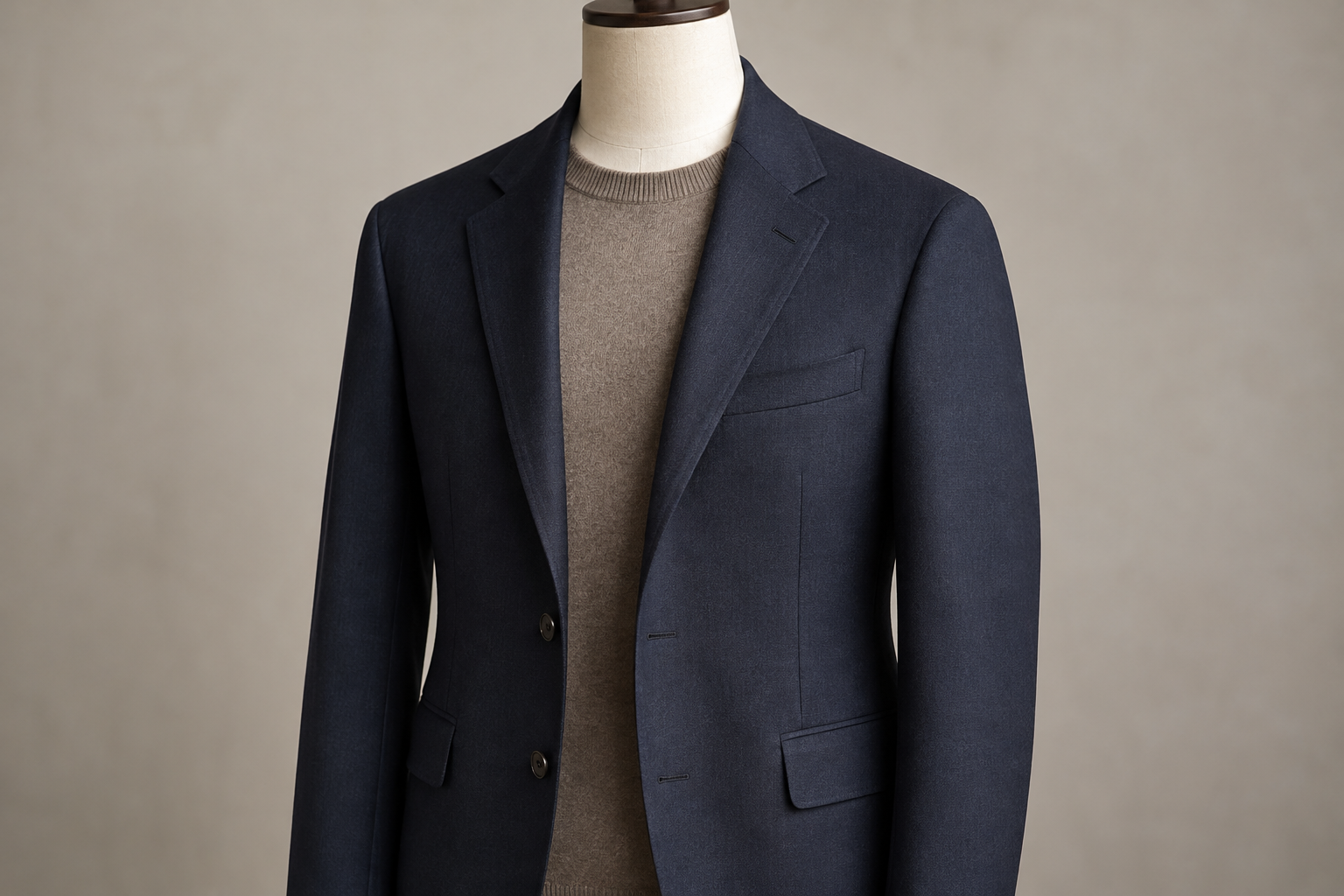
A light layer beneath a jacket needs to work with the clothes around it. Think about the shirt underneath, the jacket over it and how much room the combination leaves for ordinary movement. For a knit you'll mostly wear on its own, focus on the texture, shape and weight you enjoy.
For a colder-weather piece, describe where you'll wear it and what else you'll have on, including an outer coat if relevant. Warmth depends on the finished garment as well as the fibre.
If you want one sweater to serve several purposes, decide which matters most. That gives you a starting point when discussing compromises in weight or design.
Handle samples, not just labels
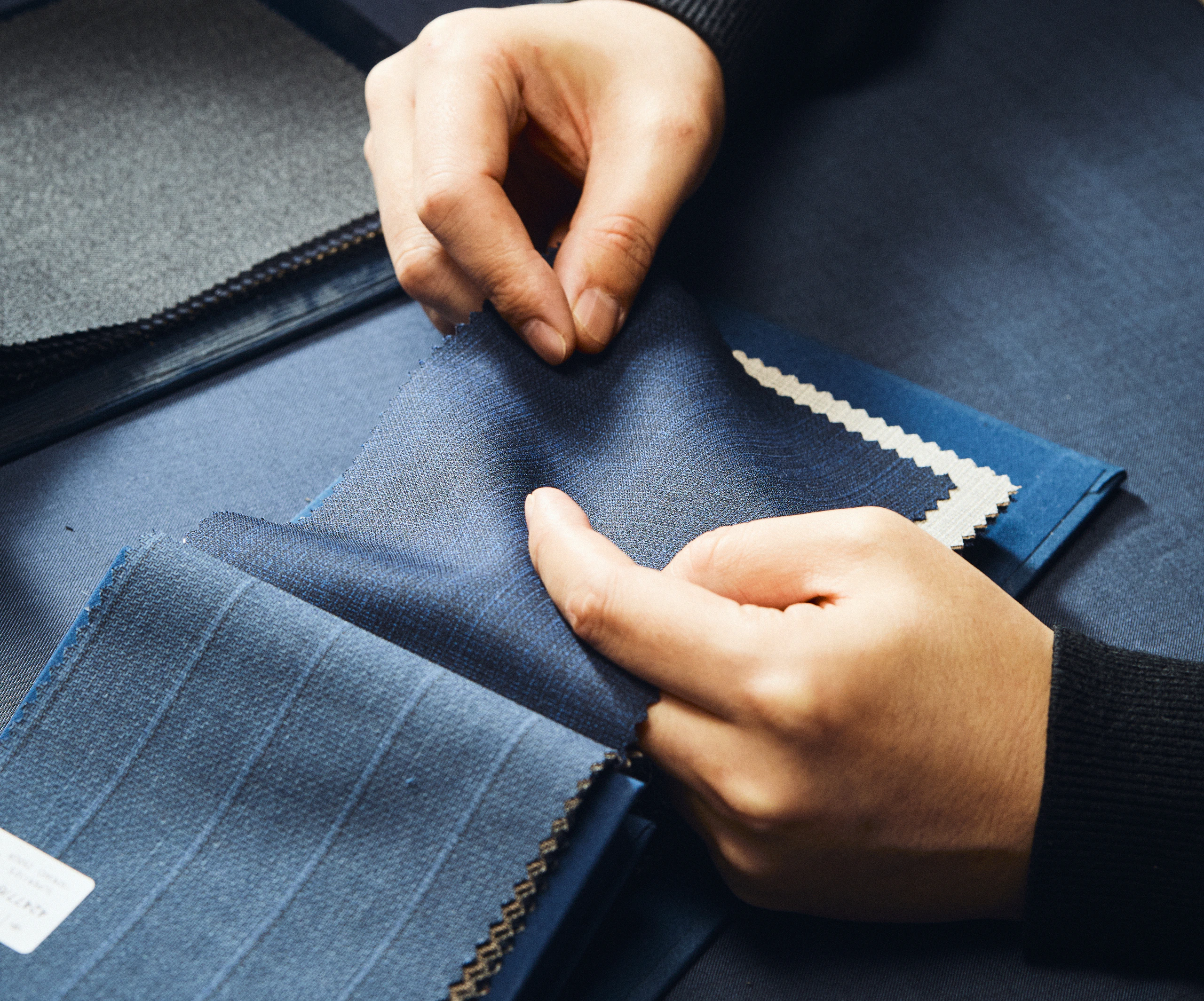
When samples are available, compare them side by side. Pay attention to softness, texture and how substantial each feels, especially if the knit will touch your skin. Simple observations such as "I prefer this smoother surface" or "this feels too heavy for an everyday layer" help explain your preferences without specialist vocabulary.
Ask how closely each sample matches the proposed sweater. Fibre, yarn weight and stitch structure are separate considerations: two knits made from the same fibre can feel quite different. A swatch helps you judge the surface; the finished garment's overall weight and shape also need to be discussed.
Isaac Ely's bespoke knitwear service includes choices in yarn weight, style, body length and sleeve length. Discuss these together, using the samples to explain what you like and the intended use to guide the design.
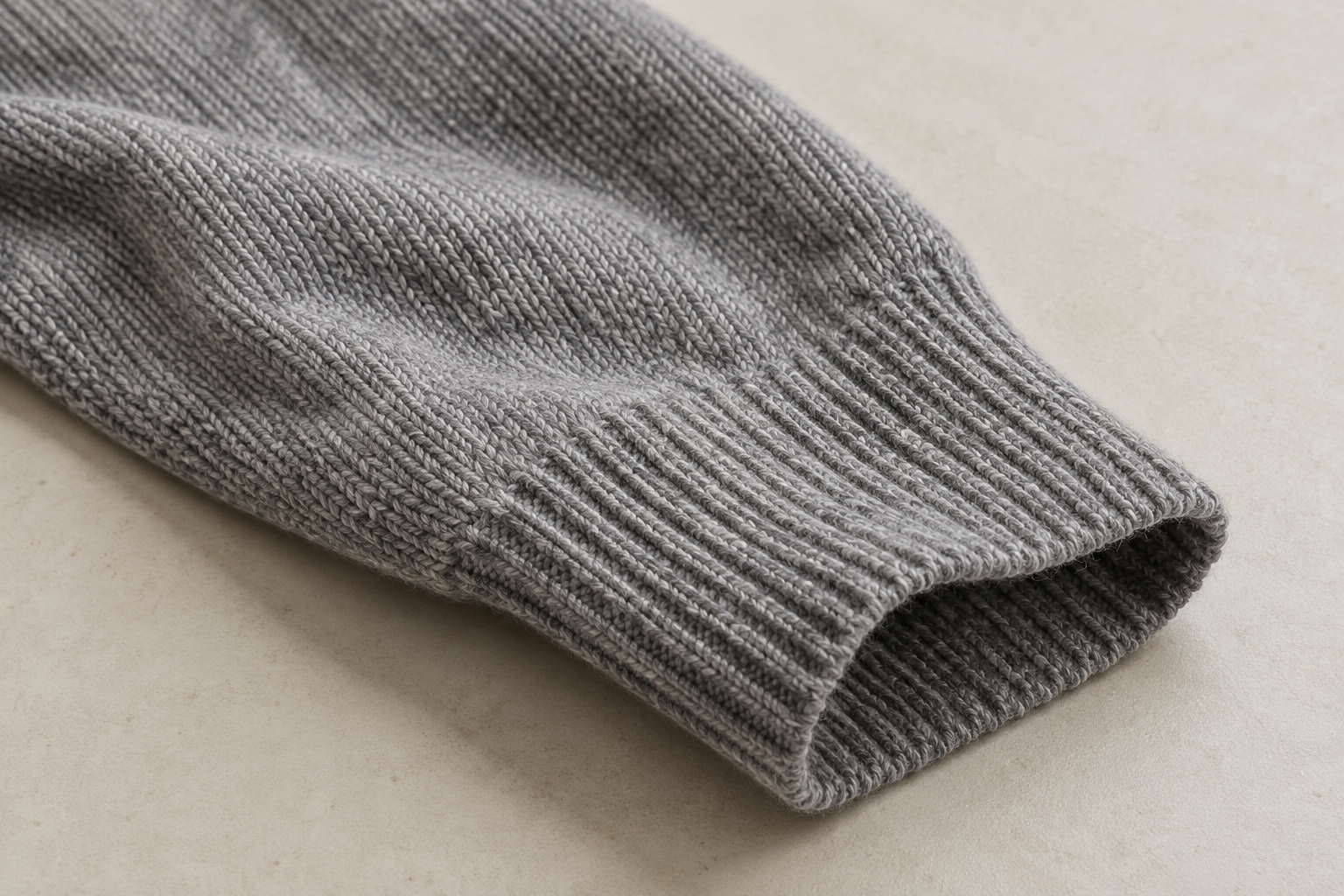
If you're planning to wear the sweater beneath tailoring, the guide to choosing knitwear that fits comfortably under a jacket explains what to check at the neckline, cuffs and hem when you try the layers together.
Check the care before you choose
Ask for the care guidance for the specific sweater. Follow its label, and clarify any questions about cleaning or storage. General advice for cashmere or merino may not apply to every knit made from that fibre.
Think about whether those requirements fit your habits, particularly for a sweater in frequent rotation. Mention any care routine you would find difficult to maintain when discussing the yarn options currently available for your design.
Make a simple comparison
For example, imagine comparing a weekday commuting layer and an occasional evening sweater. Use the same questions for each:
- Feel: Which sample's texture and weight do you prefer?
- Layers: Will this sit beneath a jacket, stand alone or need to work with both?
- Frequency: Is it for regular rotation or a particular kind of outing?
- Care: What does the garment require, and does that fit your routine?
- Open questions: What still needs to be confirmed about weight, construction or availability?
In this example, the commuter might put comfort beneath a jacket first, while the evening wearer might focus on the sweater's texture when worn on its own. The comparison helps you identify what matters most for each piece.
You can use those notes when you ask Isaac Ely about your knitwear options. Share the main use and the questions still open, and say whether you'd like to arrange a visit.