Care & Wardrobe Advice
Crew Neck or V-Neck: Planning Your Shirt and Jacket Layers
Compare crew-neck and V-neck sweaters with the shirts, ties and jackets you actually wear. Learn what to notice at the collar, how to compare two outfits, and which proportion preferences to discuss before choosing your knit.
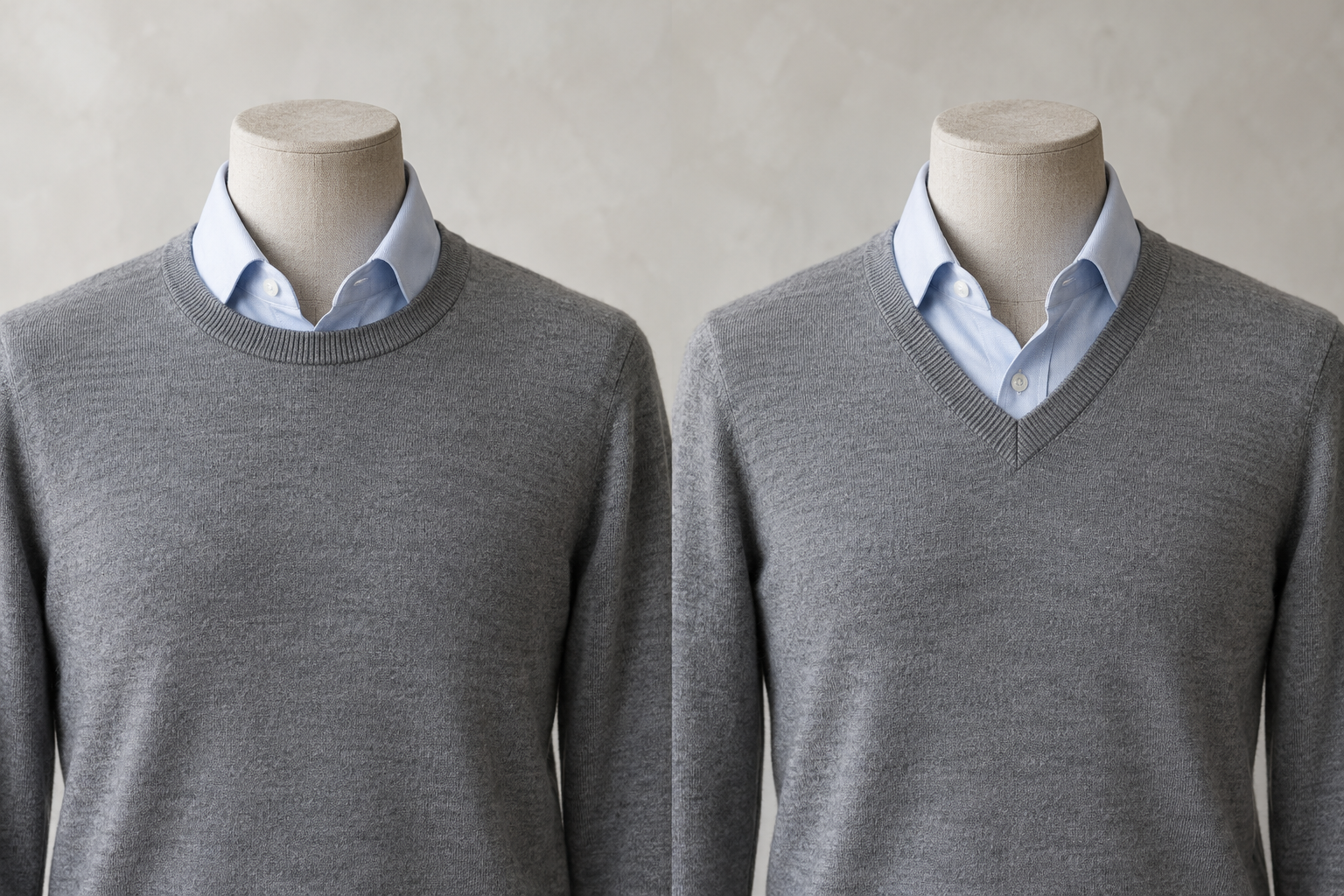
A crew-neck and a V-neck sweater show different amounts of the shirt beneath them, and the difference grows once you add a tie or a jacket. The useful comparison starts with the shirt you reach for most often, whether you add a tie, and the jacket that goes over both. A neckline you like on a shelf may look quite different once those layers meet.
Isaac Ely's bespoke knitwear includes both styles, with body length, sleeve length, yarn, weight and fit discussed alongside them. Begin with the neckline relationship you like, then weigh it against those other choices. There isn't one opening shape that works best for every wardrobe.
Start with what sits beneath the knit
Think about the outfit you'll repeat. Do you usually wear a collared shirt, sometimes add a tie, or prefer the knit without a visible collar? Each gives you a different starting point. If you expect one sweater to cover several uses, decide which matters most before comparing samples.
A collared shirt adds its own edges above and inside the knit opening. A tie introduces a knot and a length of fabric below it. Without either, the sweater's neckline becomes the main visible edge at the neck. Look at the version you actually intend to wear; adding a shirt solely for the comparison can steer you towards a combination you rarely use.
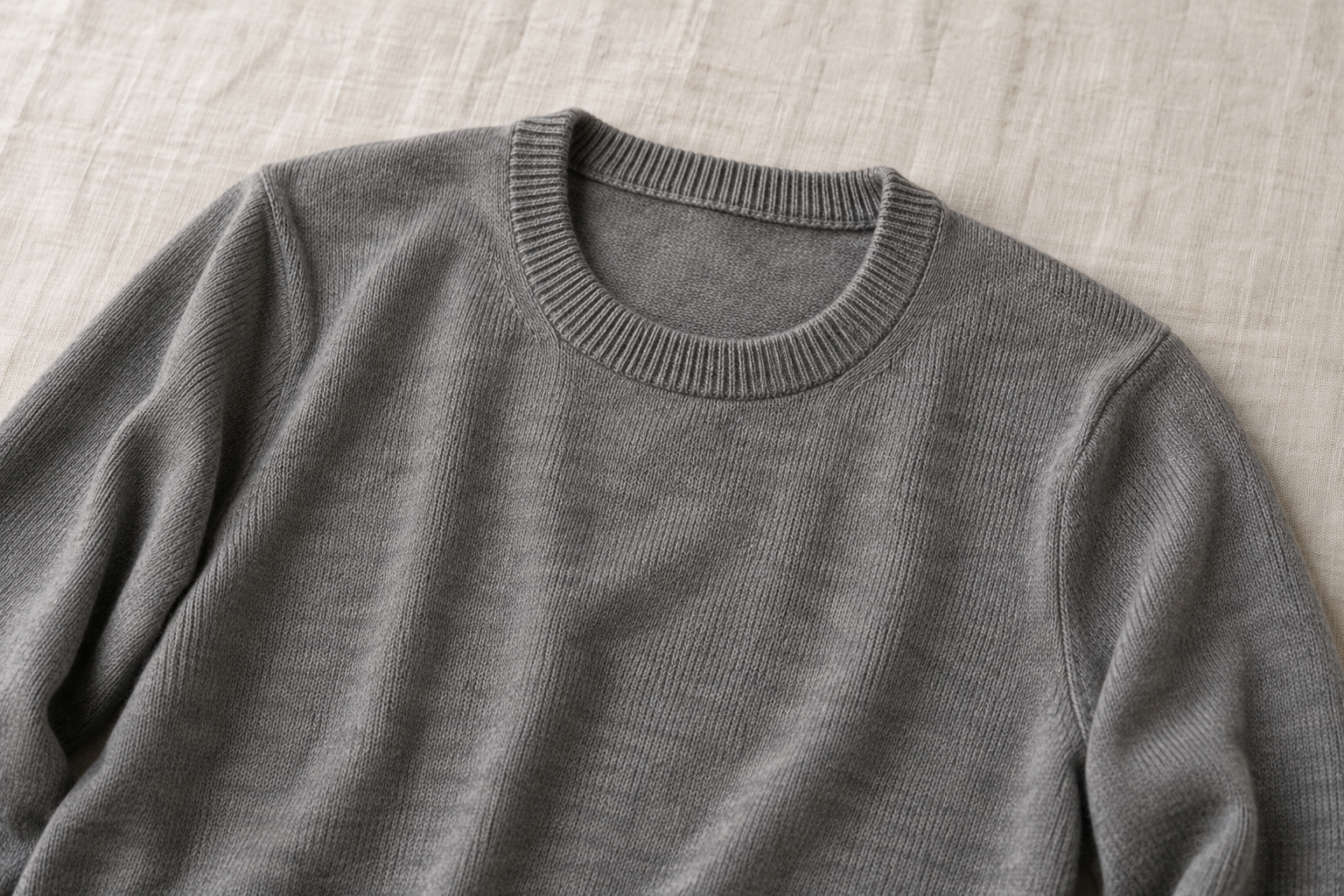
You can keep this simple. Name your usual shirt, jacket and tie habits in a sentence. For example: “I normally wear a pale-blue shirt without a tie, with my navy jacket on outdoors and off at my desk.” A sentence like that gives the neckline decision a clear purpose.
See how a crew neck frames the collar
The crew neck creates a rounded opening. With an open collar beneath it, the collar usually stands above the ribbing while the knit covers most of the shirt front, so the points either rest on the rib or tuck just under it. With a tie, a crew neck usually covers everything below the knot, leaving the knot sitting just above the ribbing. Notice which parts of the collar remain visible and where its points settle. You may like that fairly contained arrangement, or want more of the shirt front to show; either is a preference you can describe.
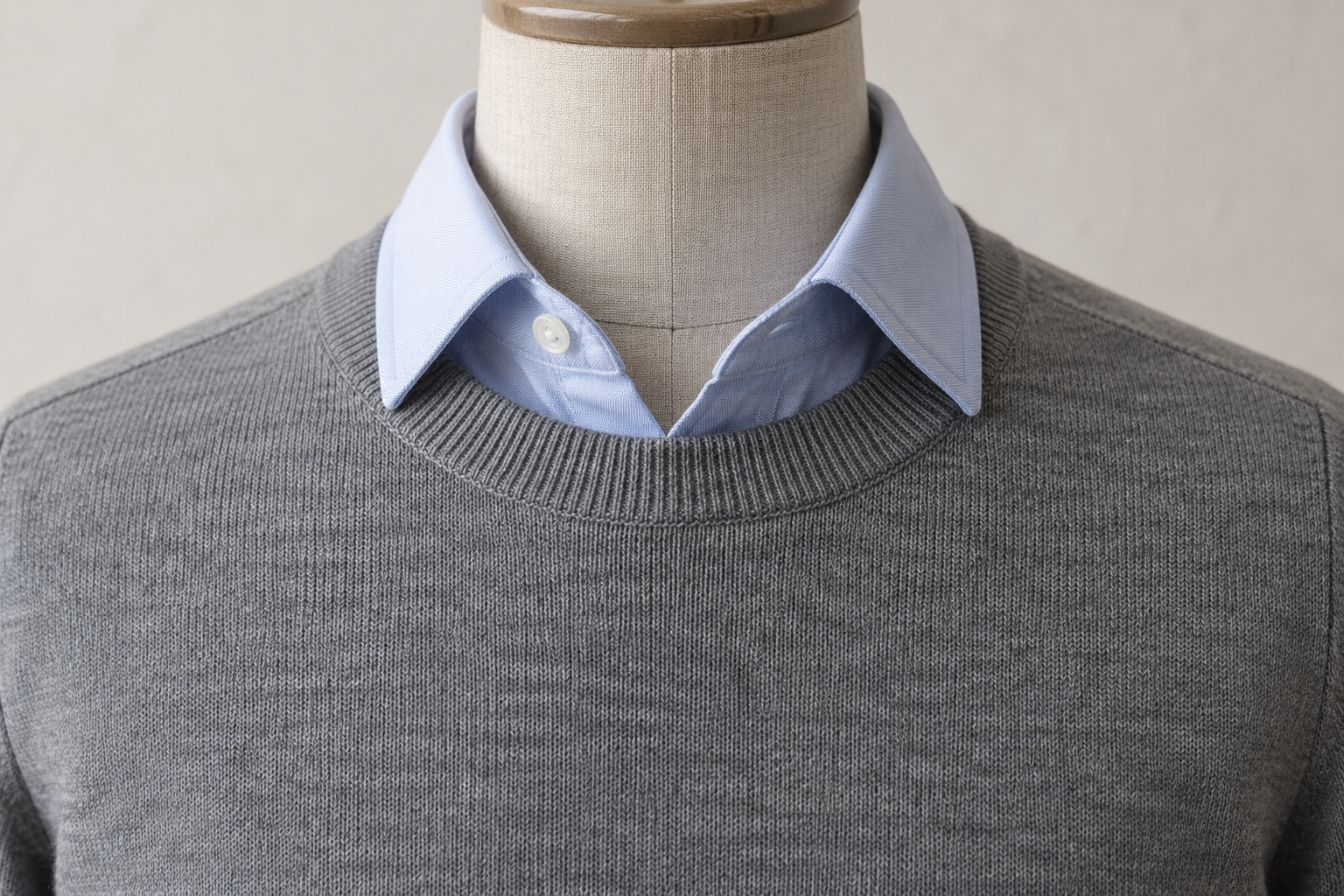
Let the layers rest before judging them. If you have to keep lifting a collar point out or pushing it back under the knit, note that. The arrangement should be assessed as you wear it, rather than only after careful positioning for a mirror.
Check how the neckline feels as well as how it looks. Turn your head naturally and sit down. If the shirt and knit feel crowded together, or a collar point keeps needing attention, describe what happens and when. A different opening shape may be worth discussing, though the neckline isn't necessarily the only cause.
Give the V-neck a shirt and tie test
A V-neck makes an angled opening over the shirt front. With a tie, it leaves the knot and the top of the tie in view, while the rest of the tie runs beneath the knit. With an open collar, it shows more of the placket and can give the collar points more space to open. Compare the visible collar, placket and, if you wear one, tie within that space, and decide whether you like how they sit together.
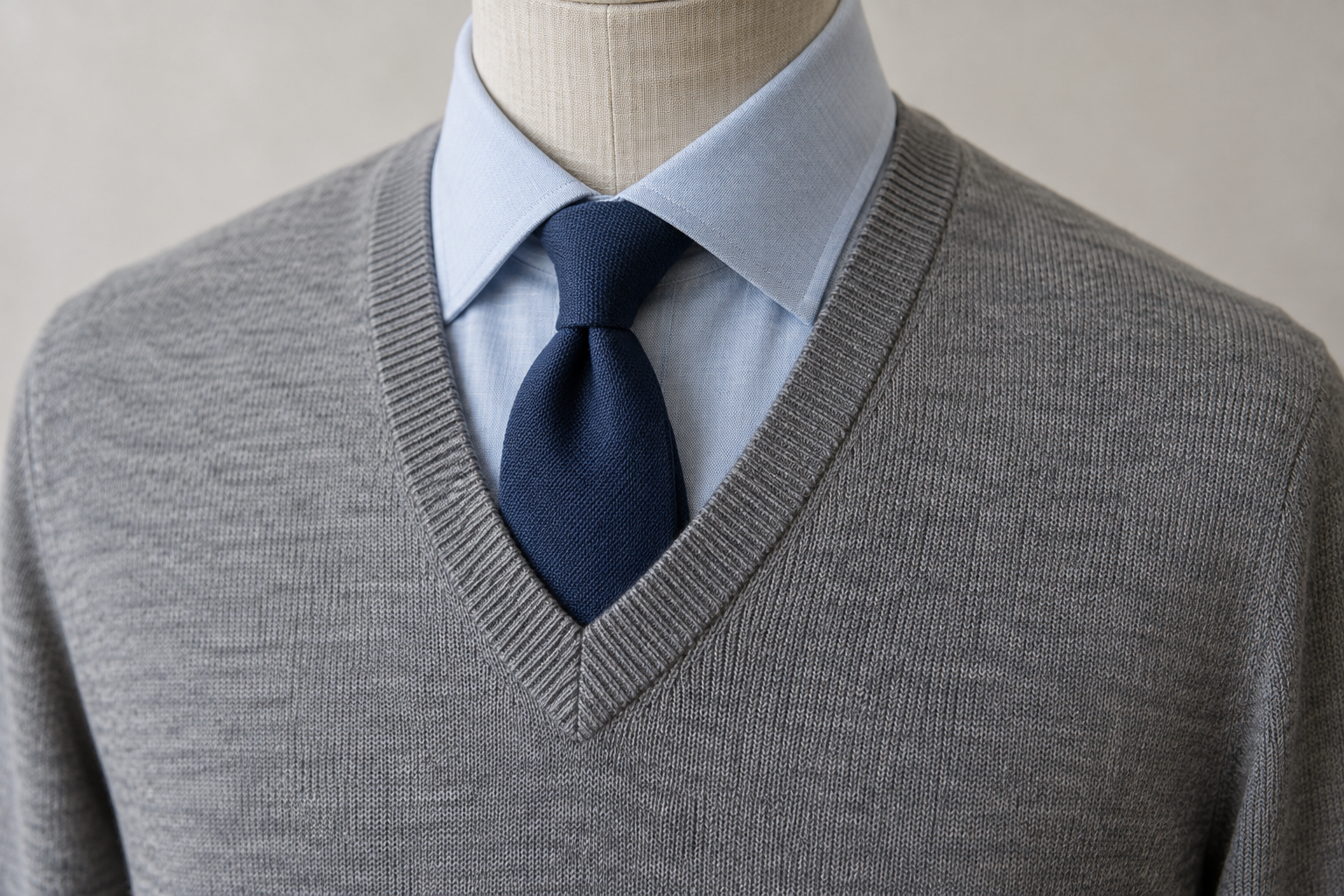
Use a familiar tie and your usual knot for the first look. Then remove it and open the shirt as you normally would. Does the same knit still give you an opening you enjoy? If you like it more with the tie, decide whether that matters for your week. An occasional outfit needn't carry the same weight as your everyday one.
The guide to choosing a shirt collar for tied and open-neck outfits goes further into that shirt decision. Here, keep your attention on what changes when the knit surrounds it: the visible shape, the space around the knot and where the collar rests.
Compare two necklines with one jacket
For a hypothetical comparison, use one pale-blue shirt and one navy jacket with two grey knits: a crew neck and a V-neck. Keep the colour and weight as similar as the available examples allow. Changing several features at once makes it harder to tell whether it's the opening or something else you prefer.
Start with the crew neck. Look at the curve between the jacket lapels and the collar above it. Then try the V-neck with the same shirt and jacket. Notice the angled opening and the additional shirt front it reveals in that particular combination.
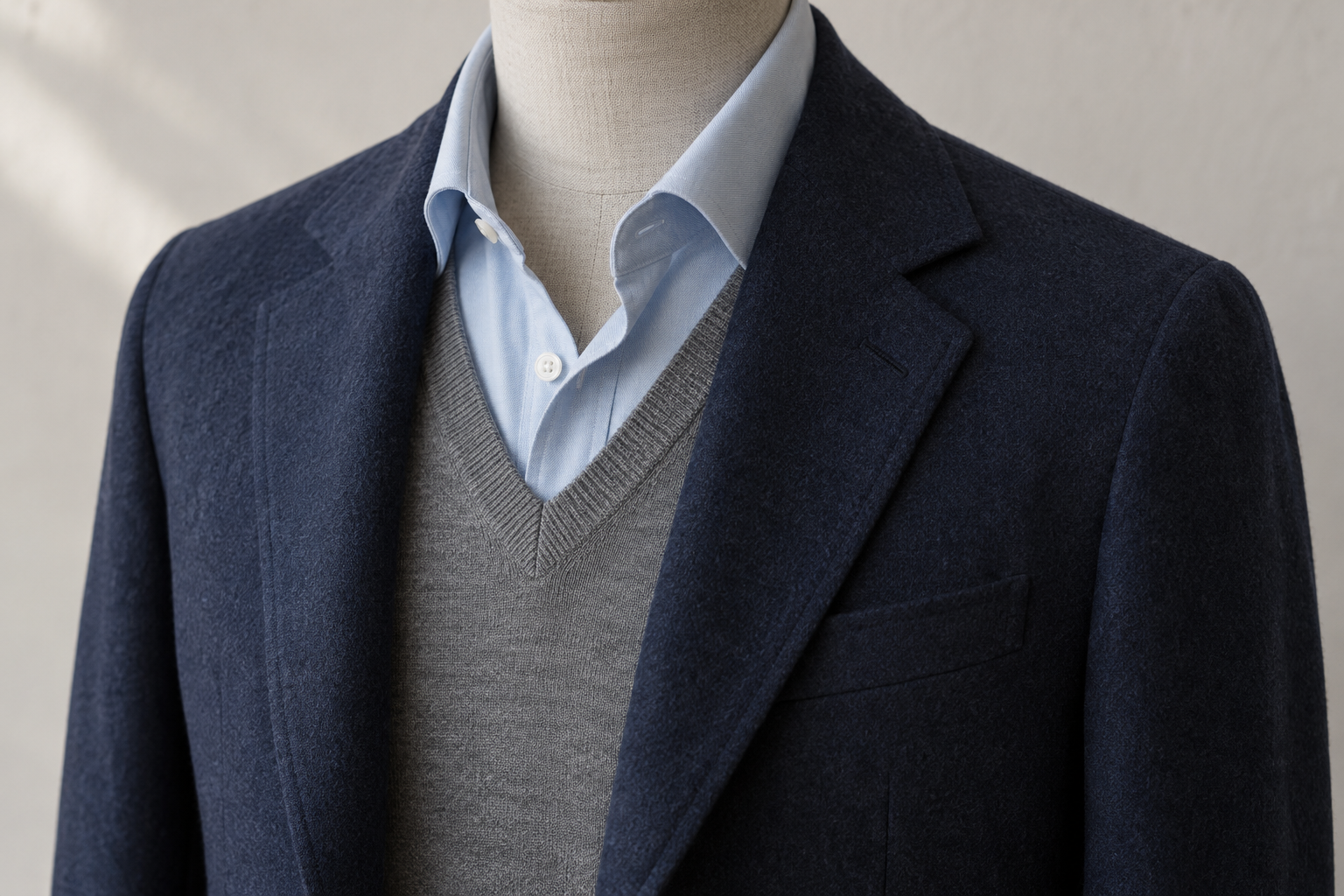
View each with the jacket open and in the fastened position you normally use. Remove the jacket too if that is part of your day. A neckline can be appealing between the lapels yet look different when the knit is the outermost layer. Give yourself room to prefer different styles for different uses.
Keep the rest of the sweater in view
Once you have a neckline preference, step back from the close comparison and look at the whole knit with your intended jacket and trousers. The neckline can affect what you notice further down. If you wear a tie under a V-neck, notice where its tip falls relative to the knit's hem. With either style, check how the hem meets the trouser waistband and how the knit and shirt cuffs sit at the end of the jacket sleeves.
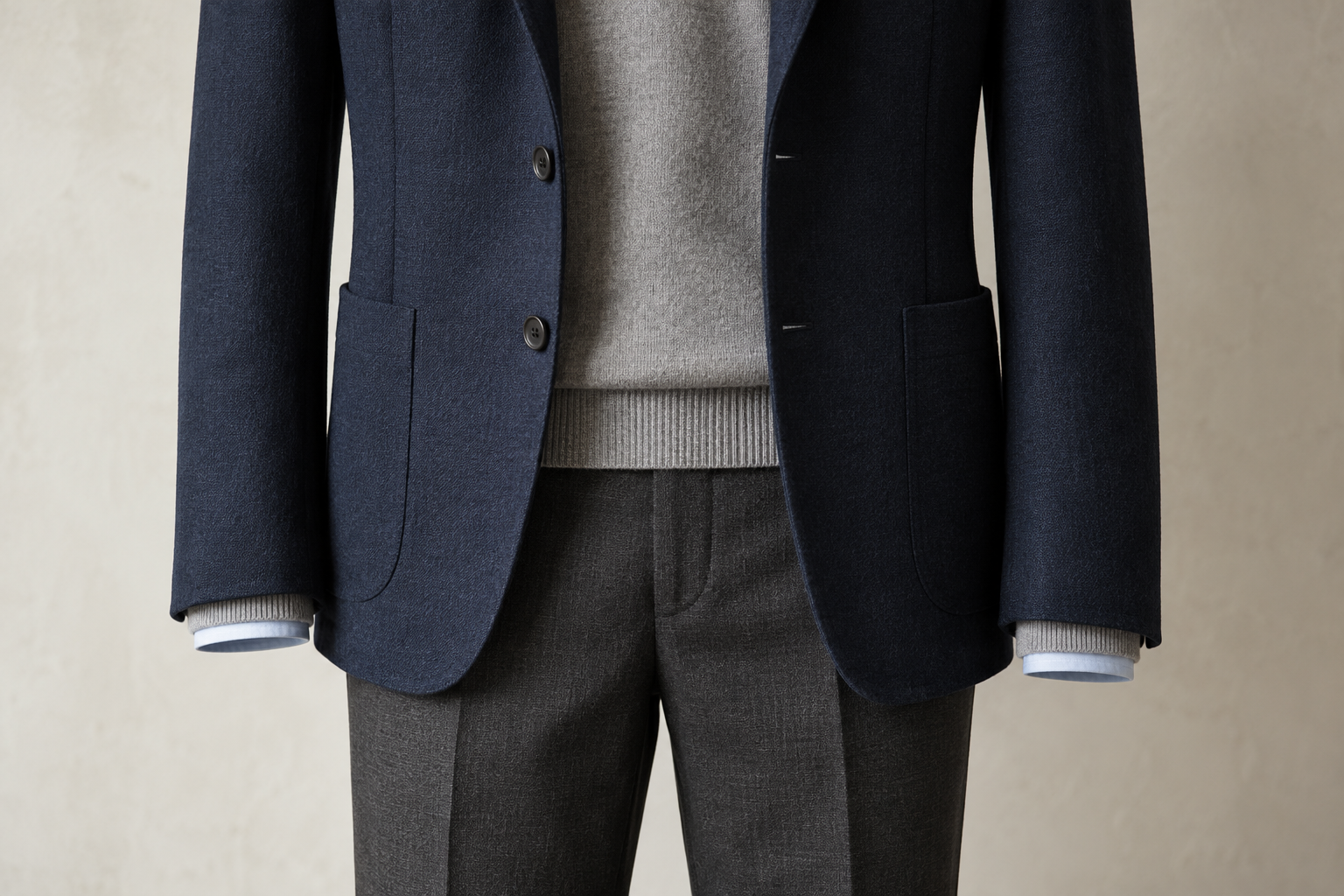
If the combination gathers or feels restrictive through everyday movement, the earlier guide to knitwear beneath a jacket provides a fuller layering check. Keep those observations separate from your neckline preference. You might want to retain a V-shaped opening while discussing the length or fullness of the particular sample.
Describe the combination you want to wear
Bring the decision back to a few concrete points: your usual underlayer, how often you wear a tie, which jacket matters most and what you liked about each opening. Include anything that needed repeated adjustment. It's equally useful to say what already felt comfortable and worth keeping.
Ask which neckline, yarn and proportion options can be considered together for your garment. A photograph can help communicate the effect you like, but it doesn't confirm an available neck depth, yarn or colour. Leave the specification open until the relevant options have been discussed.
You can ask Isaac Ely about your knitwear combination and mention which garments you'd like to bring. If a fitting would help, a time is arranged after that first conversation. Your starting point can be a simple preference—more shirt visible, a rounded edge, or a neckline you enjoy both with and without the jacket.